
Sirococcus shoot blight
Sirococcus piceicola
The disease is caused by the fungus Sirococcus piceicola, an ascomycete pathogen that specifically targets spruce species. It is highly adapted to infecting young shoots during their growth phase.
What the section contains
Sirococcus shoot blight
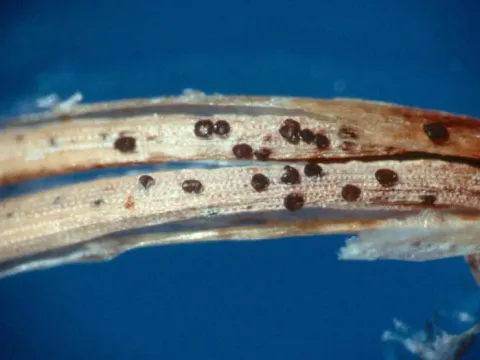
The life cycle involves the production of small pycnidia on dead needles and twigs. These structures release conidia, which are splashed by rain or wind-dispersed to healthy tissues.
Once the spores land on a susceptible surface, they germinate and penetrate the epidermis of the shoot. The fungus then colonizes the xylem and phloem, disrupting the transport of nutrients.
This pathogen thrives by exploiting the host's physiological weakness. It is capable of overwintering in infected debris, ensuring survival even in harsh environmental conditions.
Research indicates that several spruce species, such as Picea abies and Picea pungens, show varying levels of susceptibility, with younger trees being particularly vulnerable.
The hallmark symptom is the curling and wilting of current-year shoots, often referred to as a shepherd's crook, followed by rapid browning or reddening of the needles.
Necrotic lesions develop on the bark of infected shoots. These lesions often girdle the stem, causing the entire tip of the branch to die off prematurely.
Close observation reveals tiny, black, flask-shaped pycnidia on the surface of the infected needles or the underlying bark of the dead twigs.
Needle drop is common, leading to significant defoliation. As the disease progresses, the tree may exhibit stunted growth and a thin, irregular canopy appearance.
In mature trees, the infection usually remains limited to the lower branches, but in saplings, the fungus can infect the main leader, causing severe structural deformity.
Sirococcus shoot blight is heavily dependent on moisture. Frequent rainfall, high humidity, and prolonged morning dews create the perfect environment for spore dispersal.
Dense canopies and poor air circulation in forest stands or nurseries trap moisture, facilitating the spread of the fungus among adjacent trees.
Cooler temperatures, typically between 15°C and 20°C, are ideal for the rapid development of the pathogen and the infection of fresh, succulent shoot tissues.
Late spring and early summer are the periods of highest risk, as the new growth is soft and more easily penetrated by the fungal hyphae.
Stress factors, such as drought or physical damage, can compromise the tree's immune system, making it much more susceptible to colonization by S. piceicola.
This disease can cause significant mortality in nursery settings, leading to major economic losses for growers who must discard infected stock.
In ornamental and forest settings, the aesthetic value of the trees is severely diminished, and the loss of apical dominance can ruin the tree's natural form.
Chronic infections weaken the host, making it a target for secondary pests like bark beetles, which can ultimately kill the tree by girdling the main stem.
The pathogen's ability to persist in the environment means that once established, it is difficult to eradicate without sustained management efforts.
Severe outbreaks in plantation forests can reduce overall timber yield and quality, necessitating costly and intensive forest management interventions.
Sanitation is the most effective control measure. Pruning and destroying infected branches reduces the inoculum load significantly and prevents further spread.
Applying fungicides during the period of shoot elongation is critical for protecting new growth. Treatments should be timed based on local weather conditions.
Proper nursery management, including spacing trees to improve airflow and avoiding overhead irrigation, is essential to reduce the humidity levels that favor the fungus.
Maintaining tree vigor through appropriate fertilization and site selection helps trees withstand infection and recover from minor damage more effectively.
Integrated pest management strategies include
- monitoring for early symptoms;
- using pathogen-free certified seedlings;
- sterilizing pruning tools with alcohol or bleach after each use.