
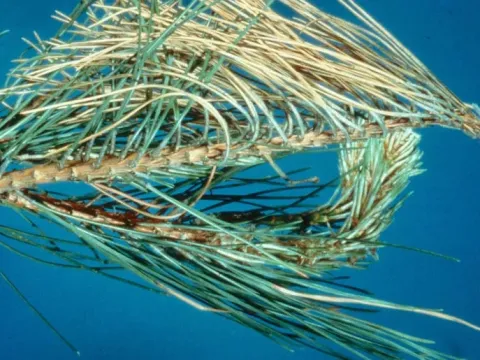
Sirococcus shoot blight
Sirococcus
The disease is caused by fungi of the genus Sirococcus, with Sirococcus conigenus being the most significant pathogen. It primarily targets members of the Pinaceae family, including spruce, pine, hemlock, and cedar species.
What the section contains
Sirococcus shoot blight
The life cycle involves the formation of pycnidia on infected needles, cones, and twigs. These fruiting bodies produce conidia that are dispersed by rain splash and wind, facilitating the infection of new, healthy shoots during the growing season.
The fungus overwinters in dead needles and cones on the forest floor, as well as on symptomatic twigs still attached to the tree. This persistence makes the environment around the trees a constant source of inoculum.
Mycelium penetrates the plant tissue, inducing necrosis in the vascular system. This disruption of nutrient and water flow is what causes the characteristic wilting and browning of the distal parts of the shoots.
This pathogen is particularly problematic in cool, moist climates where prolonged periods of high humidity coincide with the emergence of new growth, providing ideal conditions for spore germination.
The most distinctive symptom is the browning and wilting of current-year shoots. Affected shoot tips often curl, forming a characteristic "shepherd's crook" shape as they die back.
Brown necrotic lesions often appear on the stem of the shoots, sometimes accompanied by constrictions where the vascular tissue has been compromised. This blockage prevents water from reaching the terminal growth.
Small, dark, pin-point structures called pycnidia can be found on dead needles and twig bark. These are most visible under magnification or after rain, when they may release spore masses.
Needle cast is a common secondary symptom, where needles on affected branches turn yellow and drop prematurely. In severe cases, the entire branch loses its foliage, leaving only dead, brittle twigs.
In seedlings and young trees, the disease can attack the central leader, causing it to die. This often leads to permanent deformity, such as stem crooking or the development of a bushy, multi-stemmed growth habit.
Disease development is heavily dependent on moisture. Prolonged rainy weather and high relative humidity during the spring and summer are critical for spore dissemination and successful infection.
Dense planting or canopy closure creates a stagnant microclimate with limited airflow, which traps moisture and encourages fungal growth. Nurseries are particularly vulnerable due to high plant density.
Moderate temperatures (roughly 15–20 degrees Celsius) are optimal for the pathogen. In such climates, the fungus can produce multiple cycles of spores within a single growing season.
Wind-driven rain is the primary mechanism for long-distance spore dispersal. However, the movement of nursery stock is a major factor in introducing the pathogen into previously healthy landscapes.
The presence of unpruned, infected twigs or fallen debris acts as a reservoir. If these are not removed, the fungus will continue to thrive and reinfect the trees year after year whenever conditions are favorable.
The primary impact of Sirococcus shoot blight is the reduction of tree vigor. Weakened trees become more susceptible to secondary infestations by bark beetles and other wood-boring insects, leading to tree mortality.
In forest nurseries, the disease can result in devastating losses, potentially destroying the entire crop of seedlings. This requires expensive replanting and increases the overall cost of forest regeneration.
For ornamental conifers, the disease destroys the aesthetic value. Branches die back, leaving unsightly gaps in the foliage that can take years to recover, rendering the trees unfit for landscaping.
In natural ecosystems, the pathogen interferes with natural regeneration. Seedlings underneath infected mature trees are often killed, preventing the successful establishment of the next generation of the forest.
Chronic infection drains the tree's energy reserves. Constant attempts to recover from shoot dieback exhaust the plant, eventually leading to stunted growth, thin crowns, and premature tree decline.
Strict nursery sanitation is the most effective management strategy. All infected seedlings should be immediately removed and destroyed to minimize the buildup of fungal spores.
Pruning out infected branches on landscape trees can help reduce the local inoculum. It is vital to perform this work during dry weather to avoid spreading the spores further.
Fungicide applications, particularly those containing copper or triazoles, are effective when applied preventively during the period of shoot elongation. Proper timing is essential for protecting new growth.
Improving air circulation through thinning or wider spacing helps to dry out the foliage faster, making it difficult for the fungus to establish itself. Proper site selection for planting is also crucial.
Regular monitoring of trees, especially during wet springs, allows for early detection. Removing fallen needles and debris from the base of the trees helps eliminate the primary overwintering sites for the fungus.