
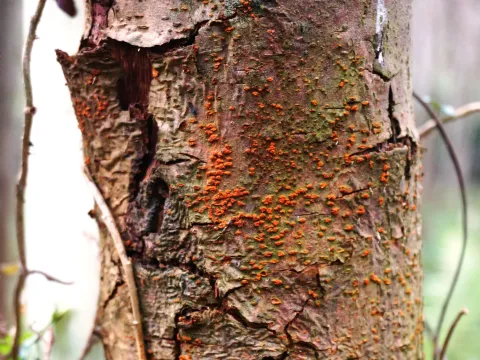
Sirococcus blight of chestnut
Sirococcus castaneae
The causative agent of the disease is the fungus Sirococcus castaneae, belonging to the group of mitosporic fungi (deuteromycetes). This pathogen is specialized in attacking woody plants, causing necrotic processes in the bark tissues and young shoots.
What the section contains
Sirococcus blight of chestnut
The life cycle of the pathogen is closely related to ambient humidity, allowing it to spread effectively through spores during rainy periods. The fungus overwinters primarily in the affected tissues of dead branches, maintaining viability for a long time.
The pathogen enters the plant through mechanical damage to the bark, cracks, or lenticels, rapidly colonizing the cambium and phloem. During development, the fungus releases specific metabolites that poison the host tissues.
Mycological diagnosis of this pathogen requires laboratory analysis, as its fruiting bodies can visually resemble other species of the Sirococcus genus. Identification is usually based on conidial morphology and culture development patterns.
The infection spreads mainly via conidia, which are dispersed by rain splashes, wind, and insects that come into contact with affected bark areas.
The first and most noticeable sign is the appearance of small, elongated necrotic spots on the bark of young branches. Gradually, these areas darken, sink, and begin to crack, exposing the underlying wood.
Exudation (resin or gum) is often observed at the site of infection, which is the tree's defense reaction against pathogen invasion. Branches located above the affected area begin to wilt and dry out prematurely.
Small black dots, known as pycnidia, can be seen on the surface of dead bark, where the fungus forms its spores. Under high humidity, slimy masses of spores can emerge from them.
Foliage on affected shoots turns yellow, curls, and falls off prematurely. In advanced cases, the disease leads to the dieback of entire branches, giving the tree crown an unkempt, sparse appearance.
Secondary signs include general plant decline, reduced annual shoot growth, and increased susceptibility of the tree to other pests and abiotic stressors.
The development of Sirococcus blight is facilitated by periods of prolonged precipitation and high relative humidity. The pathogen is particularly active in regions with temperate climates where spring and summer months feature frequent rain.
Dense plantings, where natural air circulation in the crown is hindered, create an ideal microclimate for fungal spore germination. Poor ventilation prevents rapid evaporation of moisture from the bark surface.
Weakened trees suffering from nutrient deficiencies or drought stress become more susceptible to infection. A healthy plant is capable of localizing the fungal focus, whereas stress reduces the tree's immune response.
Mechanical damage caused by hail, windstorms, or pest activity provides "entry gates" for the infection. In these areas, the fungus establishes itself very rapidly.
The optimal temperature for Sirococcus castaneae mycelial growth falls within the moderate range typical of the spring-autumn season, which determines the seasonality of disease outbreaks.
Sirococcus blight poses a serious threat to young chestnut seedlings and ornamental plantings. Intense infection leads to mass dieback of skeletal branches, which deforms the crown structure.
Prolonged exposure to the pathogen drains the tree's metabolic resources, eventually leading to the death of the entire plant. This is particularly critical in nurseries, where the disease can destroy most of the stock.
The disease significantly reduces the aesthetic value of chestnut trees used in urban landscaping. Trees with affected crowns lose their decorative appeal and require costly pruning.
Disruption of photosynthesis due to leaf loss negatively affects nutrient accumulation in the root system, making the tree more vulnerable to winter frosts.
Economic losses include expenditures for sanitation measures, replacement of dead trees, and reduced timber quality in industrial chestnut cultivation.
The foundation of management is timely sanitary pruning and destruction of affected branches. Cuts should be made into healthy wood, ensuring tools are disinfected after each use.
To prevent spore spread, it is recommended to conduct preventive fungicide applications using copper-based or systemic products during high-risk periods (spring, rainy summer).
An important element of prevention is maintaining optimal planting density to ensure good air circulation. This prevents the accumulation of excess moisture in the crown.
One must avoid mechanical damage to trunks during routine maintenance. Controlling pests that damage the bark also acts as an indirect method of disease prevention.
Selecting resistant varieties and providing optimal growing conditions is the key to tree health. Regular monitoring of the plantings allows for early detection of the problem and prevents epidemics.