
Sistotrema brinkmannii
Sistotrema brinkmannii
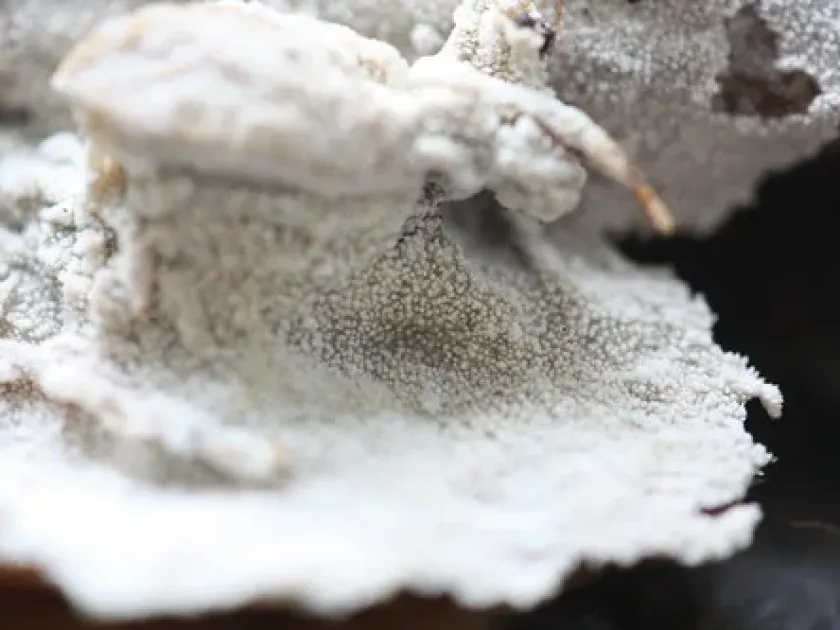
Description
Symptoms
The first signs of infestation often include chlorosis, starting from the lower leaves and progressing upwards. Plants exhibit stunted growth and an overall decline in vigor compared to healthy ones in the same field.
An examination of the root system reveals browning and tissue softening. The roots may become brittle, and the finer root hairs often disappear, severely limiting the plant's ability to absorb water and nutrients.
In high-moisture conditions, a delicate, whitish or greyish mycelial mat may be observed on the collar region of the stem. This indicates the active growth of the pathogen moving from the soil into the vascular system.
Affected plants often show signs of premature wilting during hot afternoons, as the impaired root system cannot meet the transpiration demands of the plant. Over time, the stems may lose structural integrity and collapse.
The inner tissues of the infected roots may turn dark brown or black, often accompanied by a distinct odor if secondary bacterial colonization occurs. This decay process is typical for advanced stages of the disease.
Pathogen
The causative agent of the disease is the fungus Sistotrema brinkmannii, which belongs to the Basidiomycota phylum. While it is primarily a saprotroph common in forest soils, it can behave as a facultative parasite on various crop plants.
The fungus is characterized by the formation of thin mycelium with clamp connections. Its ability to colonize organic debris allows it to survive in the soil for extended periods, making it a persistent threat in agricultural environments.
Biologically, it is highly adaptable to different substrates. Its life cycle involves the production of basidiospores, which facilitate the rapid spread of the fungus across fields during periods of high humidity and moderate temperatures.
The pathogen produces extracellular enzymes that degrade cellulose and lignin, allowing it to penetrate and feed on plant tissues. This destructive capability is what leads to the weakening of the host root systems.
Systematically, it is a well-documented species known for its role in decaying plant matter. However, its shift toward pathogenic behavior in agricultural systems makes it a significant subject for modern plant pathology.
Conditions for development
Development of Sistotrema brinkmannii is strongly associated with high soil moisture levels. Water-logged conditions, poor drainage, or excessive irrigation provide the necessary environment for the fungal spores to germinate and colonize.
The fungus thrives in moderate temperature ranges, typically between +10°C and +20°C. These conditions are common during early spring or autumn, which explains why seedlings are frequently the most vulnerable to infection.
Soil compaction significantly contributes to disease development. When the soil lacks proper oxygen levels, the root system is weakened and physiologically stressed, making it much easier for the fungus to establish its infection.
The presence of un-decomposed plant residues from previous seasons acts as a primary inoculum reservoir. Large amounts of crop debris left on or near the surface support the growth of the fungus during off-seasons.
Neutral to slightly acidic soil pH levels are generally considered favorable for the fungal growth. Managing soil chemistry can sometimes be a subtle way to limit the competitive advantage of the pathogen.
Why it matters
The primary economic harm is the reduction in crop density due to plant death shortly after emergence or during the vegetative growth phase. This often necessitates costly replanting efforts.
Even if the plants survive, the damage to the root system results in significantly lower yield potential. The grain or produce often fails to reach the required market weight or quality standards due to nutritional deficits.
The disease negatively impacts the uniformity of the crop. Uneven maturity across a field creates significant challenges during harvest, leading to losses in efficiency and product quality degradation.
By creating pathways for secondary pathogens, Sistotrema brinkmannii can lead to complex disease scenarios. This increases the total damage to the crop and complicates diagnostic and treatment efforts.
Long-term contamination of the soil limits future crop options. Farmers may be forced to avoid high-value susceptible crops in heavily infested areas until the infection pressure is reduced through sanitation or rotation.
Protection
Implementing a long-term crop rotation strategy is the most effective way to reduce the soil inoculum pressure. Avoiding consecutive plantings of highly susceptible crops disrupts the life cycle of the pathogen.
Proper soil management, including deep tillage to incorporate crop residues, helps speed up the decomposition process and reduces the availability of food sources for the fungus to survive between crops.
Seed treatment with systemic fungicides is a crucial protective measure. It safeguards the emerging roots from infection during the critical early development phase of the plant.
Improving soil structure through drainage and aeration is vital to prevent the anaerobic conditions that favor fungal development. A well-aerated soil promotes vigorous root growth and natural resistance.
- Use of biological control agents such as Trichoderma species.
- Application of balanced fertilizers to support plant tissue strength.
- Regular inspection of fields for early signs of root system damage.
- Monitoring soil moisture to avoid excessive, prolonged saturation.
Discussion
No discussions yet — be the first.