
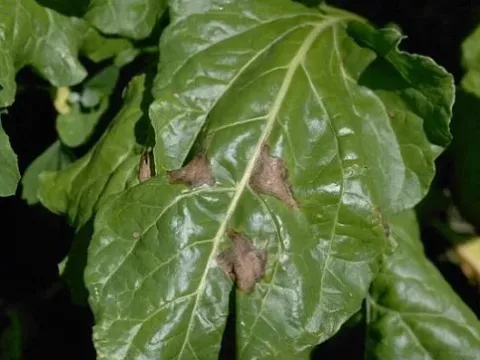
Bacterial blight of sugar beet
Saccharata
The causative agent of bacterial blight in sugar beet is a group of bacteria, primarily Erwinia betavasculorum. These pathogens are soil-borne organisms that infect the vascular system of the host plant.
What the section contains
Bacterial blight of sugar beet
The disease is characterized by the bacterial invasion of the vascular bundles. Bacteria typically gain entry into the plant tissues through wounds inflicted by soil pests or mechanical damage during cultivation.
Once inside, these microorganisms multiply rapidly within the xylem, secreting enzymes that degrade cell wall pectin. This enzymatic activity leads to the collapse of internal tissues and the development of rot.
The pathogen can persist for several seasons in crop residues left in the soil, which serves as the primary reservoir for infection in subsequent years.
The bacteria are capable of infecting various other crops, making crop rotation a critical component of disease management to prevent the buildup of the bacterial population in the field.
The first signs of bacterial blight include the wilting and yellowing of the lower leaves. If the leaf petioles are cut, brown discolorations of the vascular bundles are typically visible.
On the root surface, the disease appears as water-soaked, dark spots that eventually expand into large, decaying lesions. These infected areas often emit a foul, unpleasant odor.
Internally, the roots exhibit browning of the core and the formation of cavities filled with soft, decomposing tissue. The root's internal structure loses its density and turns mushy.
Plants affected by the disease are significantly stunted in growth and can be easily pulled from the soil due to the decay of the taproot and lateral root system.
- Wilting and chlorosis of the foliage
- Brown vascular bundles in leaf petioles
- Dark, water-soaked rot on the root surface
- Soft, mushy internal tissue decay
- Strong unpleasant odor of decaying roots
High soil and air humidity, especially during the summer, create optimal conditions for the proliferation of the bacteria. Prolonged rainfall significantly increases the rate of disease spread.
Warm temperatures further accelerate the metabolic activity of the bacteria inside the sugar beet tissues, causing the infection to move rapidly through the crop.
Insects and nematodes that feed on the roots cause mechanical wounds, which serve as the most common entry points for the bacteria to infect the healthy plant tissue.
Poorly drained fields with waterlogged soil create anaerobic conditions that inhibit root health and make the crop significantly more susceptible to bacterial invasion.
Dense plant spacing restricts air circulation and keeps the soil surface constantly moist, providing an ideal environment for the pathogen to thrive and infect neighboring plants.
Bacterial blight causes severe yield losses by directly damaging the root system and decreasing the total weight and sugar content of the harvested beets.
The infection significantly degrades the quality of the raw material, making the beets unsuitable for processing. Infected roots often lead to operational problems in sugar refineries.
During storage, even a small number of infected beets can cause massive rot in piles or storage facilities, leading to the loss of large quantities of healthy yield.
Due to the decomposition of plant tissues and potential toxicity of bacterial byproducts, infected beet roots cannot be safely utilized as animal feed.
The economic impact is profound, forcing farmers to bear the costs of field disinfection, potential loss of the entire harvest, and necessary changes to their long-term crop rotation plans.
The primary control measure is strict adherence to a long-term crop rotation schedule, allowing at least a 4-year interval before planting sugar beets again in the same field.
Managing soil-borne pests is essential; applying appropriate insecticides helps to prevent root damage, thereby closing the most common pathways for bacterial entry.
Selecting and planting resistant sugar beet varieties is a vital preventative strategy. Farmers should ensure they use high-quality, certified seeds to reduce initial disease risk.
Optimizing crop nutrition, particularly potassium fertilization, strengthens the plant's natural defenses and enhances its ability to resist and recover from infections.
Post-harvest sanitation, including deep plowing to bury crop residues, is crucial for eliminating the habitat of the pathogen and reducing the carryover of infection to the next season.