
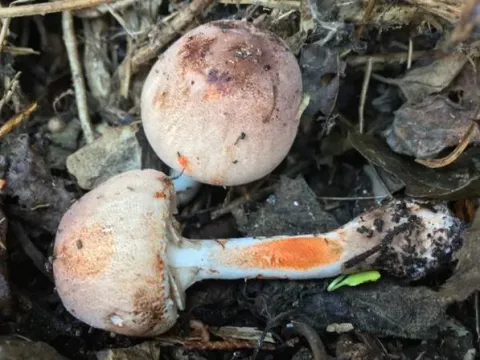
Badham's dapperling
Leucoagaricus badhamii
Leucoagaricus badhamii, commonly known as Badham's dapperling, is a basidiomycete fungus that acts as a significant competitive contaminant in mushroom cultivation.
What the section contains
Badham's dapperling
This fungus behaves as a saprotroph, opportunistically colonizing the nutrient-rich substrate intended for the commercial production of Agaricus bisporus.
The pathogen is introduced into cultivation facilities primarily through contaminated casing soil, faulty substrate sterilization processes, or poor air filtration systems.
Biologically, it is highly persistent, with spores capable of surviving in cracks and crevices of growing rooms, which makes it a challenging pest to eradicate completely.
Once established in the substrate, its rapid mycelial growth rate often outcompetes the commercial mushroom mycelium, limiting the nutrient availability for the target crop.
The most distinctive symptom of an infection is the emergence of unusual mycelial mats on the casing layer that differ in texture and density from the commercial strain.
When the fruiting bodies of Leucoagaricus badhamii are cut or bruised, they exhibit a characteristic color change, turning reddish-brown or saffron, which is a key diagnostic feature.
The mushrooms themselves have scaly caps with darker centers, making them visually distinct from the white buttons of the cultivated mushroom crop.
Infected areas of the substrate often show stunted or distorted growth of the main mushroom crop, as the competitor fungus secretes inhibitory substances.
- Reddish-brown staining upon bruising of fruiting bodies.
- Development of scaly, yellowish-brown mushroom caps.
- Inhibited development of Agaricus primordia in the affected zone.
- Dense, atypical mycelium colonizing the surface of the casing soil.
Development is favored by the high humidity and moderate temperatures that are standard in professional mushroom growing environments.
Inadequate pasteurization of the compost allows the fungus to gain an early foothold, giving it a competitive advantage over the commercial mushroom strain.
Poor ventilation leads to stagnant moisture, which provides the necessary conditions for the germination of spores and the spread of mycelial colonies.
Improper sanitation of equipment and tools used in the facility facilitates the cross-contamination between different growing rooms or batches.
Fluctuations in pH within the substrate, often caused by poorly managed composting processes, can also trigger outbreaks of this competitor species.
The primary economic impact is a reduction in the total yield of commercial mushrooms, as the competitor occupies space and consumes nutrients in the substrate.
Presence of this fungus in the beds degrades the product quality, rendering the batch unsuitable for sale due to contamination risks and aesthetic differences.
Severe infestations may necessitate the disposal of entire batches of substrate, leading to substantial financial losses for the grower.
The competitive pressure exerted by the mycelium can suppress the formation of mushroom pins, leading to uneven and reduced cropping cycles.
The requirement for additional disinfection cycles during the cleaning phase increases operational costs and reduces the efficiency of the production schedule.
Stringent thermal treatment (pasteurization) of both the substrate and the casing soil is the most effective method for preventing contamination.
Regular sanitation of the entire facility using specialized fungicides and disinfectants is crucial to maintaining a clean growing environment.
Immediate removal of any encountered fruiting bodies, along with the surrounding substrate, is necessary to minimize spore dissemination within the room.
Growers should focus on the quality of raw materials, specifically the sourcing of high-quality peat for the casing layer to prevent the introduction of pathogens.
Maintaining optimal airflow and climate control prevents the moisture accumulation that serves as a breeding ground for this competitor species.