
Description
Symptoms
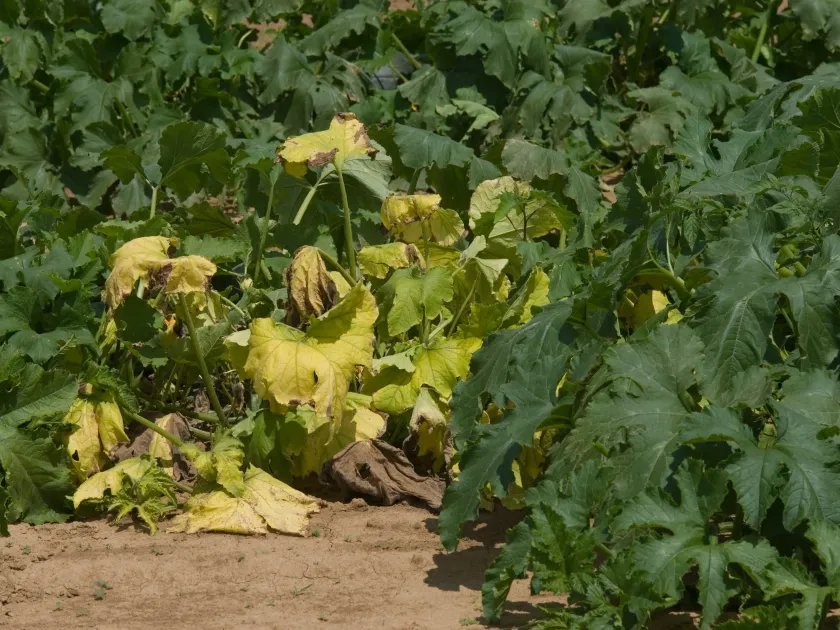
The primary symptom of the infection is the sudden loss of turgor in leaves and vines, occurring initially during the day and becoming permanent over time.
Early stages manifest as small greasy spots on the leaves, which gradually darken and eventually necrose, creating a scorched appearance.
Cutting the stem of an infected plant reveals a viscous white or cream-colored bacterial ooze, which is a key diagnostic indicator of the disease.
Vascular bundles inside the stem turn brown due to the bacterial mass clogging the xylem and preventing the normal transport of water and nutrients.
On fruits, such as watermelons, depressed spots may appear, which can develop a specific bacterial film under conditions of high humidity.
Pathogen
The causative agent of the disease is the gram-negative bacterium Serratia marcescens, belonging to the family Enterobacteriaceae.
This microorganism is characterized by high ecological flexibility and the ability to survive in soil and on plant debris for extended periods.
The bacteria invade the plant vascular system through natural openings or mechanical wounds caused by insect pests or farming practices.
By proliferating within the xylem, the pathogen disrupts plant metabolism, leading to systemic infection and the eventual death of the host plant.
While the pathogen does not strictly require a vector, insect activity significantly increases the rate of spread throughout the field.
Conditions for development
The development of Serratia marcescens is favored by high humidity, exceeding 80 percent, and moderately warm temperatures.
The optimal temperature range for rapid bacterial multiplication is between 25 and 30 degrees Celsius.
Outbreaks are more common in dense plantings where poor air circulation creates a favorable microclimate for bacterial growth.
Heavy dew, fog, or frequent overhead irrigation facilitates the movement of bacteria from the soil onto the aerial parts of the plants.
Stressed plants, suffering from nutrient deficiencies or temperature fluctuations, are significantly more susceptible to successful bacterial invasion.
Why it matters
The primary economic impact is the total death of entire plants, leading to severe reductions in total crop yield.
Infected watermelon fruits lose their marketability due to tissue breakdown and reduced sugar content, making them unfit for consumption.
The pathogen can cause post-harvest rot, leading to further losses during storage and transportation phases.
Bacterial wilt often results in significant financial losses for farmers due to the premature abandonment of affected fields.
The ability of the pathogen to persist in the environment complicates agricultural planning and requires rigorous sanitation protocols.
Protection
The most effective strategy is the use of resistant crop varieties that have genetic tolerance to bacterial pathogens.
Strict adherence to crop rotation, ensuring a gap of at least 3-4 years before planting cucurbits in the same field, is vital.
Sanitation practices, including thorough disinfection of seeds and the removal of crop residues, are essential to reduce the primary inoculum.
Effective management of insect pests, particularly aphids and beetles, is crucial to minimize the entry points for the bacteria.
- Application of copper-based bactericides for preventative treatment.
- Use of biological control agents containing beneficial bacteria.
- Balanced fertilization to maintain robust plant health and immunity.
Pathogens and affected parts
Affects crops · 1
Discussion
No discussions yet — be the first.