
Description
Symptoms
The earliest symptom of bacterial wilt is the loss of turgor in the leaves, often manifesting during the hottest parts of the day. Plants may appear to recover overnight, but this temporary state precedes permanent wilting.
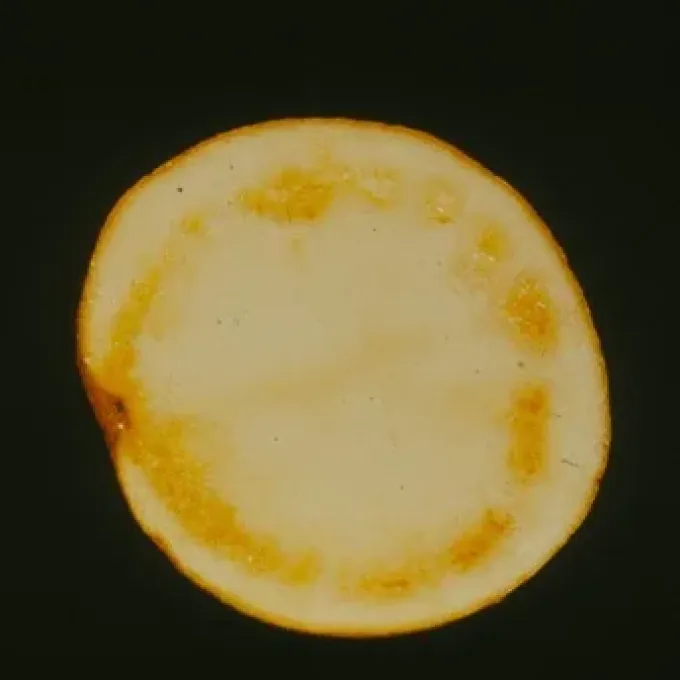
As the disease progresses, leaves begin to yellow at the margins and eventually dry out, leading to necrosis. A diagnostic feature is the browning or darkening of the vascular ring inside the stem, which can be seen upon cutting.
In the case of hop plants, symptoms include stunted growth, curling of leaves, and the premature death of bine sections. In severe cases, a foul-smelling bacterial exudate may be present in the vascular bundles.
Severe infection leads to total wilting, where the plant cannot recover even after intensive irrigation. Eventually, the root system decays, and the entire plant dies, often collapsing to the ground.
The "streaming test" is a reliable field diagnostic: placing a fresh stem cross-section in a clear glass of water often reveals a visible, cloudy stream of bacteria diffusing from the vascular bundles into the water.
Pathogen
The causative agent of bacterial wilt is bacteria from the genus Corynebacterium, which are facultative parasites. These microorganisms have the ability to persist for long periods in soil, plant debris, and infected tissues, making them difficult to eradicate.
Infection primarily occurs through wounds or natural openings in the plant's root system or stem. Once inside, the bacteria proliferate within the vascular bundles, forming biofilms and bacterial mass that obstruct the transport of water and nutrients.
During their growth, these bacteria produce phytotoxins and extracellular enzymes that break down plant cell walls. This destruction of vascular tissue leads to the characteristic wilting symptoms observed in many agricultural crops, including hops.
The spread of the pathogen is facilitated by contaminated water, soil movement, agricultural tools, and various insect vectors. Its ability to adapt to different hosts makes it a significant threat to diverse types of plantation systems.
Laboratory diagnosis often involves observing the characteristic bacterial ooze and isolating the pathogen on specific media. The genetic diversity within the genus allows some strains to maintain high virulence even under suboptimal environmental conditions.
Conditions for development
High soil moisture and temperatures between +20°C and +30°C create an ideal environment for bacterial colonization. Excess irrigation or heavy rainfall often triggers rapid outbreaks in susceptible fields.
Temperature fluctuations and environmental stress weaken the plant's defense mechanisms, making it easier for bacteria to colonize. Poor soil aeration can exacerbate the situation, promoting the growth of anaerobic microorganisms alongside the pathogen.
Physical damage to the roots caused by nematodes or soil insects provides direct entry points for the bacteria. Therefore, management of these secondary pests is crucial for preventing a primary infection of bacterial wilt.
Dense planting reduces air circulation and increases the relative humidity around the plant canopy, which favors the spread of the pathogen. Poor drainage in the field remains one of the primary drivers of localized infections.
The accumulation of inoculum in the soil is supported by monoculture farming. Continuous cropping without adequate intervals or rotation allows the pathogen population to build up to levels that cause significant economic losses.
Why it matters
The primary harm is the dramatic reduction in yield, which can lead to total crop failure. Infected plants lose their commercial value entirely, as they cannot produce healthy fruits, tubers, or hop cones.
Physiological disruption caused by the obstruction of xylem vessels leads to the starvation of the plant. This stress renders the crop highly susceptible to secondary attacks by fungi and other opportunistic pathogens.
Bacterial wilt causes significant economic strain due to the high cost of field sanitation, removal of dead plants, and the necessity of taking land out of production for rotation purposes. Farmers may face severe losses in profitability.
In hop production, the loss of mature plants is particularly damaging, as establishing a new plantation requires a substantial investment of time and capital. A widespread outbreak can reduce harvest volumes by 50% or more.
Furthermore, the persistent nature of the bacteria in the soil restricts the options for crop rotation, effectively limiting what can be grown on the infected parcel of land for several seasons thereafter.
Protection
The foundation of effective control is the use of pathogen-free, certified nursery stock. Planting resistant varieties is the most sustainable long-term solution for managing bacterial wilt in hop yards and other fields.
Strict adherence to crop rotation cycles is necessary to starve the bacterial population in the soil. Farmers should avoid planting susceptible crops in fields known to have a history of bacterial wilt for at least several years.
Regular monitoring and pest control aimed at nematodes and soil insects help reduce the number of potential infection entry points. Infected plants must be rogued and destroyed, preferably by burning, to eliminate the source of inoculum.
Disinfecting all machinery and tools used in affected areas is a mandatory practice to prevent the cross-contamination of healthy fields. Improving field drainage is also essential to reduce the risk of future outbreaks.
Balanced fertilization, particularly adequate potassium and phosphorus levels, helps strengthen plant cells and improve overall resilience. Some growers also utilize biological control agents that act as antagonists to the Corynebacterium genus.
Pathogens and affected parts
Affects crops · 1
Discussion
No discussions yet — be the first.