
Bacidiaceae lichens
Bacidiaceae
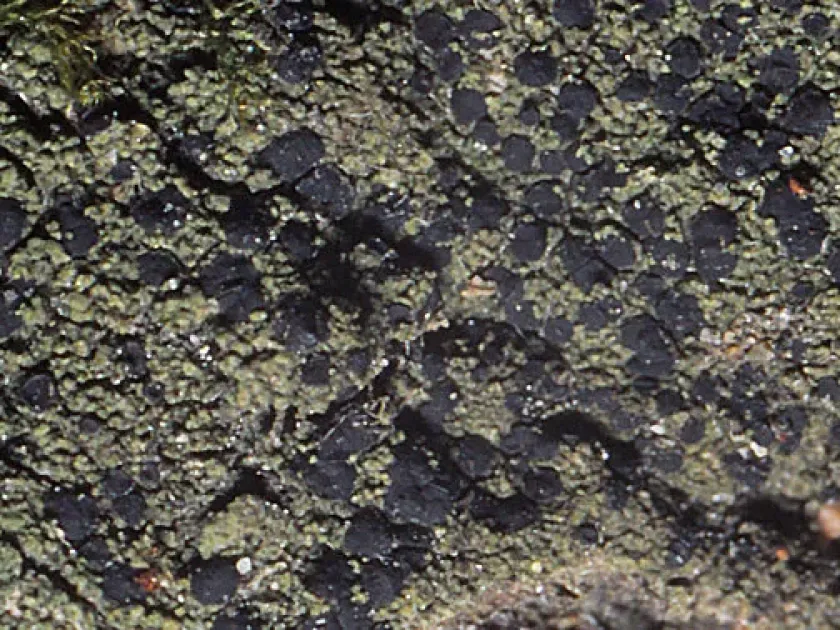
Description
Symptoms
Bacidiaceae lichens are epiphytic organisms that colonize the bark surface of trunks and scaffold branches in various woody perennial crops.
The primary symptom of their presence is the appearance of gray, greenish, or whitish patches, crusts, or scales covering the bark.
Unlike parasitic fungi, these organisms develop superficially, yet they adhere firmly to the host surface, noticeably changing the texture of the bark.
Over time, extensive lichen growth may lead to superficial cracking of the bark as the lichen thallus expands, sometimes causing localized peeling.
The color of the colonies may fluctuate based on humidity levels, appearing more vibrant and saturated during damp weather and dull during dry spells.
Pathogen
This group of organisms is not a pathogen in the traditional sense, as lichens are a symbiotic association between a fungus and algae or cyanobacteria.
Members of the Bacidiaceae family utilize the tree purely as a stable substrate for attachment and do not feed on the plant's sap.
Biologically, they are classified as epiphytes that do not penetrate living tissues, although their presence reflects the ecological conditions of the garden.
Intensive lichen development typically indicates high atmospheric humidity and a weakened immune status of the host tree itself.
Their unique biology allows these organisms to survive with minimal nutrient input by relying on photosynthesis provided by the algal component.
Conditions for development
The primary factor facilitating their distribution is high air humidity, especially in dense orchards where air circulation is restricted.
Development is encouraged by low light levels resulting from poor canopy management and the absence of regular pruning practices.
Older or stressed trees with slow bark growth rates are most frequently affected, providing a stable platform for the lichen to settle.
Frequent fog, proximity to water bodies, or excessive overhead irrigation creates the ideal moisture levels for spore germination on tree trunks.
Neglecting basic orchard maintenance and failing to perform sanitation measures provides a favorable microclimate for lichen colonization.
Why it matters
The direct harm caused by lichens is minimal, but they provide perfect shelter for overwintering pests and various fungal disease spores.
In crevices hidden by lichen thalli, scale insects, mites, and pathogen spores often thrive, making standard disinfection treatments difficult.
Excessive coverage of the trunk by lichens may inhibit normal gas exchange through the bark, potentially slowing down the tree's physiological functions.
Visual abundance of lichens serves as a secondary indicator that a tree is under physiological stress and requires professional agronomic attention.
Heavy colonization on young saplings is undesirable, as it may contribute to stunted growth and premature bark aging.
Protection
The most important protection measure is regular canopy pruning to improve airflow and increase sunlight exposure throughout the tree structure.
Mechanical removal of lichen growth from trunks and main branches using stiff brushes or scrapers helps to clear the bark surface effectively.
Applying a lime wash to trunks and main branches, often fortified with fungicides, is an effective way to eliminate and prevent lichen spores.
Preventive spraying with a copper sulfate solution (1–3%) in early spring before bud break is recommended for orchard sanitation.
It is vital to maintain overall tree vigor through proper fertilization and watering, which reinforces the tree’s natural defense mechanisms.
Discussion
No discussions yet — be the first.