
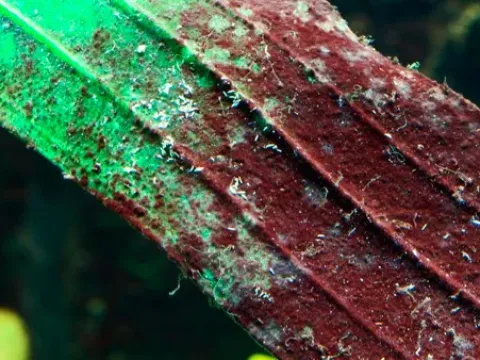
Bacillariosis
Bacillariaceae
Bacillariosis refers to bacterial diseases caused by members of the Bacillaceae family, which are rod-shaped microorganisms capable of forming highly resistant spores. These spores allow the bacteria to survive harsh environmental conditions in the soil for extended periods.
What the section contains
Bacillariosis
The infection typically enters the plant host through wounds caused by mechanical damage, weather events like hail, or insect feeding. Once inside, the bacteria migrate into the intercellular spaces, utilizing specialized enzymes to break down plant cell walls.
This process leads to the degradation of tissues, characterized as a bacterial soft rot or necrosis. The pathogen thrives by consuming nutrients released during cell wall disintegration, which allows the bacterial population to multiply rapidly within the host.
The ability of these bacteria to infect a wide variety of plant species makes them significant pathogens in agriculture. They can survive on crop debris or within the rhizosphere, acting as a constant threat to subsequent plantings.
Understanding the biological cycle of these pathogens is essential for management, as they are often capable of switching between a saprophytic lifestyle in the soil and a pathogenic phase when a host becomes available.
The initial signs of bacillariosis often manifest as water-soaked, irregular lesions on the foliage or stems. These areas quickly lose their firmness and start to darken, transitioning to a brownish or blackish color.
A hallmark of this disease is the presence of a foul-smelling, slimy exudate on the surface of infected tissues. This is a clear indicator that the plant cells are undergoing rapid enzymatic decomposition by the bacteria.
Systemic infections result in wilting that cannot be corrected by irrigation. This occurs when bacteria colonize the xylem, obstructing the transport of water and essential nutrients from the roots to the upper parts of the plant.
In advanced stages, the internal tissues of stems or fruits become mushy and disintegrated. When the tissue is cut, it often reveals a dark, disorganized interior accompanied by the characteristic unpleasant odor.
- Water-soaked lesions on leaves
- Tissue softening and discoloration
- Foul-smelling bacterial slime
- Wilting and drooping of stems
- Vascular browning and necrosis
High relative humidity and warm temperatures are the primary environmental drivers for bacillariosis. These conditions accelerate bacterial growth and facilitate the spread of the pathogen via surface water.
Mechanical damage to plant tissues, especially from insect vectors, creates ideal entry points for the bacteria. Therefore, crops that are not properly protected from pests are at a significantly higher risk of infection.
Excessive nitrogen fertilization often leads to succulent, lush growth that is physically more susceptible to bacterial penetration. Such tissue lacks the structural robustness needed to resist enzymatic attack.
Poor soil drainage and low-lying fields promote a microclimate with high moisture, which is conducive to the survival and transmission of soil-borne bacterial pathogens.
Lack of crop rotation leads to a build-up of bacterial inoculum in the soil. Without a period of interruption, the pathogen population increases to levels that make severe outbreaks almost inevitable during favorable weather.
The economic impact of bacillariosis is significant, primarily due to the speed at which it can destroy an entire crop during favorable weather conditions. The damage often renders the produce unsalable.
Infected harvested produce is highly prone to post-harvest decay. The bacteria continue to consume the tissues in storage, leading to the rapid loss of inventory and potential contamination of healthy stocks.
The disease reduces overall crop yield by damaging the plant's metabolic and transport systems. Infected plants show reduced photosynthetic efficiency, leading to stunted growth and lower fruit quality.
Early-stage infections in seedlings can result in significant stand loss, forcing farmers to replant and incurring additional labor and material costs.
Fields infested with these bacteria may suffer from long-term issues, as the pathogen persists in debris, complicating management strategies for future production cycles of susceptible crops.
The cornerstone of bacillariosis control is effective crop rotation, which breaks the survival cycle of the bacteria. Avoiding susceptible crops for several years in the same location is vital.
Sanitation practices, such as the removal and destruction of crop debris after harvest, are critical. This minimizes the amount of inoculum that remains in the field to threaten the next crop.
Integrated Pest Management (IPM) is essential to minimize insect damage, which is a major pathway for bacterial entry. Protecting plant surfaces from mechanical injury is a key prevention strategy.
Balanced fertilization, particularly maintaining adequate phosphorus and potassium levels, helps to toughen plant tissues and provides a natural barrier against bacterial invasion.
When necessary, the application of copper-based bactericides or biocontrol agents can help suppress bacterial growth; however, these are most effective when combined with robust agronomic management practices.