
Eyespot of cereals
Oculimacula acuformis
The disease is caused by the fungus Oculimacula acuformis (syn. Pseudocercosporella herpotrichoides), which specifically infects the stem bases of cereal crops.
What the section contains
Eyespot of cereals
This pathogen survives in the soil and on crop residues, maintaining its infectious potential through the production of mycelium and spores.
The fungus is known for its ability to persist in diverse environmental conditions, making it a persistent threat in regions with intensive cereal cultivation.
Infection occurs when conidia are splashed onto the lower leaves and stems of young seedlings by rain drops during damp conditions.
The mycelium colonizes the outer leaf sheaths, gradually penetrating deeper into the tissues of the stem, which causes systemic structural weakening.
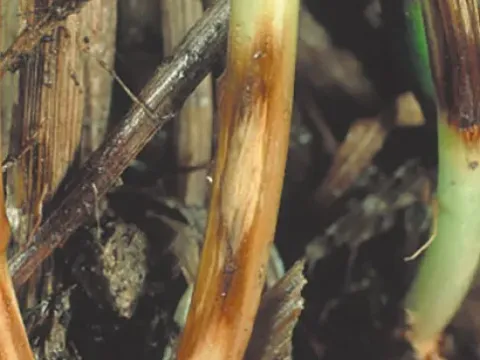
The most characteristic sign is the appearance of eye-shaped lesions on the lower leaf sheaths and the base of the stem.
These spots are typically oval with a distinct dark brown or black margin, surrounding a pale center where the fungus sporulates.
When humidity is high, a greyish, felty layer of fungal conidia may become visible on the surface of the lesions.
As the disease progresses, the base of the stem becomes brittle and necrotic, leading to the typical lodging of the crop in patches.
Severely affected plants may exhibit stunting and premature ripening, with stems snapping easily near the ground under pressure.
Eyespot development is strongly correlated with cool, wet weather, particularly during the autumn and early spring months.
Temperatures between 5 and 15 degrees Celsius are ideal for the fungal infection cycle to proceed rapidly.
High plant density and nitrogen-rich environments foster the microclimate necessary for spore spread and mycelial growth.
Continuous cropping of wheat or barley without adequate crop rotation significantly increases the inoculum levels in the soil.
Reduced tillage systems, which leave infected straw on the surface, provide a direct pathway for the fungus to reach new seedlings.
The primary damage caused by eyespot is the physical weakening of the stem, which makes crops highly susceptible to lodging.
The disruption of the vascular tissues prevents the translocation of essential nutrients and water to the developing grain heads.
This physiological restriction results in shrivelled grain, reduced test weight, and significant overall yield loss.
In severe infestation cases, crops may lodge before harvest, making mechanized gathering impossible and resulting in total loss of affected areas.
Beyond yield quantity, the grain quality is negatively impacted, often making the harvest unsuitable for milling or seed production.
The most effective strategy for managing eyespot is the implementation of a proper crop rotation that breaks the infection cycle.
Ploughing and deep incorporation of infected crop residues can significantly reduce the amount of primary inoculum available to infect the next crop.
Fungicide application during the early spring, specifically targeting the tillering to stem elongation phase, is essential in high-risk scenarios.
- Selection of cereal cultivars with genetic resistance or tolerance to Oculimacula species.
- Delayed sowing of winter cereals to minimize the duration of the infection window in autumn.
- Balanced fertilization to prevent excessive canopy growth and high humidity within the crop.
Constant field monitoring and the use of integrated pest management practices help minimize reliance on chemicals and ensure sustainable crop protection.