
Fabraea
Fabraea
The causative agent of the disease is the ascomycete fungus Fabraea maculata (the teleomorph stage is Diplocarpon mespili). It is a specialized pathogen that affects various members of the Rosaceae family.
What the section contains
Fabraea
The fungus overwinters in fallen infected leaves, where it develops apothecia. During wet spring conditions, spores are released, which initiate the primary infection on young plant tissues.
The pathogen is highly persistent and can survive in the soil and on plant debris for extended periods, waiting for favorable environmental conditions to emerge.
The fungus attacks the epidermal cells of leaves and fruit, disrupting the plant's metabolic processes and significantly hindering photosynthesis.
One of the most challenging biological aspects is the latent period of the infection, which often masks the disease until significant tissue damage has already occurred.
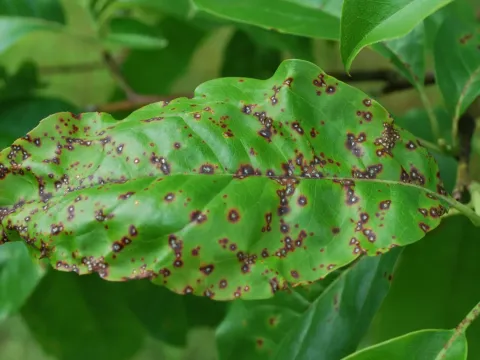
The initial symptoms are small, circular reddish-brown or purple spots appearing on the upper surface of the leaves.
As the infection progresses, these spots enlarge, turn darker, and may merge into larger necrotic areas, leading to premature leaf chlorosis and leaf drop.
On the fruit, the disease manifests as distinct black, slightly sunken spots that may cause the skin to crack and the fruit to rot prematurely.
Under humid conditions, small cream-colored or light-colored pustules, representing the fungal fruiting bodies, may become visible on the surface of the lesions.
Young shoots can also be affected, developing longitudinal dark ulcers that distort growth and make the branches more vulnerable to other pathogens.
Fabraea development is highly favored by prolonged periods of high humidity, frequent rainfall, and fog during the spring and summer seasons.
The optimal temperature for fungal sporulation and infection typically ranges from 15 to 22 degrees Celsius.
Orchards with dense planting, poor canopy aeration, and unremoved plant debris provide an ideal microclimate for the rapid spread of the fungus.
Stressed trees, particularly those suffering from poor nutrition or prior pest damage, are much more susceptible to the infection compared to vigorous, healthy trees.
In seasons with exceptionally high rainfall, the disease can reach epidemic proportions, causing significant damage throughout the entire orchard.
The primary damage caused by Fabraea is premature defoliation, which severely weakens the trees and reduces their carbohydrate reserves for the following winter.
Fruit damage leads to a significant decrease in crop quality and marketability, often resulting in complete loss of harvest for commercial growers.
Chronic infections year after year cause a progressive decline in tree vigor, reduced annual growth, and lower overall long-term productivity.
In severe cases, the disease leads to twig dieback, which necessitates extensive pruning and can result in the loss of major branches or whole trees.
The economic impact includes the direct cost of chemical treatments, harvest losses, and the labor-intensive requirements for maintaining orchard sanitation.
Effective management begins with rigorous orchard sanitation, specifically the collection and destruction of all fallen leaves to reduce the primary inoculum source.
Pruning to improve light penetration and airflow within the tree canopy is essential for reducing the humidity levels that favor fungal growth.
Fungicide applications, particularly those using copper-based products or systemic fungicides, should be timed according to weather forecasts and risk assessment.
Maintaining optimal tree health through balanced fertilization and proper water management strengthens the plant's natural defense mechanisms against the infection.
- Remove and burn infected leaves.
- Improve orchard ventilation.
- Apply preventive fungicide sprays.