
Description
Symptoms
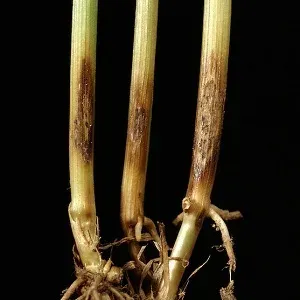
Initial visual signs of the disease appear during the tillering phase as oval spots on the lower leaf sheaths. Inside these spots, a dark fungal mycelial layer forms over time.
The most characteristic symptom, known as "eyespot," appears on stems directly above the tillering node. The spots have a light center and a dark border.
As the disease progresses, the infected tissues soften, the stem loses structural integrity, and susceptibility to lodging increases. Necrosis is often observed on affected stems, disrupting vascular conductivity.
Affected plants often appear stunted, lag in growth, and form less productive ears. Under conditions of severe infestation, premature death of individual tillers is possible.
Diagnosis of the disease requires careful inspection of the stem base, as other root rots may have similar symptoms. When cutting the stem, a grey fungal layer is often visible.
Pathogen
The causal agent of eyespot disease is the specialized fungus Pseudocercosporella herpotrichoides. This pathogen primarily affects the lower part of the stem in cereal crops.
The fungus belongs to the class of deuteromycetes and survives in soil, crop residues, and on winter crop seedlings. The main source of infection is the infested stubble of the previous crop.
The fungal mycelium is capable of withstanding low temperatures, allowing it to successfully overwinter in plant tissues. In the spring, the fungus produces conidia, which are spread by rain splashes.
The disease affects a wide range of cereal crops. In agronomic practice, winter wheat is most frequently affected, but rye is also susceptible to significant infestation.
The infection penetrates plant tissues through leaf sheaths, gradually growing deeper towards the tillering node. Consistent destruction of tissues leads to the disruption of nutrient transport to the entire above-ground part of the plant.
Conditions for development
Cool and moist weather during autumn and spring promotes fungal development. Optimal temperatures for active infection range from +5 to +15 degrees Celsius.
Prolonged periods of high air and soil humidity create an ideal microclimate for spore reproduction. Dense crops, where air circulation is restricted, suffer more from the disease.
Frequent rainfall during the spring helps transfer the infection from lower levels to the upper parts of the stem. Rain splashes carry conidia to neighboring plants within the field.
Excessive nitrogen fertilization, which triggers rapid vegetative growth, can also contribute to the epiphytotic development of the disease. Dense vegetation retains moisture for longer periods.
Minimum tillage practices, where a large amount of infected crop residue remains on the surface, increase the risk of massive crop infestation in the following season.
Why it matters
The damage caused by eyespot disease lies in the significant reduction of grain mass and quality. The infection prevents normal ear filling due to the damage to the conductive system.
The main consequence of the disease is massive lodging of crops before harvest. This complicates the use of machinery and leads to enormous yield losses at the maturation stage.
Infected plants become more vulnerable to other diseases and the impact of unfavorable weather factors. Overall field productivity can decrease by 15 to 30 percent.
Intensive infestation results in crop thinning. This provides a competitive advantage to weeds, further reducing the overall profitability of crop cultivation.
Loss of grain quality is expressed in lower test weight, vitreousness, and seed germination. Seed material collected from diseased fields requires thorough fungicidal treatment.
Protection
The primary method of protection is crop rotation, returning cereal crops to the same field no sooner than after two or three years. This breaks the life cycle of the fungus.
Agronomic measures include deep plowing of crop residues into the soil, which accelerates their decomposition and the death of fungal spores. It is important to avoid excessive crop density.
The use of chemical plant protection products, such as systemic fungicides, must be conducted strictly during periods when the risk of infection is highest (tillering phase).
- Use of resistant cereal varieties.
- High-quality seed treatment before sowing.
- Optimization of nitrogen fertilizer doses.
- Timely weed control, as weeds can act as reservoirs for infection.
Monitoring the phytosanitary status of crops at the beginning of the growing season allows for timely decisions regarding treatment. Ignoring control measures leads to the accumulation of infection in the soil.
Pathogens and affected parts
Affects crops · 1
Discussion
No discussions yet — be the first.