
Eyespot of corn
Aureobasidium zeae
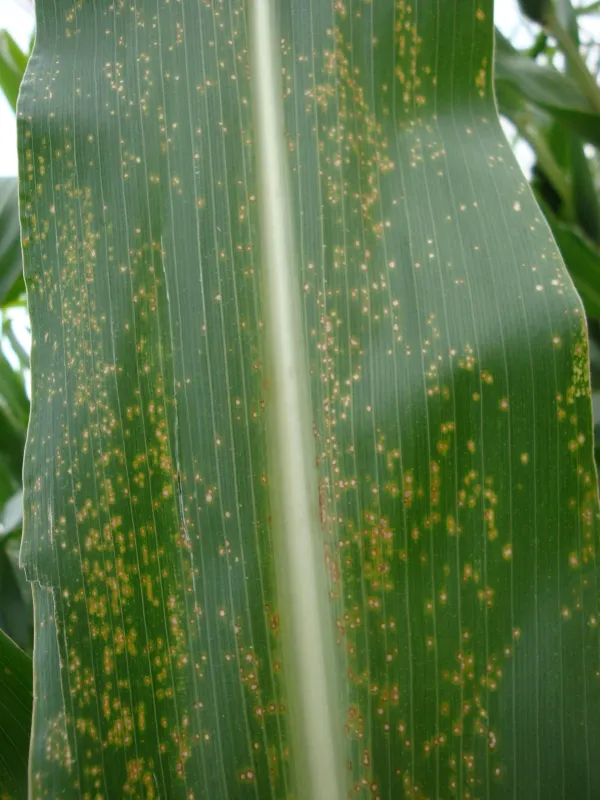
Description
Symptoms
The disease is characterized by small, circular to oval lesions that resemble an eye, featuring a light-colored center surrounded by a dark border.
Initially, the spots are very small, but they enlarge rapidly under favorable conditions, often merging into larger necrotic areas on the leaf blade.
The dark border of the spots can range from dark brown to purple, creating a distinct visual contrast against the healthy green leaf tissue.
Symptoms typically appear first on the lower leaves of the plant and progress upwards as the season advances toward the silking stage.
In severe cases, the lesions may appear on the husks of the ears, which can affect the quality and appearance of the harvest.
Pathogen
The causal agent of eyespot is the fungus Aureobasidium zeae, which primarily infects the leaves of corn plants during the growing season.
The fungus overwinters in infested corn debris left on the soil surface, providing a continuous source of inoculum for subsequent seasons.
Infection occurs when conidia are splashed by rain or carried by wind onto susceptible leaf tissues. The pathogen thrives under moderate temperatures and high humidity.
The infection process involves the penetration of fungal hyphae through the epidermis, leading to the formation of characteristic necrotic spots.
The fungus is highly specialized, and its survival strategy depends on the persistence of crop residues in the field.
Conditions for development
Eyespot development is strongly favored by cool, wet weather conditions, particularly during the vegetative stages of corn growth.
Optimum temperatures for the fungus to infect and colonize corn leaves fall within the 15 to 20 degrees Celsius range.
Continuous corn cropping without rotation provides a favorable environment for the pathogen to multiply and spread across the field.
High humidity and dew are critical for the germination of fungal spores, making low-lying areas of the field more prone to severe outbreaks.
Poor air circulation within dense canopies helps maintain the moist microclimate necessary for the pathogen to thrive and propagate.
Why it matters
The primary impact of eyespot is the reduction of the photosynthetic leaf area, which limits the plant's ability to produce energy for grain filling.
Significant infestations lead to lower grain yields and reduced kernel weight, impacting the overall profitability of the corn crop.
Weakened plants are more susceptible to lodging and secondary infections by opportunistic pathogens, further compromising harvest operations.
The disease can significantly decrease the nutritive value of the fodder, causing economic losses in livestock-oriented farming systems.
In years with prolonged cool and wet springs, the potential for yield loss can be significant, especially in highly susceptible corn varieties.
Protection
Crop rotation is the most effective cultural practice to manage eyespot by breaking the infection cycle and reducing the fungal inoculum.
Tillage practices that incorporate corn residues deep into the soil help decompose the debris faster, effectively reducing the source of the disease.
Planting resistant or tolerant corn hybrids is the primary method for long-term management and prevention of the disease in high-risk areas.
Fungicide applications are recommended only when environmental conditions are conducive to disease spread and the risk of yield loss is high.
- Implementing a 2-3 year crop rotation.
- Managing crop residues through deep tillage.
- Selecting hybrids with high disease resistance.
- Monitoring weather patterns and field history.
- Avoiding excessive plant density in fields.
Discussion
No discussions yet — be the first.