
Eyespot
Cercosporella
Eyespot is a fungal disease caused by the pathogen Pseudocercosporella herpotrichoides (often referred to as Cercosporella herpotrichoides). This fungus primarily attacks the stem base of cereal crops such as wheat, barley, and rye.
What the section contains
Eyespot
The fungus survives on infected crop residues and in the soil for several years. Its ability to persist in debris makes it a persistent threat in fields where intensive cereal production is practiced over multiple seasons.
In spring, the fungus produces conidia, which are disseminated by rain splash and wind. These spores land on the lower parts of stems, initiating the infection cycle as they penetrate the leaf sheaths near the soil surface.
The development of the pathogen is strongly influenced by cool, wet weather. It continues to grow and multiply during the winter and early spring, making it particularly damaging to winter-sown cereals.
The fungal hyphae slowly colonize the stem tissue, causing structural damage. By weakening the mechanical integrity of the stem base, the fungus prepares the ground for severe lodging later in the growing season.
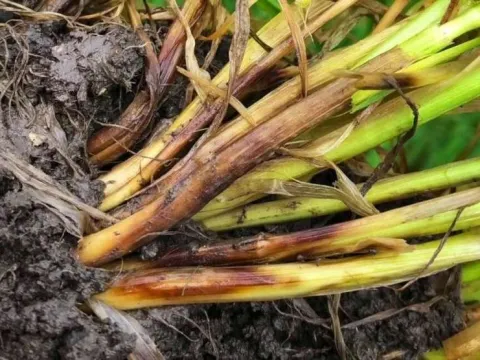
The most distinctive symptom is the appearance of oval-shaped spots on the stem base, which look remarkably like an eye, giving the disease its common name. These spots often feature a light center with a dark margin.
As the infection advances, the lesions enlarge and can eventually encircle the stem, creating a necrotic area. In humid conditions, a greyish mould may be visible within the lesion, representing the fungal sporulation.
The structural damage caused by the fungus makes the stem brittle. As a result, the stems often twist and collapse in a disorganized manner, which is a major indicator of severe infection in a cereal field.
Plants affected by eyespot often exhibit uneven growth, with many stems failing to produce a full head. The disruption of nutrient and water flow leads to premature yellowing of leaves and overall plant stunting.
Unlike other forms of lodging caused by wind or rain, eyespot-induced lodging typically occurs as a tangle of stems. Close inspection of these stems reveals the characteristic eyespot lesions near the root zone.
Eyespot thrives in cool and damp conditions. The fungus is most active when temperatures range between +5 and +15 degrees Celsius, which is common in many cereal-growing regions during spring.
High planting density is a major risk factor. Dense canopies trap moisture near the ground, creating a microclimate with high relative humidity that is perfect for the germination and spread of fungal spores.
Soil type also plays a role in disease prevalence. Heavy, poorly drained soils are more conducive to the development of eyespot, as they maintain high surface moisture levels for extended periods.
Frequent rainfall events are essential for the splash dispersal of the pathogen's spores. When heavy rain occurs during the tillering stage, the risk of significant infection in the stem base increases dramatically.
Short rotations, especially continuous wheat cropping, increase the inoculum level in the soil. Without a break in the host crop, the pathogen population remains high, leading to recurring outbreaks.
The primary economic impact of eyespot is yield reduction caused by the lodging of the crop and poor grain filling. The damaged vascular system prevents the transport of necessary nutrients to the spike.
Lodging caused by eyespot makes harvesting extremely difficult and slow. Even with modern equipment, farmers may face significant grain losses because the lodged crop cannot be easily picked up.
Severe infestations can lead to a considerable decrease in grain quality. Shrunken kernels have lower thousand-grain weight and reduced test weight, affecting their market value and milling potential.
Yield losses from eyespot can range from 10% to 30%, or even higher in favorable years. These losses occur not only through direct reduction in weight but also through increased susceptibility to other pathogens.
The disease weakens the host plant, leaving it vulnerable to invasion by secondary pathogens such as Fusarium or other root rots, which further complicate the health status of the crop.
Effective management starts with crop rotation. Introducing broad-leaved crops or non-host cereals into the rotation helps to reduce the inoculum level in the field significantly.
Choosing resistant or tolerant varieties is the most sustainable approach. Modern breeding programs have developed wheat varieties with high levels of natural resistance to eyespot.
Appropriate agronomic practices, such as optimizing seeding rates, are crucial. Lower seeding rates improve air circulation in the lower canopy, reducing the humidity that the fungus requires to develop.
Fungicide application during the tillering stage is a standard practice in regions with high disease pressure. Applying systemic fungicides can protect the stem base from early infections.
Effective management of crop residues through tillage can also help. Burying infected straw deep in the soil accelerates its decomposition, thereby reducing the survival rate of the fungal pathogen.