
Fairy fingers
Clavaria fragilis
Description
Symptoms
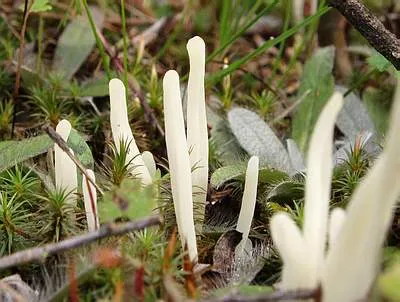
Clavaria fragilis, commonly known as fairy fingers, appears as thin, brittle, white or yellow finger-like structures emerging from the soil.
These fruiting bodies often grow in clusters within grass, reaching heights of 5 to 10 centimeters during the peak of their growing season.
The fungus is characterized by its fragile texture, which easily breaks if handled or disturbed during routine lawn maintenance or mowing.
It lacks a traditional cap, appearing instead as simple or slightly branched spikes that grow directly from the root zone of lawn grasses.
Sightings of these fungi are common in shaded, damp areas of gardens where the soil environment is rich in decaying organic matter.
Pathogen
The fungus is classified as a saprotroph, meaning it feeds exclusively on dead organic material and is not a parasite of living plant tissues.
As a saprophytic organism, it plays a beneficial role in the ecosystem by decomposing leaf litter and plant debris into essential soil nutrients.
It is not considered a plant pathogen, and its presence does not lead to the infectious diseases that typically threaten crops or garden plants.
The mycelium develops beneath the surface, interacting with the soil profile to break down complex organic compounds into simpler forms.
Understanding its biology reveals that it is a sign of a biologically active soil rather than an indicator of a diseased or dying plant community.
Conditions for development
Development of Clavaria fragilis is highly dependent on environmental humidity, with fruiting bodies emerging after periods of heavy rainfall.
Shady areas with poor air circulation provide the stable, moist conditions necessary for the rapid expansion of fungal colonies in the grass.
Cooler temperatures, typically ranging from 15 to 22 degrees Celsius, are ideal for the rapid growth and emergence of the fungal spikes.
Thick layers of lawn thatch provide an excellent food source and moisture-retentive substrate that encourages the spread of the fungus.
Soil composition, specifically high levels of organic matter and poor drainage, creates a perfect habitat for this saprophytic organism to thrive.
Why it matters
The fungus poses no direct threat to the health or vitality of lawns, garden flowers, or agricultural crops in the vicinity.
The primary concern is aesthetic, as the sudden appearance of white clusters can disrupt the uniform look of a well-manicured lawn or sports pitch.
While harmless, its presence can serve as a diagnostic indicator of excessive soil moisture or an accumulation of thatch that requires management.
No instances of nutrient competition or root damage have been documented, as the fungus does not interact with the living roots of grass.
Management is purely voluntary and based on personal preference regarding the cleanliness of the garden environment and landscape visual quality.
Protection
Effective control involves cultural practices such as regular aeration and scarification, which improve soil drainage and reduce thatch buildup.
Proper irrigation management is essential to ensure that the soil surface dries out adequately between watering sessions to discourage fungal growth.
Removing plant debris and clippings from the lawn reduces the available organic food supply, naturally limiting the fungal population.
Improving light penetration through strategic pruning can also help dry out shaded areas that are prone to hosting fungal colonies.
- Aerate the lawn to reduce compaction.
- Scarify to remove thatch and debris.
- Maintain a balanced irrigation schedule.
Discussion
No discussions yet — be the first.