
Spathularia
Spathularia
Description
Symptoms
The first sign of the fungus is the formation of characteristic fruit bodies on the soil surface under the forest canopy. They are most commonly found near the base of trunks or on decaying coniferous litter.
Affected needles or small twigs often show signs of premature yellowing and shedding when the fungus actively impacts the plant. Thin, web-like mycelial threads may also be observed on the bark in infected zones.
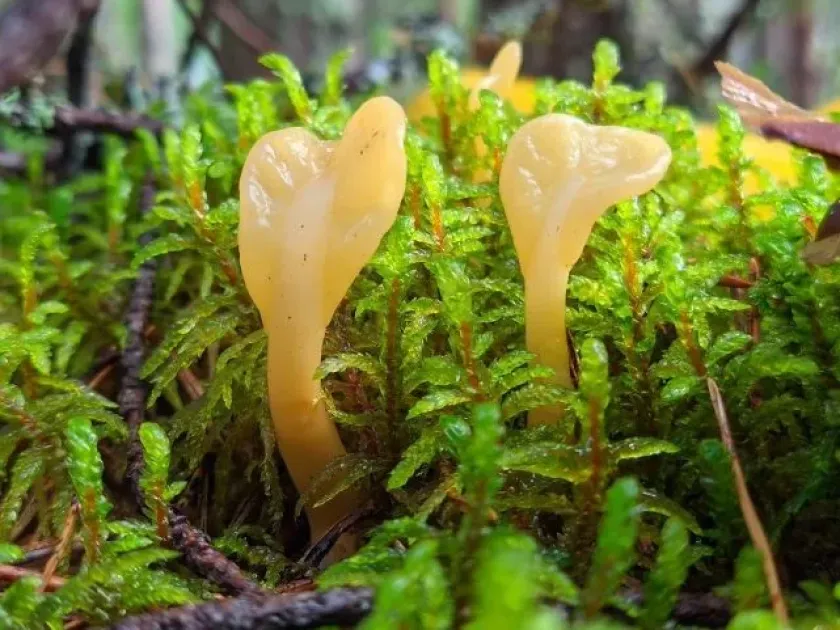
Visually, the fruit body resembles a tiny spatula or fan raised above the soil. Their colors range from light yellow to ochre, making them easily distinguishable against the dark forest floor background.
Trees affected at the root level often show signs of general decline: reduced annual growth, thinning crowns, and chlorosis of the needles. These symptoms frequently accompany fungal invasions in high-humidity conditions.
In severe cases, a large cluster of apothecia may appear around the tree base, indicating a high level of fungal infestation in the surrounding soil environment.
Pathogen
Spathularia is a genus of ascomycetous fungi belonging to the order Helotiales. In forestry, while primarily recognized as saprotrophs, some species can exhibit parasitic behavior, affecting weakened coniferous trees and shrubs.
The pathogen spreads mainly through spores dispersed by wind or rain splashes. The fungal mycelium develops within the forest floor or on roots, gradually invading the weakened tissues of the host plant.
The biology of this fungus is closely tied to the presence of organic debris in the soil. It possesses powerful enzymatic systems that allow it to break down complex polymers, facilitating its survival in various forest ecosystems.
The life cycle includes both sexual and asexual reproduction stages. The primary reproductive structure is the apothecium, which appears as a spatula-shaped or fan-like fruit body, typically yellow or cream in color.
The taxonomy of this genus is frequently revised by mycologists due to significant morphological variability based on environmental conditions. Proper identification is crucial to distinguish it from other soil-dwelling discomycetes.
Conditions for development
Optimal conditions for mass development of the fungus are prolonged wet periods during the summer and autumn months. It prefers loose, humus-rich soils with high moisture content.
Temperatures ranging from +15 to +22 degrees Celsius favor rapid growth of fruit bodies. Sharp temperature fluctuations and drought conditions significantly hinder the development of active mycelium.
The presence of a dense layer of coniferous litter is a primary factor for the accumulation of infectious inoculum. The fungus uses organic substrates for primary feeding before transitioning to parasitic activity.
Densely planted forests, where air circulation and light penetration are poor, create an ideal microclimate for the propagation of Spathularia, as high humidity is maintained for extended periods.
Poorly drained areas also contribute to water stagnation, which directly promotes the activation of pathogens in the root zone of coniferous trees.
Why it matters
The harmfulness of the fungus lies in its disruption of the tree's metabolic processes through damage to fine root endings. Weakened plants become significantly more susceptible to secondary pests and pathogens.
When young seedlings are infected, the fungus can cause bark necrosis, leading to the gradual drying and death of the entire plant, which poses a significant threat to forest nurseries.
The accumulation of fungal biomass alters the structure of the forest soil, hindering the efficient uptake of essential nutrients by the tree's root system over time.
While Spathularia is not typically classified as a major epidemic pathogen, its presence correlates with a long-term reduction in the biological resilience of conifer stands.
In forest management, the appearance of this fungus serves as an indicator that sanitation measures are needed. Ignoring such signs can lead to the gradual degradation of valuable forest patches.
Protection
The primary control measure is strict adherence to forest nursery management standards, including ensuring proper soil drainage and maintaining correct irrigation schedules.
Timely removal of forest litter and infected tree specimens, which serve as reservoirs for spore accumulation, is highly recommended to mitigate the risk of spread.
The use of broad-spectrum fungicides is justified only in cases of severe seedling infestation in nurseries. It is essential to rotate products to prevent the development of fungal resistance.
Preventive soil treatment before planting seedlings can significantly decrease the likelihood of fungal infections. Biological products based on antagonistic fungi are also highly effective.
- Regular soil aeration;
- Removal of infected plant residues;
- Maintaining optimal planting density;
- Professional application of fungicides when necessary.
Discussion
No discussions yet — be the first.