
Spathiphyllum Calonectria root rot
Calonectria spathiphylli
Description
Symptoms
The initial symptom of this infection is the sudden yellowing (chlorosis) of the lower leaves, followed by a rapid loss of turgor. Affected plants appear wilted despite the soil being moist, as the roots can no longer transport water upward.
Brown, necrotic streaks and lesions eventually appear on the petioles and at the base of the stems. As the infection progresses, these tissues turn mushy and dark, eventually leading to the collapse of the entire leaf structure.
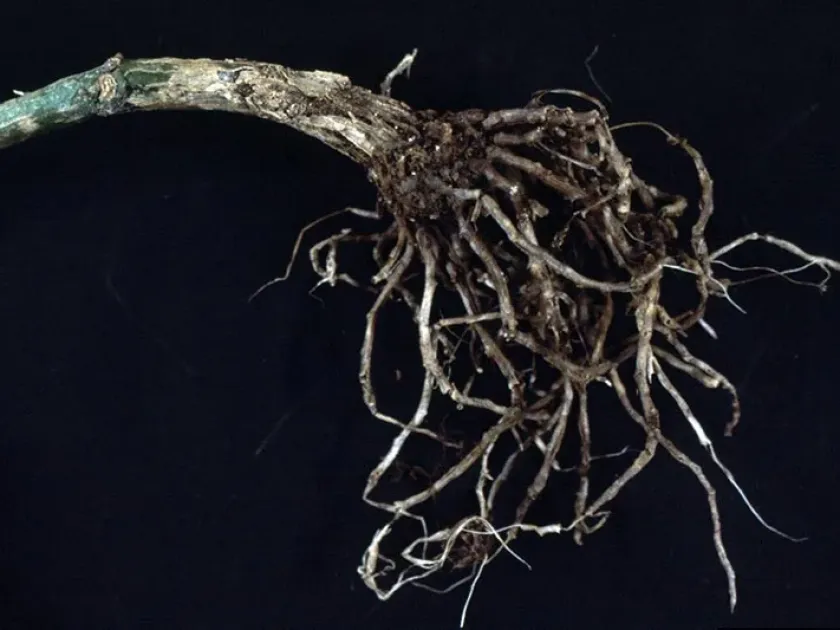
When inspecting the root system, one will observe extensive brown discoloration and decay. The roots become fragile, slough off easily, and fail to provide the necessary support or nutrition to the canopy of the plant.
In high-humidity environments, a thin, white, or grayish fungal growth—representing the spore-bearing structures—may become visible on the stems or near the soil line.
- Chlorosis (yellowing) of lower leaves.
- Sudden wilting despite adequate soil moisture.
- Dark necrotic lesions on stems and petioles.
- Root system disintegration and browning.
- Rapid, irreversible plant decline.
Pathogen
The disease is caused by the pathogenic fungus Calonectria spathiphylli (formerly identified as Cylindrocladium spathiphylli). This soil-borne pathogen is specifically adapted to infect the roots and crown of Spathiphyllum species, causing severe vascular damage.
The fungus survives in the growing medium for extended periods through the production of micro-sclerotia, which are highly resistant to environmental stressors. It is easily spread via contaminated water, infected plant stock, or dirty nursery equipment.
Its infection cycle involves the rapid production of conidia, which are dispersed primarily by water splashes during irrigation. Once these spores land on susceptible root tissue, the fungus quickly penetrates and colonizes the plant's vascular system.
The development of Calonectria spathiphylli effectively blocks the transport of water and nutrients throughout the plant. This vascular collapse is the primary driver of the rapid wilting symptoms observed in infected plants.
This pathogen is widely recognized in professional ornamental horticulture as one of the most destructive threats to mass-produced Spathiphyllum, requiring stringent management protocols.
Conditions for development
Calonectria spathiphylli thrives in warm growing conditions, with an optimal temperature range for infection between 25°C and 30°C. These temperatures are commonly maintained in industrial greenhouses.
Excessive soil moisture and poor drainage create the ideal environment for the pathogen to thrive. Waterlogged conditions are the primary driver for the rapid movement of spores between individual plants.
High plant density and inadequate air circulation create a localized microclimate that promotes fungal growth. When air movement is restricted, the foliage stays damp for longer, increasing the risk of secondary infections.
Over-fertilization with nitrogen can make the plant tissues softer and more succulent, providing an easier entry point for the fungal mycelium. Weakened or stressed plants are significantly more susceptible to infection.
Good nursery hygiene, including the consistent sterilization of pots, tools, and work benches, is essential to prevent the fungus from gaining a foothold in the production area.
Why it matters
The economic impact of this disease is severe, as it can decimate entire production lots of Spathiphyllum. Because the pathogen is systemic, individual plants are rarely recoverable once symptoms appear.
The persistent nature of the fungus in the potting medium means that any substrate used for infected plants becomes a source of inoculum. This necessitates costly disposal or thorough sterilization of all potting materials.
The disease reduces the ornamental value of surviving plants, making them unsuitable for retail. Even if a plant survives, it remains stunted and carries a high risk of spreading the pathogen to other healthy stock.
Outbreaks of Calonectria lead to increased labor costs for monitoring, quarantine, and sanitization. The financial loss is compounded by the need for preventive chemical treatments across all remaining stock.
In retail and home environments, the presence of this fungus is often overlooked until the plant is beyond saving, highlighting the need for preventative nursery-level control.
Protection
The most effective strategy is the use of high-quality, pathogen-free growing media and certified clean starting material. Strictly preventing cross-contamination from infected plants is the primary line of defense.
Systemic fungicides containing active ingredients such as thiophanate-methyl or metalaxyl are often used as a preventative measure in greenhouse production to suppress Calonectria development.
Early detection and prompt isolation of symptomatic plants are critical. Infested pots must be discarded immediately, and surrounding plants should be treated to prevent further spread.
Biological control agents, such as Trichoderma species, have proven effective in some settings by colonizing the rhizosphere and preventing pathogenic fungi from establishing their colonies.
Maintaining proper irrigation practices, ensuring excellent drainage, and promoting adequate airflow are fundamental cultural practices to minimize the favorable conditions required for the disease to thrive.
Discussion
No discussions yet — be the first.