
Anomalous webcap
Cortinarius anomalus
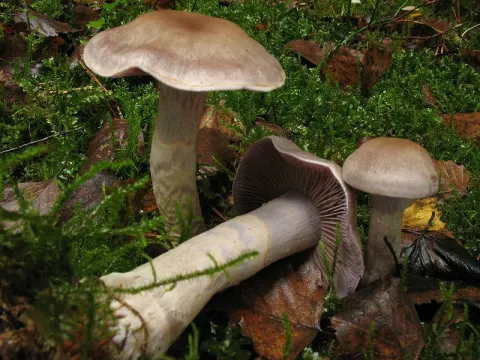
The anomalous webcap (Cortinarius anomalus) is a gilled mushroom in the Cortinariaceae family, characterized by a cap that measures between 3 and 8 cm in diameter.
What the section contains
Anomalous webcap
The cap often exhibits a brownish or grayish hue with a distinctive violet tint, especially noticeable in younger specimens before the cap fully expands and flattens.
The gills are initially a vibrant purple color, transitioning to a rusty-brown shade as the spores mature and deposit upon the gill surfaces.
The stem is typically cylindrical, featuring a bulbous base and often showing remnants of a cobweb-like veil that leaves faint, yellowish or brownish rings.
The flesh is generally light-colored, lacking any distinct or pungent odor, and possesses a mild taste, which helps distinguish it from other potentially toxic species in the genus.
It is crucial to clarify that the anomalous webcap is not a plant pathogen; it does not cause diseases in crops or forestry trees under typical conditions.
This fungus is a well-known mycorrhizal associate that establishes symbiotic relationships with the root systems of various woody species, including deciduous and coniferous trees.
By forming ectomycorrhizal structures, the fungus acts as an extension of the tree's root system, significantly enhancing the uptake of water and essential nutrients.
The fungus provides the host plant with minerals obtained from the soil, receiving photosynthetically derived sugars from the tree in a mutualistic exchange.
Consequently, the presence of this fungus is considered a sign of a healthy, functioning forest ecosystem rather than a symptom of a pathological issue.
The development of Cortinarius anomalus is dependent on the presence of suitable host trees, such as spruce, pine, or beech, which are essential for its life cycle.
The fungus thrives in acidic, moist forest soils rich in organic litter, where it can easily extend its mycelial network within the soil horizon.
Fruiting typically occurs during the late summer and autumn months, triggered by periods of increased rainfall and stable moderate temperatures.
Environmental stability, particularly the maintenance of a consistent moisture level in the leaf litter, is a vital factor for the production of sporocarps.
Any disruption to the soil layer, such as compaction or severe pollution, can hinder the growth of the fungus and interrupt the mycorrhizal association.
The anomalous webcap is not considered harmful; it does not degrade plant tissue or promote any form of plant disease in agricultural or forestry contexts.
On the contrary, it is an essential component of the rhizosphere, supporting the long-term survival and vigor of forest ecosystems and commercial timber stands.
There is no economic damage associated with this species; in fact, its presence is often encouraged in reforestation projects to promote faster tree growth.
Incorrect labeling of this fungus as a plant disease can lead to unnecessary interventions that would ultimately damage the symbiotic networks in the soil.
By protecting such fungi, land managers ensure that the natural balance and soil fertility are maintained without the need for additional chemical inputs.
As this species is not a disease-causing organism, there is no requirement for control measures, pesticides, or any form of eradication in forest management.
Management practices should prioritize the preservation of soil structure and the protection of natural mycorrhizal communities to ensure tree health.
The use of broad-spectrum fungicides should be avoided in sensitive forest areas to prevent the unintentional elimination of these beneficial fungal partners.
Monitoring the diversity of mycorrhizal fungi is a recommended practice to assess the ecological health and resilience of forested landscapes over time.
No agricultural intervention is needed regarding this fungus, as it is a natural and beneficial resident of healthy woodland environments.