
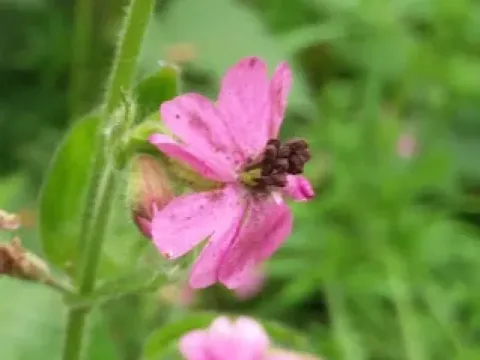
Anther smut
Microbotryum lychnidis-dioicae
The causal agent of this disease is the basidiomycete fungus Microbotryum lychnidis-dioicae. It is a highly specialized parasite that exclusively targets members of the Caryophyllaceae family.
What the section contains
Anther smut
This fungus exhibits systemic growth within the host plant, permeating stems and leaves. In perennial plants, the mycelium persists within the crown and rhizomes, overwintering successfully until the next growing season.
During the flowering stage, the fungus invades the anthers, replacing the plant's pollen with its own dark, powdery teliospores. This process is a classic biological example of pathogen-induced sterilization.
The fungus effectively manipulates the host to facilitate its own transmission. By forcing the plant to produce spores instead of pollen, it ensures that pollinators visiting the flower will carry the inoculum to other healthy hosts.
The lifecycle is tightly synchronized with the flowering phenology of the host, allowing the pathogen to maximize its dispersal efficiency across the plant population.
The primary symptom is the presence of a dusty, purple-brown mass of spores inside the anthers. Instead of normal yellow pollen, the flower appears to be filled with fine soot-like material.
Infected plants often show floral abnormalities, such as petal discoloration or distorted reproductive structures. The disease may cause a change in the sex expression of the flowers.
A hallmark of the infection is total seed set failure. Since the fungus consumes the floral tissues, the plant becomes incapable of producing fruit or viable seeds, impacting its reproductive success.
In many cases, the external morphology of the plant, such as height and leaf appearance, may remain relatively normal, which can mask the infection until the onset of the flowering period.
The teliospores are easily dispersed by wind or physical contact with insects, making the infected flowers highly infectious to neighboring healthy plants during the blooming phase.
The spread of Anther smut is heavily dependent on the activity of pollinators like bees and butterflies. These insects unwittingly transfer fungal spores along with pollen between plants.
Cool, damp weather conditions during the early stages of bud development are favorable for the fungus to colonize the emerging floral parts.
High plant density and proximity to infected wild relatives significantly increase the risk of disease outbreak. The pathogen can persist in the environment, creating a continuous source of infection for subsequent years.
Optimal temperatures for the fungus are within the range commonly experienced during spring and early summer when host plants are actively blooming.
Once established in a patch of perennial hosts, the fungus can maintain a high prevalence due to the persistent mycelium within the root systems of the plants.
The most severe impact of Anther smut is the total reproductive castration of the host. The plant remains vegetative but cannot contribute to the next generation through sexual reproduction.
The disease drains nutrients from the host plant, diverting resources that would otherwise support vegetative growth or storage for winter survival in perennials.
In ornamental settings, the infection results in poor floral display and ruined blossoms. This makes the affected plants unsightly and unsuitable for horticultural purposes.
The rapid spread of the fungus can lead to an epidemic within a localized plant population, potentially leading to the disappearance of susceptible species in the area.
It acts as a significant biotic stressor, weakening the overall resilience of the host and making it more susceptible to other secondary infections or environmental pressures.
The most effective strategy for managing Anther smut is the early identification and physical removal of infected plants. Infected specimens should be completely grubbed out before they release spores.
It is crucial to dispose of removed plants away from the garden, preferably by burning or deep burial, to prevent spore contamination of the soil.
Regular monitoring during the blooming season is essential. Since the disease is systemic, treatment with fungicides is generally ineffective for long-term eradication in established perennial beds.
Maintaining proper distance between plants and removing wild host plants from the vicinity can greatly reduce the probability of new infections.
- Rogue out and destroy infected plants as soon as symptoms appear.
- Avoid collecting seeds from populations where the disease is present.
- Sterilize garden tools that come into contact with diseased material.
- Keep the garden free of susceptible wild weed species.