
Anther smut
Antherospora vaillantii
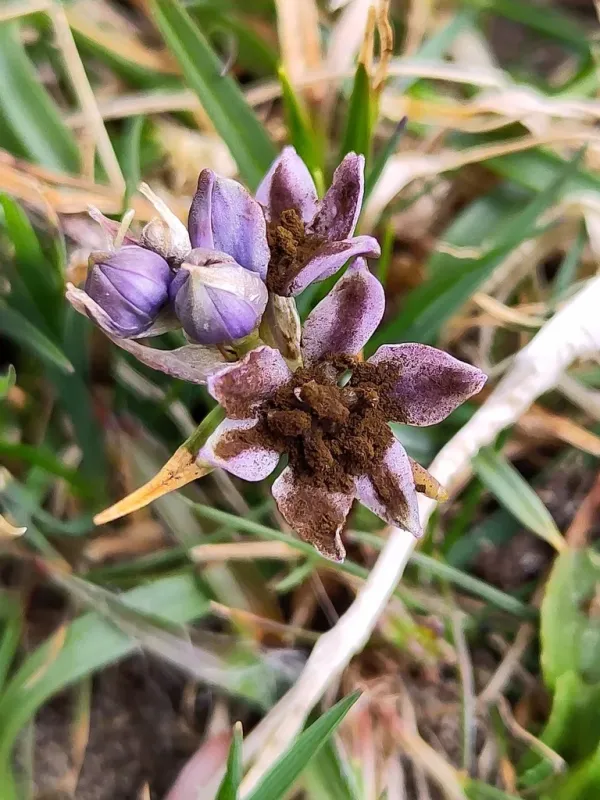
Description
Symptoms
The primary symptom of this disease is the transformation of the plant's anthers, which become filled with a dark, powdery mass of fungal spores. Instead of producing yellow pollen, the flowers exhibit a black, sooty appearance.
Infected plants often show signs of stunted growth or abnormal development, with flower stalks being shorter and inflorescences failing to open properly. This significantly ruins the aesthetic value of the affected plants.
Spores are easily dispersed by wind, rain, or visiting pollinators, spreading the fungal infection to neighboring healthy plants. The affected flowers typically wither rapidly and lose their beauty prematurely.
Upon closer inspection, one can see that the anthers burst open, releasing clouds of spores that cover the petals and stems. This gives the plant a messy, dusty look, which is a classic diagnostic feature of the disease.
Because the fungus is a systemic pathogen that persists in the plant tissues and the bulb itself, the symptoms usually recur annually if the infected bulb is not removed from the soil.
Pathogen
The disease is caused by the fungus Antherospora vaillantii, a member of the smut fungi group. It specifically targets members of the Asparagaceae family, particularly the Scilla and Muscari genera.
The fungal mycelium spreads systemically throughout the plant's tissues, eventually colonizing the bulb, which allows the fungus to overwinter and survive within the planting material itself.
During its life cycle, the fungus produces teliospores, which are resistant structures capable of surviving adverse environmental conditions. The primary spore production is localized within the flower anthers.
The pathogen spreads both through infected bulbs and via soil contaminated with spores. Understanding its systemic nature is crucial for managing the disease effectively in any garden or nursery setting.
While the taxonomic classification has shifted over the years, current scientific consensus categorizes this fungus as Antherospora vaillantii, emphasizing its niche biological interaction with the plant's reproductive organs.
Conditions for development
The disease thrives in conditions of high humidity during the early growing season. Damp, rainy springs provide the perfect environment for the germination and spread of fungal spores.
Overcrowded plantings that lack proper air circulation create a localized microclimate favorable for the pathogen. This is especially problematic in dense flower beds or rock gardens containing bulbous species.
Temperature fluctuations during the period of sprout emergence and flower bud development play a significant role in the infection rate. Mild and wet weather often correlates with higher incidence levels.
The presence of infection sources in the soil or on nearby debris encourages rapid transmission of the pathogen. Failure to adhere to proper horticultural practices often exacerbates the development of the fungus.
Lack of crop rotation leads to the gradual buildup of spores in the soil, making the site increasingly unsuitable for growing healthy, susceptible bulbous plants over successive years.
Why it matters
The main harm caused by anther smut is the complete loss of the plant's ornamental value, rendering infected specimens useless for landscape design. This leads to disappointment for gardeners and growers.
The gradual exhaustion of the bulb due to the fungal systemic growth leads to declining plant vigor and eventual death. Widespread infection can result in the loss of entire plant collections or cultivars.
The fungus disrupts normal seed production, which prevents natural propagation and hinders breeding efforts. A site with infected plants becomes a long-term phytosanitary challenge.
For commercial nurseries, the disease causes direct economic loss because infected bulbs are unfit for sale. This requires additional investments in quality control and disease management protocols.
The long-term survival of spores in the soil prevents the safe use of the land for susceptible crops for several years, creating significant logistical difficulties in garden planning and maintenance.
Protection
The primary control measure is the immediate rogueing and destruction of all infected plants along with their bulbs. This is vital to prevent the spread of spores to healthy areas of the flower bed.
- Regular inspection of plantings and removal of any suspicious specimens.
- Use of disease-free bulbs sourced from reputable, certified suppliers.
- Maintenance of proper spacing between plants to ensure good air circulation and lower humidity.
- Implementation of crop rotation, avoiding susceptible bulbs in the same area for at least 3-4 years.
- Treatment of bulbs before planting with systemic fungicides to prevent internal fungal colonization.
If the infection has become widespread, it is recommended to treat the entire flower bed with systemic fungicides during the early vegetative phase to suppress spore production.
Replacing the topsoil in areas where the disease was previously observed is an effective way to lower the inoculum load and reduce the risk of recurring infection in the following seasons.
Discussion
No discussions yet — be the first.