
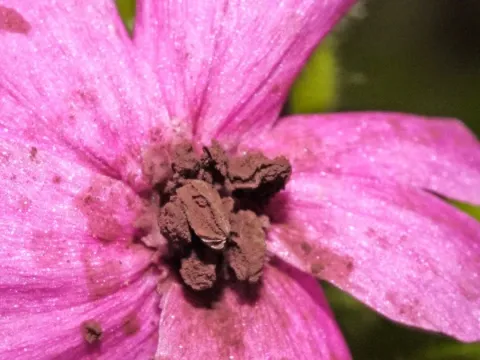
Anther smut
Microbotryum
The disease is caused by fungi of the Microbotryum genus, classified within the Ustilaginomycetes class. The most prominent species is Microbotryum violaceum, which primarily targets plants of the Caryophyllaceae family.
What the section contains
Anther smut
The pathogen is characterized by strict host-specificity, having evolved alongside its host plant. Its life cycle is deeply integrated with the plant's reproductive system, facilitating dispersal via pollen.
The fungus invades host tissues early in development. Once established, the mycelium spreads systemically throughout the plant, eventually colonizing the flower buds and replacing the pollen with a mass of spores.
Reproduction involves the production of vast quantities of teliospores that substitute for healthy pollen. Externally, this appears as a dark, powdery substance inside the flower.
Microbotryum can remain viable for long periods in soil or crop debris and can also be seed-borne, which significantly complicates phytosanitary management in nurseries.
The primary symptom is the modification of the anthers: instead of healthy pollen, they are filled with a dark purple or black powdery mass of fungal spores.
Infected flowers are often sterile, lose their ornamental appeal, and may wilt prematurely. In some cases, the flower's sex is altered, a strategy used by the pathogen to facilitate transmission by pollinators.
Systemically infected plants may exhibit signs of stunting, stem deformation, and abnormal flowering. The appearance of the plant often deviates from the norm due to hormonal imbalances caused by the mycelial infection.
During field inspections, pollinating insects can be observed transferring fungal spores to healthy plants, which significantly contributes to the spread of the infection across the field.
For diagnosis in field conditions, carefully opening a bud is sufficient: the presence of dark spores instead of stamens is a definitive indicator of Microbotryum infection.
Disease development is closely correlated with weather conditions during bud formation. High humidity and moderate temperatures provide ideal conditions for spore germination and tissue colonization.
The dispersal of the pathogen is highly dependent on the activity of pollinating insects, which accidentally carry the spores to the stigmas of healthy flowers.
Agricultural factors, such as dense planting and poor air circulation, create a microclimate that is extremely conducive to the spread and establishment of the disease.
The flowering period is the most critical stage, as the plant is most susceptible and the pathogen is highly active in securing its place within the reproductive structures.
Prolonged rainfall facilitates the washing of spores into the soil, where they can accumulate and retain their infectious potential for several growing seasons.
The damage caused by Microbotryum primarily involves the total loss of the commercial value of ornamental crops. Infected specimens are unsuitable for sale or floral arrangements.
Systemic infection leads to complete plant sterility, preventing the collection of seeds from valuable cultivars and causing significant financial losses to breeders.
The pathogen depletes the host plant, diverting nutrients to support the production of millions of spores, which severely reduces the overall vigor and longevity of the crop.
The rapid spread of spores via insect vectors makes the infection difficult to contain in large-scale plantations without immediate phytosanitary action.
Infected plantings serve as a reservoir for the disease, leading to long-term contamination of the field and necessitating rigorous eradication measures.
The primary control measure is the immediate rogueing and destruction of all infected plants before flowers open and release their spores.
It is essential to maintain spatial isolation between plantings and use only certified, disease-free plant material that has undergone laboratory testing.
Good agricultural practices are critical, including ensuring proper ventilation of crops, controlling weeds that may act as secondary hosts, and managing planting density.
Chemical control involves the application of systemic fungicides early in the growing season to prevent spore germination and inhibit mycelial growth within plant tissues.
In cases of severe infestation, crop rotation is necessary, as spores can survive in the soil for extended periods, rendering the site hazardous for subsequent susceptible crops.