
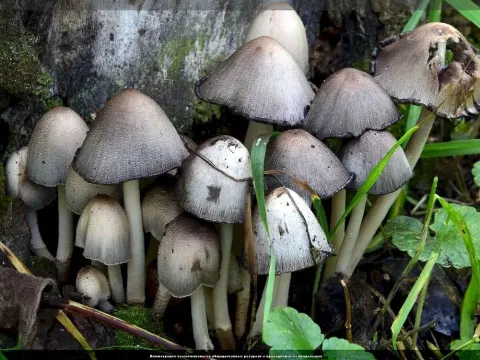
Shaggy Ink Cap
Coprinus
The Shaggy Ink Cap (latin: Coprinus comatus) is a member of the Agaricaceae family. In agriculture, it is often misunderstood as a plant disease, although it is actually a beneficial saprotroph that plays a key role in soil decomposition.
What the section contains
Shaggy Ink Cap
The fungus functions by breaking down dead organic matter, such as straw, leaf litter, and wood chips. It does not possess the mechanisms required to infect living plant tissue, making it a decomposer rather than a pathogen.
The life cycle of the species is defined by its rapid growth and subsequent autolysis, where the mature cap liquefies into a black, ink-like substance. This is a natural physiological process, not a sign of disease in the fungus itself.
The mycelium grows within nutrient-rich, moist substrates. Its presence in agricultural fields is indicative of high biological activity and significant amounts of decomposing organic material in the topsoil.
From a biological standpoint, Coprinus species are essential components of the soil food web, contributing to the recycling of carbon and nitrogen back into the ecosystem.
Development is favored by high moisture levels and a high concentration of organic matter. The fungus thrives in temperatures between 18°C and 25°C, making it common during mild, rainy seasons.
Agricultural fields that receive heavy applications of fresh manure or straw mulch are primary sites for fungal colonization. Inadequate aeration and waterlogged soils further promote the rapid expansion of the fungal network.
The species prefers neutral to slightly alkaline soil conditions. A high calcium content in the soil profile often correlates with the frequent appearance of fruit bodies after rainfall.
Spore dispersal occurs primarily through wind and soil disturbance. Once spores settle in a favorable environment, the mycelium begins to colonize the organic material present in the substrate.
Poorly managed compost piles that are kept constantly moist provide the ideal habitat for this fungus to thrive throughout the growing season.
The Shaggy Ink Cap is not considered harmful to healthy plants. However, in dense populations, the mycelium can compete with young seedlings for available nitrogen during the initial decomposition process.
This nitrogen immobilization can lead to temporary nutrient deficiency, manifesting as pale or yellowing leaves in sensitive vegetable crops. This is usually a short-term issue that resolves as decomposition progresses.
In extremely high densities, the mycelial mat can alter the physical structure of the soil surface, potentially affecting water infiltration near the roots of young plants. This is rare and usually occurs only in heavily mulched areas.
The fruit bodies themselves can be a nuisance in aesthetic gardens or specialized high-value crop areas, requiring manual labor for removal to maintain a clean field appearance.
While not a primary pest, the presence of large fungal biomass can attract various insects, which might pose a secondary risk if they become attracted to the nearby root zones of succulent crops.
Management focuses on proper composting practices. Using fully matured, stable compost prevents the presence of large quantities of un-decomposed material that fuel the fungus.
Good soil aeration is critical. Regular tillage or cultivation breaks up the surface mycelium, reducing the ability of the fungus to form fruit bodies and limiting its spread across the field.
- Applying only fully aged organic fertilizers.
- Improving drainage to prevent standing water.
- Removing fruit bodies manually before spore release.
- Ensuring proper soil balance and moisture management.
Biological controls such as Trichoderma species can be introduced to the soil. These beneficial fungi are known to compete with saprotrophic species, effectively keeping their populations under control.
By optimizing irrigation and soil organic matter management, growers can maintain a balanced soil microbiome without the need for synthetic fungicides.