
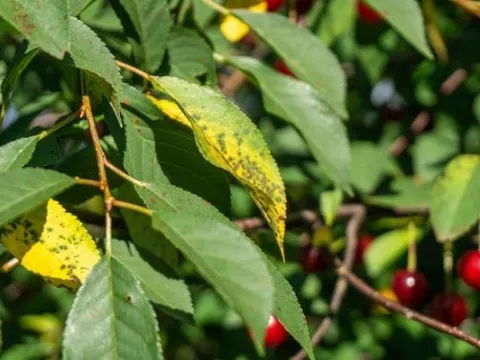
Cherry leaf spot
Coccomyces vilis
Cherry leaf spot is caused by the fungus Coccomyces hiemalis (syn. Blumeriella jaapii), a serious pathogen affecting stone fruits, primarily cherry and sour cherry trees. This fungus belongs to the family Dermateaceae and is a major threat to orchard productivity worldwide.
What the section contains
Cherry leaf spot
The life cycle of the pathogen begins with the development of apothecia on overwintered fallen leaves. In spring, these structures release ascospores that are dispersed by wind and rain, initiating primary infections on new leaf growth.
During the growing season, the fungus produces conidia in masses, often visible as a white or pinkish film on the underside of the leaves. These spores facilitate secondary cycles of infection, spreading rapidly under favorable moisture conditions.
The fungus is highly host-specific, focusing its damage on the foliage of Prunus species. It enters the leaves through the stomata, where it colonizes the leaf tissue, disrupting the photosynthetic process and causing tissue necrosis.
As the season progresses, the fungus may also infect fruit pedicels and even the fruit itself. The rapid reproduction cycle allows the pathogen to cause severe epidemics in a relatively short period if the climate remains humid and mild.
The first symptoms appear as small, circular, purple or reddish-brown spots on the upper surface of the leaves. These spots are the result of the fungal invasion into the leaf tissue and are often referred to as "shot-hole" symptoms in advanced stages.
On the undersides of the leaves, corresponding to the spots, white or pinkish-gray fungal spore masses become visible. These masses are the primary source of inoculum for subsequent infections within the canopy.
As the disease progresses, leaves turn yellow and drop prematurely. In severe cases, trees may lose nearly all their foliage by mid-summer, leaving the branches bare before the natural autumn dormancy begins.
Infected fruit often exhibit small, sunken, dark-colored lesions. While the fruit may remain on the tree, it becomes distorted, lacks taste, and is generally unsuitable for harvest or processing, leading to significant yield losses.
Infected pedicels may cause the fruit to shrivel and dry up on the stem. This weakened state not only ruins the current crop but also puts the tree under significant physiological stress for the following growing season.
Moisture is the primary driver of cherry leaf spot development. Frequent rain events, prolonged leaf wetness, and high humidity provide the necessary environment for spore germination and rapid spread.
The disease thrives in moderate temperatures, typically ranging from 15°C to 22°C (60°F to 72°F). Under these conditions, the incubation period is significantly reduced, leading to explosive spread across the orchard.
Poor orchard ventilation, resulting from dense plantings or lack of pruning, exacerbates the issue by keeping the foliage wet for longer periods after rain or morning dew, creating an ideal nursery for the fungus.
The presence of overwintering inoculum in the form of infected fallen leaves on the orchard floor is a critical factor. Without proper sanitation, these leaves serve as the starting point for the seasonal epidemic.
Trees that are already stressed due to drought, poor nutrition, or pest infestation are more susceptible to infection. Maintaining overall tree health is essential for reducing the risk and severity of the disease.
The most devastating effect of cherry leaf spot is premature defoliation. When leaves drop early, the tree cannot accumulate sufficient energy reserves through photosynthesis to survive the winter and produce new growth in the spring.
Severe defoliation drastically reduces the tree's winter hardiness. As a result, buds may fail to set for the next year, and in extreme cases, the entire tree may suffer cold damage or die during winter dormancy.
Yield loss is significant not only in quantity but also in fruit quality. Distorted, infected fruits are unmarketable, and the overall reduction in tree vigor leads to smaller fruits in subsequent years.
Chronic annual infections lead to the gradual decline of the orchard. Trees weaken over time, becoming more vulnerable to secondary pests, diseases, and harsh weather conditions, ultimately shortening their productive life.
Economically, the impact of the disease is profound, forcing orchardists to invest heavily in fungicide programs and increased labor for sanitation and maintenance to protect their production.
Effective management begins with sanitation. Collecting and destroying fallen leaves by burning or deep burial is vital to eliminate the overwintering inoculum that initiates the spring infection cycle.
Chemical control typically involves a scheduled spray program. Applications of copper-based fungicides or modern systemic products are recommended at key stages: pink bud, post-bloom, and immediately after fruit harvest.
Proper pruning is essential to improve airflow throughout the canopy. This practice helps foliage dry faster after rain, making it harder for the fungal spores to germinate and colonize the leaves.
Balanced fertilization and good water management support the tree's natural defense mechanisms. Healthy, vigorous trees are better able to withstand moderate infection pressures compared to neglected ones.
- Copper-based sprays
- Systemic fungicides (e.g., triazoles, strobilurins)
- Orchard sanitation (leaf removal)
- Canopy thinning (pruning)