
Chestnut blight
Cryphonectria
Description
Symptoms
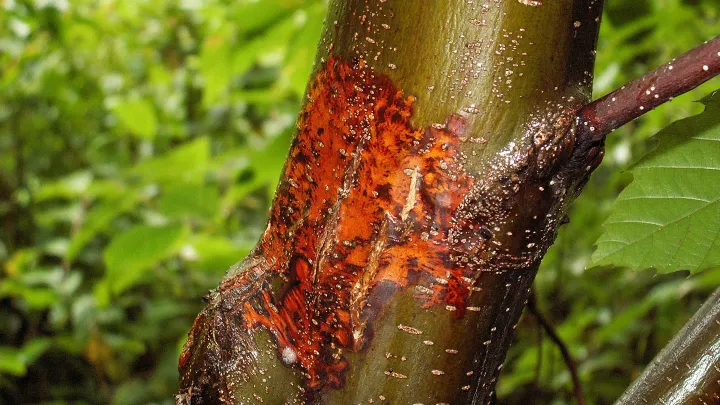
The first external signs include the appearance of reddish-brown or orange sunken lesions on the bark of stems and branches.
As the mycelium develops, the bark may show longitudinal cracking or bulging, indicating the expansion of the fungal colony beneath the surface.
Tiny orange to yellow pimple-like structures, known as stroma, eventually break through the bark, serving as the source of infectious spores.
Leaves above the infection site often turn yellow and wilt, which eventually leads to the death of the limb or the entire crown, known as flagging.
At the base of the infected area, trees often produce epicormic shoots (sprouts) as a survival reaction to the loss of top-growth viability.
Pathogen
Chestnut blight is caused by the fungus Cryphonectria parasitica, a highly destructive ascomycete pathogen that primarily attacks chestnut trees.
The fungus functions by invading the bark and cambium layer, effectively girdling the tree and cutting off the flow of water and nutrients.
It produces two types of spores: conidia, which are sticky and spread by rain or insects, and ascospores, which are wind-dispersed for long-distance infection.
The fungus can persist in the environment for years, living saprophytically on bark and dead wood fragments, which makes eradication extremely difficult.
Its biological adaptation to various environmental conditions allows it to thrive in different forest ecosystems, leading to rapid disease progression.
Conditions for development
The disease spreads most effectively in warm, humid climates where moisture remains on the bark for extended periods, facilitating spore germination.
Trees under stress, whether from drought, nutrient deficiency, or mechanical wounding, show significantly higher susceptibility to Cryphonectria infection.
Dense forest stands with low airflow create a favorable microclimate for the accumulation and transmission of airborne fungal spores.
Insects and birds frequently act as vectors, transporting the sticky conidia from infected trees to healthy ones through wounds and crevices.
The spread of the fungus is most active during the growing season, particularly following frequent rainfall events that aid in spore dispersal.
Why it matters
Chestnut blight has caused the mass mortality of American chestnut trees, fundamentally altering the composition of deciduous forests.
It causes significant economic losses in nut production and timber quality, making the cultivation of susceptible chestnut species risky.
The disease leads to the rapid loss of mature trees, which diminishes ecological biodiversity and destroys habitats for dependent wildlife.
In urban landscapes, the disease poses a safety hazard, as infected limbs can become brittle and fall, necessitating costly tree removal operations.
The persistence of the pathogen in the soil and wood debris makes the management of chestnut blight an ongoing challenge for conservationists.
Protection
The cornerstone of disease management is rigorous sanitation, including the prompt removal and destruction of infected wood and branches.
Strict hygiene protocols, such as disinfecting pruning tools with alcohol or bleach, are essential to prevent the human-aided spread of the fungus.
Biological control using hypovirulent strains of the fungus, which contain a virus that weakens the pathogen, has shown success in aiding natural tree recovery.
Good silvicultural practices, including maintaining optimal tree vigor through irrigation and site selection, can help mitigate the impact of the disease.
Current research efforts are heavily focused on breeding programs designed to develop and introduce blight-resistant chestnut cultivars to the landscape.
Discussion
No discussions yet — be the first.