
Chestnut blight
Endothia
Chestnut blight is caused by the ascomycete fungus Cryphonectria parasitica, a highly aggressive pathogen that invades the bark and cambium of chestnut trees.
What the section contains
Chestnut blight
The fungus enters the host through bark fissures, pruning wounds, or insect feeding sites, quickly establishing itself in the tree's vascular system.
Its reproductive cycle involves the production of both wind-borne ascospores and water-splashed conidia, facilitating rapid dispersal within groves.
The pathogen thrives in the bark of infected wood, where it can persist for several years, forming persistent cankers that slowly kill the host tissue.
Genetic diversity within fungal populations allows it to adapt to various environmental conditions, making it one of the most resilient forest pathogens known.
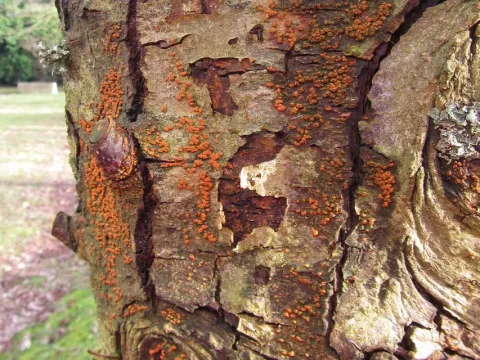
Initial symptoms include the appearance of sunken or swollen orange-brown cankers on the smooth bark of branches and the main trunk.
During humid weather, the fungus produces orange-colored tendrils on the surface of the bark, which are actually dense masses of spores.
As the infection progresses, the bark cracks and peels away, and the tree often produces callus tissue in a desperate attempt to wall off the infection.
Leaves on infected branches show signs of wilting, yellowing, and drying out, often leading to a condition called flagging, where dead leaves remain attached.
The final stage is reached when the canker girdles the entire circumference of the stem, cutting off nutrient flow and causing the death of the upper tree part.
High humidity, frequent rainfall, and warm temperatures provide the perfect conditions for spore release, germination, and colonization of host trees.
Trees experiencing environmental stress, such as drought or nutritional deficiency, are significantly more susceptible to successful fungal infection.
Poor orchard management, including lack of proper pruning and over-crowding, creates favorable microclimates for the fungus to spread.
Mechanical damage to the bark from farming equipment or wildlife provides easy entry points that the fungus effectively exploits.
The absence of strict phytosanitary measures during the transport of nursery stock is a primary driver for the geographic spread of the pathogen.
Chestnut blight is considered a devastating disease that has caused the decline of millions of chestnut trees across vast geographical regions.
The primary damage is the complete disruption of sap flow caused by the destruction of the cambium layer by the expanding fungal mycelium.
Ecologically, the loss of mature chestnut trees alters forest composition, negatively impacting wildlife species that rely on chestnut mast for food.
Economic losses are immense, involving the destruction of timber resources, the cost of tree removal, and the devaluation of forested properties.
The disease effectively eliminates the ability of affected trees to regenerate, as sprouts emerging from the base are also quickly re-infected.
Sanitation is the cornerstone of management: all infected wood must be pruned, removed, and burned immediately to reduce the local spore load.
Rigorous sanitation of pruning tools using 70% alcohol or bleach solutions between every cut is vital to prevent human-assisted transmission.
Selecting and planting blight-resistant or blight-tolerant chestnut varieties is the most sustainable long-term solution for orchard owners.
Biological control using hypovirulent strains of the fungus, which contain a virus that weakens the pathogen, has shown success in healing cankers.
Routine monitoring and maintenance of tree health through proper fertilization and watering can help trees better resist early-stage infections.