
Chestnut blight
Cryphonectria parasitica
The primary symptom is the appearance of reddish-brown sunken or swollen cankers on the bark of branches and trunks. Over time, the affected bark tissue cracks, forming deep fissures and girdling the tree.
What the section contains
Chestnut blight
A characteristic sign of the disease is the development of mycelial fans under the bark, which exhibit a yellowish-orange or brown color. Removing the dead bark often reveals the presence of orange-colored fungal fruiting bodies.
Above the infection site, foliage wilting and branch dieback occur because the fungus blocks the movement of water and nutrients within the vascular system. Often, epicormic shoots (water sprouts) appear below the infection point.
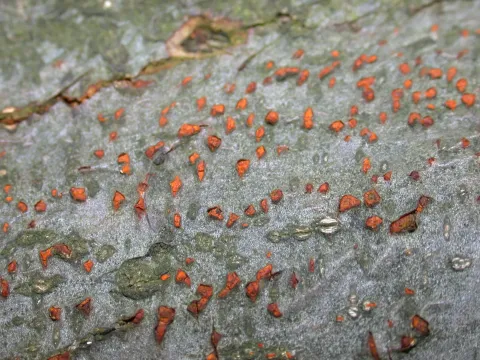
During the early stages, small orange pustules called pycnidia appear on the bark, releasing spores as yellowish, curly tendrils in moist weather. Later, black flask-shaped perithecia develop, which contain sexual spores.
In advanced cases, multiple cankers merge, fully girdling the trunk and inevitably leading to the death of the entire canopy above the site of infection.
The disease is caused by the ascomycete fungus Cryphonectria parasitica. It is a highly destructive pathogen that specifically infects members of the Castanea genus, causing extensive bark necrosis.
The fungus acts as a wound parasite. It infiltrates tree tissues through any break in the bark, such as mechanical injuries, sunscald, frost cracks, or wounds made by wood-boring insects.
The pathogen produces both asexual (conidia) and sexual (ascospores) stages. This dual reproductive cycle provides the fungus with high environmental plasticity and efficiency in spreading throughout the growing season.
Mycelial growth occurs in the phloem and cambium. The fungus secretes toxins that inhibit the tree's natural defenses, rapidly leading to tissue necrosis and the eventual death of the affected area.
Cryphonectria parasitica is extremely aggressive and can remain viable in dead wood or forest litter for several years after the host tree has died, serving as a reservoir for new infections.
Moderately warm weather combined with high humidity provides the ideal conditions for the fungus to grow and sporulate. High moisture levels facilitate the mass release of spores.
Spores are dispersed primarily by rainwater splash, wind, and movement by insects, birds, or mammals that come into contact with the sticky conidia on infected trees.
Trees that are already stressed due to poor site conditions, drought, or nutrient deficiencies are significantly more susceptible to successful infection and show faster rates of decline.
The presence of bark wounds is a critical factor. Without existing physical openings in the bark, the fungal hyphae struggle to penetrate the protective layers of the tree.
Secondary infections often exacerbate the impact of the blight, especially where insect activity provides entry points for the pathogen to establish itself in healthy wood.
Chestnut blight is arguably one of the most destructive diseases in forestry, capable of wiping out entire populations of susceptible chestnut species in a relatively short period.
The disease causes significant economic loss in the timber industry and for nut growers, as it removes the ability of the tree to produce fruit or reach harvestable timber size.
In urban forestry and landscaping, the death of mature chestnut trees reduces aesthetic value and environmental benefits, often leading to expensive removal programs for dead, hazardous trees.
The pathogen has historically decimated populations of the American chestnut, altering entire forest ecosystems and reducing biodiversity in regions where the species was once dominant.
Massive outbreaks necessitate strict quarantine regulations for the trade of plant materials and raw wood, creating hurdles for the nursery industry and cross-border commerce.
Sanitation is the primary management strategy: diseased branches should be pruned promptly, with the removal including a significant margin of healthy tissue to ensure all mycelium is cleared.
Sterilization of pruning tools using alcohol or bleach between each cut is essential to prevent the mechanical transmission of spores from infected trees to healthy ones.
Promoting tree vigor through proper silvicultural practices, including adequate watering and soil nutrient management, helps trees sustain their natural defense mechanisms.
Biological control using hypovirulence is a promising research field, involving the introduction of specific viruses that weaken the fungus, making it less aggressive and allowing the tree to heal its cankers.
- Sourcing only blight-resistant or certified disease-free nursery stock for new plantings.
- Implementing regular monitoring and tree inspections to detect cankers early.
- Applying fungicides in controlled settings or nurseries to protect young saplings during high-risk seasons.