
Chestnut blight
Endothia chinensis
Chestnut blight is caused by the fungus Cryphonectria parasitica, an ascomycete pathogen that has decimated chestnut populations globally.
What the section contains
Chestnut blight
The fungus is a wound parasite, typically entering trees through small openings in the bark, including fissures, insect damage, or pruning wounds.
Once inside, the fungus colonizes the inner bark and cambium, eventually girdling the branch or trunk and interrupting the transport of water and nutrients.
The pathogen reproduces via conidia, spread by rain splash, and ascospores, which are dispersed by wind, allowing for rapid colonization of new hosts.
It can persist as a saprophyte on dead bark and wood, maintaining a reservoir of infection that can survive for many years in the environment.
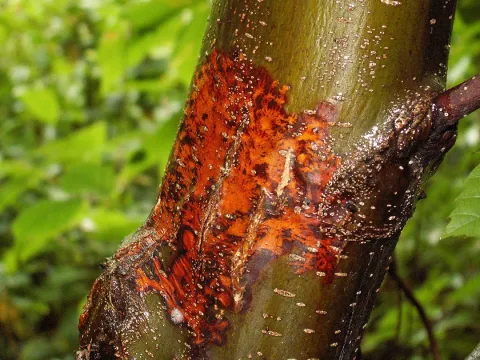
The earliest symptom is the appearance of small, orange-brown, sunken or swollen patches on the bark, which later develop into cankers.
Characteristic orange, pimple-like fruiting bodies (stromata) emerge through the bark, releasing spores during moist weather conditions.
Leaf wilting and branch death above the canker site (flagging) are classic indicators that the vascular system has been compromised by the fungus.
Beneath the bark of an active canker, one can observe a yellowish, fan-shaped mass of mycelium spreading through the host tissues.
The tree may develop epicormic shoots below the infection site in a desperate attempt to survive, though these are also typically attacked by the blight.
Warm and humid weather conditions are ideal for the rapid development and spread of Cryphonectria parasitica spores.
Temperature fluctuations and stress factors, such as drought or physical injury, significantly increase a tree's susceptibility to successful infection.
In dense forest stands, the close proximity of trees facilitates the spread of spores, making natural regeneration of the species extremely difficult.
Inappropriate pruning practices, if not followed by sanitation, often accelerate the transmission of the fungus from one branch to another.
Human activity, including the transport of infected firewood or nursery stock, remains the primary vector for introducing the blight into new geographic areas.
Chestnut blight causes severe economic and ecological loss by girdling and killing host trees, often resulting in the loss of entire stands within years.
The ecological impact is profound, as the loss of chestnut trees disrupts natural habitats and food sources for various wildlife species.
The pathogen severely diminishes the timber quality of affected trees, rendering them useless for commercial construction or artisan woodworking.
In urban landscapes, the death of large, mature chestnut trees poses significant safety risks due to the falling of diseased branches and trunks.
Eradication is currently impossible in wild populations, making management focused solely on slow-spreading and conservation efforts extremely challenging.
Strict quarantine measures are essential to prevent the human-mediated movement of infected plant material between uninfected areas.
Sanitation, including the prompt removal and burning of infected branches or entire trees, can help reduce the localized inoculum density.
Sterilizing pruning tools with alcohol or a strong disinfectant between every single cut is a mandatory practice for preventing accidental spread.
Biological control using hypovirulence (viruses that weaken the fungus) shows promise, allowing trees to form callus tissue and survive the infection.
- Regular inspection of bark surfaces.
- Breeding for resistant chestnut cultivars.
- Promoting overall tree vigor through site management.
- Public education on not moving firewood.