
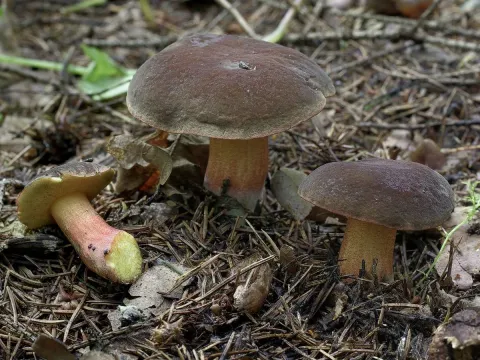
Chestnut bolete
Xerocomus badiorufus
The Chestnut bolete (Xerocomus badiorufus) is scientifically recognized as a wood-decaying fungus that can exhibit pathogenic properties when trees are physically stressed or biologically weakened.
What the section contains
Chestnut bolete
The pathogen initiates infection by deploying hyphae into the plant's vascular system, primarily through the root collar or existing bark lesions.
Once established, the fungus secretes enzymes that break down lignin and cellulose, which are the main structural components of the tree's inner tissues.
The life cycle involves the production of spores that are easily dispersed by wind, effectively ensuring the spread of the fungus across wide areas.
Under favorable conditions, the mycelium expands rapidly, colonizing the sapwood and heartwood, which disrupts the tree's nutrient transport mechanism.
The most visible sign is the emergence of fruiting bodies around the base of the trunk, indicating that the fungal colonization has reached a mature phase.
Affected trees typically exhibit gradual canopy thinning, yellowing leaves, and a significant reduction in annual shoot growth compared to adjacent healthy specimens.
Bark near the root collar may show discoloration, cracking, or soft patches where the underlying wood has lost its structural integrity.
Upon closer examination of the internal wood structure, one may detect signs of wood rot, characterized by a brownish hue and an increased moisture content.
- Fruiting bodies forming near the tree base.
- Premature yellowing and leaf loss.
- Softening and discoloration of bark.
- Presence of internal decay in wood tissues.
- Reduced vigor and stunted branch development.
High moisture levels in both soil and air are essential for the rapid germination of spores and the subsequent spread of the mycelium throughout the host.
Poorly drained soils create an anaerobic environment, which weakens the roots and makes the tree highly susceptible to fungal penetration.
The development of the fungus is most active during periods with temperatures ranging from 15°C to 25°C, coupled with high atmospheric humidity.
Wounds caused by frost, wildlife, or mechanical equipment during forestry operations provide direct access for fungal spores to the inner tissues.
Trees with underlying health issues, such as nutrient deficiencies or competition for sunlight, are more likely to be colonized by this opportunistic pathogen.
The primary harm is the structural decay of the host tree, which diminishes its biological longevity and poses a significant risk of structural failure.
Widespread infection within a stand can lead to significant economic losses in timber production and increase the necessity for costly sanitation felling.
Infected trees become unstable, creating potential safety hazards in parks, residential areas, and along roadsides due to the risk of falling branches or uprooting.
The presence of the fungus disrupts the local ecosystem by reducing the vitality of host species and altering the competitive dynamics of the forest floor.
Persistent infestations lead to the degradation of the soil profile, as the organic matter cycle is disrupted by the unchecked proliferation of the decay fungus.
Preventive sanitation is the most effective approach, involving the systematic removal and destruction of deadwood and infected trees from the plantation.
Maintaining optimal soil conditions, specifically improving drainage, helps ensure that roots remain robust and resistant to pathogen invasion.
All mechanical damage to bark must be promptly sealed with appropriate wound dressing materials or fungicides to prevent opportunistic infections.
Biological control agents, such as beneficial soil microorganisms that compete with the fungus for space and nutrients, can be applied to infested areas.
Regular monitoring of tree health, particularly during the growing season, allows for the early detection and management of the pathogen before it causes widespread damage.