
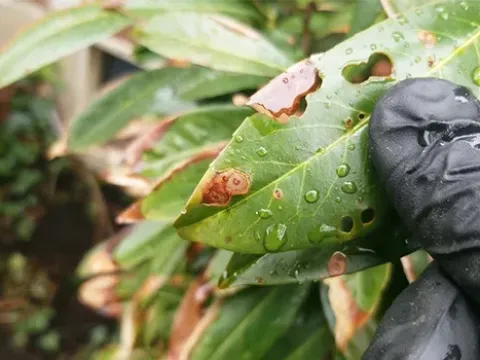
Cherry laurel phoma leaf spot
Phoma laundoniae
The causal agent of this disease is a fungus from the Phoma genus, specifically Phoma laundoniae. It is an imperfect fungus belonging to the Coelomycetes class, which thrives within the tissues of evergreen plants.
What the section contains
Cherry laurel phoma leaf spot
The pathogen survives in infected plant debris, fallen leaves, and damaged branches of the cherry laurel. The fungus is capable of overwintering in mycelial form, awaiting favorable conditions to resume vegetative activity.
The microorganism spreads through pycnidia—specialized fruiting bodies where spores are produced. Conidia are easily dispersed by wind, rain splashes, and insects, facilitating rapid infection of neighboring plants.
The biology of Phoma laundoniae is closely linked to the weakening of the host plant's immunity, often caused by environmental stress or mechanical damage to the bark. The fungus enters tissues through stomata or micro-cracks.
The high specialization of the pathogen allows it to successfully attack members of the Prunus laurocerasus genus, causing characteristic necrotic changes within plant cells.
The first visual sign of Phoma leaf spot is the appearance of circular or irregular brown to dark grey spots on the leaves. As the disease progresses, these spots enlarge and may develop a lighter halo.
In the center of the necrotic areas, small black dots—the pathogen's pycnidia—form over time. This is a diagnostic feature that helps distinguish Phoma leaf spot from other types of foliage spots.
When branches are affected, yellowing and premature leaf drop are observed. Sunken cankers or lesions may develop on the stems, leading to the drying out of individual branches or the entire crown in advanced stages.
The disease negatively impacts the overall decorative appearance of the cherry laurel. The plant loses density, foliage becomes limp, and shoot tips may curl or die due to disturbed metabolic processes.
Under high humidity conditions, a faint grey mold consisting of a mass of fungal conidia may appear around the infected areas, ready for further dispersal across the site.
The primary requirement for infection development is high humidity in both the air and soil. Frequent rainfall, fog, and poor air circulation within dense foliage facilitate spore germination on leaf surfaces.
The fungus prefers moderately warm weather. The optimal temperature range for mycelial growth and sporulation of Phoma laundoniae is 18–24 degrees Celsius.
Crowded cherry laurel plantings lacking proper ventilation are significantly more prone to infection compared to plants spaced according to recommended intervals.
Mechanical damage to tissues following pruning, hail, or strong winds creates entry points for fungal spores to penetrate into the healthy tissues of the shrub.
A reduction in the plant's natural immunity due to nutrient deficiency or improper irrigation makes them more susceptible to Phoma laundoniae throughout the entire growing season.
Phoma leaf spot poses a serious threat to cherry laurel as it triggers premature leaf drop. This leads to significant weakening of the plant and loss of its ornamental value in landscape design.
Prolonged pathogen infection causes shoot dieback, disrupting the crown structure and necessitating radical sanitary pruning, which is stressful for evergreen species.
In nurseries, Phoma leaf spot can cause substantial economic losses by reducing the marketability of seedlings and increasing culling rates due to necrosis development.
Severe infection weakens the plant's cold hardiness. A fungus-weakened bush is less capable of enduring low winter temperatures, often resulting in the freezing of entire branches or the death of the whole plant.
The spread of infection to neighboring plants can lead to the destruction of entire hedges if measures for timely localization and containment are not taken.
The basis of prevention is good agricultural practice. It is essential to avoid over-irrigation and ensure good crown ventilation through proper and timely pruning of the cherry laurel.
Regular sanitary cleaning is necessary: all infected leaves and dead branches must be removed and destroyed. This significantly reduces the infectious pressure in the garden.
Upon detecting the first signs of disease, treatment with systemic fungicides containing copper or specialized products from the triazole and strobilurin groups is recommended.
To prevent infection after pruning, cut surfaces should be treated with pruning paint or antiseptic pastes to block fungal spores from accessing open wounds.
- Apply preventative fungicide sprays at the beginning of the growing season.
- Maintain optimal nutrient levels to improve plant resistance.
- Control planting density to enhance air circulation.
- Maintain tool hygiene after working with infected shrubs.