
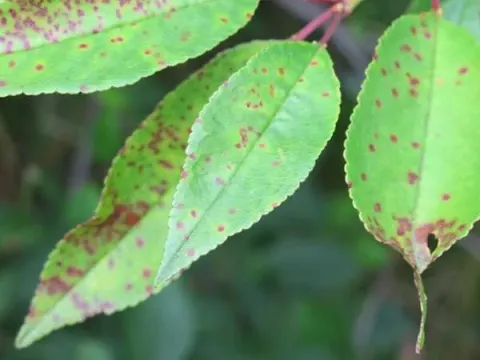
Cherry leaf spot
Coccomyces tumidus
The disease is caused by the fungus Blumeriella jaapii, formerly known as Coccomyces hiemalis. It is a major fungal pathogen affecting stone fruit trees, especially cherries and plums.
What the section contains
Cherry leaf spot
The fungus overwinters in fallen leaves on the orchard floor. As spring approaches, it produces ascospores which are ejected during wet weather to initiate primary infection.
During the growing season, the fungus produces conidia on the undersides of infected leaves. These spores are spread by wind and splashing rain to healthy foliage.
Warm and moist weather patterns allow for rapid secondary cycles of the fungus, leading to exponential increases in infection levels throughout the summer months.
Understanding the life cycle of this pathogen is crucial for timing fungicide applications, which should coincide with periods of high risk based on weather forecasts.
Initial symptoms appear as tiny, purple-to-reddish spots on the upper leaf surface. These spots enlarge and often turn brown as the tissue dies.
On the undersides of the leaves, white or pinkish masses of spores become visible, appearing as small "pimples" or pustules within the infected areas.
Infected leaves often turn yellow before dropping prematurely. In severe cases, trees can be completely defoliated by mid-summer, causing significant stress.
Fruit may also be affected, showing depressed, dark lesions. These fruits are often bitter, shriveled, and fail to ripen properly, making them unmarketable.
If the infection persists over multiple years, twig dieback can occur, further weakening the tree structure and overall health.
Cherry leaf spot thrives in environments characterized by frequent rainfall, high humidity, and moderate temperatures, typically between 15°C and 22°C.
Poor orchard sanitation, such as failing to remove leaf litter, ensures a high inoculum load for the following season, creating a cycle of persistent infection.
Dense canopy growth prevents adequate airflow and sunlight penetration, keeping foliage wet for longer periods and creating ideal conditions for fungal spore germination.
Orchards located near wild or abandoned stone fruit trees are at constant risk due to the proximity of the fungal source and lack of regular disease management.
Overhead irrigation systems can inadvertently mimic rainy conditions, splashing spores from infected leaves to healthy parts of the canopy.
The primary damage is premature defoliation, which severely limits the tree's ability to produce sugars through photosynthesis, leading to depleted energy reserves.
Trees stripped of their leaves too early in the season are unable to harden off properly, making them highly susceptible to winter injury and low-temperature damage.
Yield reduction is significant, as the fruit quality is compromised and the trees lack the resources to develop fruit buds for the subsequent harvest year.
The cumulative effect of repeated yearly infections is a drastic reduction in tree vigor, leading to stunted growth and increased susceptibility to secondary pests.
Without intervention, chronic infections can eventually kill the tree, necessitating the removal and replacement of the entire orchard section.
Sanitation is the cornerstone of control; rake and destroy all fallen leaves in the autumn to eliminate the primary overwintering source of the fungus.
Implement a fungicide spray program, focusing on the critical periods between petal fall and harvest to protect the developing foliage from new infections.
Prune trees annually to improve light penetration and air circulation, which helps foliage dry quickly after rain and reduces the risk of fungal establishment.
Maintain tree health through proper fertilization and irrigation practices to ensure the plant can withstand and recover from light infections.
- Use copper-based fungicides for dormant season cleanup.
- Select resistant cultivars during orchard planning.
- Monitor the canopy regularly for the first signs of reddish spotting.