
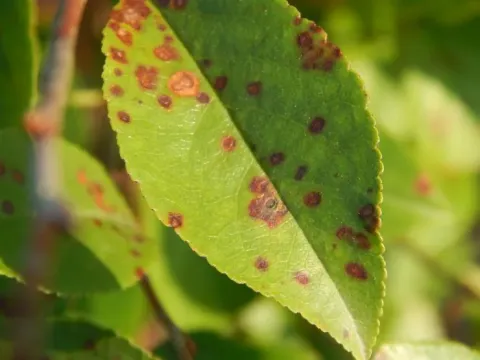
Cherry leaf spot
Coccomyces papillatus
The disease is caused by the fungus Coccomyces hiemalis (also known as Blumeriella jaapii), which primarily affects members of the Prunus genus, especially cherries and sour cherries.
What the section contains
Cherry leaf spot
The fungus reproduces through conidia, which are spread by wind and rain splashes during the growing season, facilitating the spread of the infection between trees.
The pathogen overwinters as mycelium in fallen leaves. In early spring, the fungus develops apothecia, which release ascospores that trigger the primary infection of the season.
Once the spores land on moist leaves, they germinate and enter through the stomata, eventually colonizing the leaf tissue and causing characteristic damage.
The biological cycle is highly dependent on humidity, as the fungus requires a film of water on the leaf surface to initiate the infection process successfully.
Early symptoms appear as small, dark red or purple spots on the upper side of the leaves, which gradually enlarge and may coalesce over time.
On the underside of the leaves, you can observe a white or pinkish mass of spores, which is a diagnostic sign of active fungal growth.
Severe infections cause premature yellowing and dropping of leaves, leading to heavy defoliation during mid-summer, which weakens the tree significantly.
The fruits can also be affected, showing depressed, dark, and misshapen spots, making them unmarketable and poor in taste due to stunted development.
Small twigs may show necrotic spots, and in extreme cases, the entire tree might show signs of dieback due to lack of energy reserves.
The disease thrives in warm, rainy weather, with the most favorable temperatures for infection being between 18°C and 22°C.
Extended periods of leaf wetness, such as those caused by prolonged rain, heavy dew, or foggy conditions, significantly promote the rapid germination of spores.
Poor orchard ventilation and dense canopy growth create stagnant air zones, which maintain high humidity levels and favor the spread of the pathogen.
Insufficient sanitation, specifically leaving leaf litter under the trees, provides a constant source of inoculum for the next year's infection cycle.
A history of high disease pressure in the orchard makes the trees more vulnerable, especially if the spring season is unusually wet and cool.
The primary impact of cherry leaf spot is early defoliation, which severely limits the tree's ability to photosynthesize and store sugars for winter survival.
Trees affected by the disease exhibit reduced winter hardiness, leading to potential branch dieback or even total tree loss during harsh winters.
Fruit yield is drastically reduced both in quantity and quality, as the trees struggle to nourish the fruit, leading to smaller, less flavorful produce.
The reduction in vigor makes the trees more susceptible to secondary pests and other diseases, creating a cycle of decline that is hard to stop.
Long-term infestation can shorten the productive lifespan of an entire orchard, representing a major financial risk for commercial fruit growers.
Sanitation is the cornerstone of control: all fallen leaves must be raked and destroyed or deeply buried to break the overwintering cycle of the fungus.
Pruning the trees to allow better air circulation and sunlight penetration helps keep the foliage dry and makes the environment less favorable for the fungus.
Chemical control involving fungicides is necessary in high-pressure areas, with timing based on the tree's growth stages and local weather conditions.
- Pre-bloom fungicide applications.
- Post-bloom sprays to protect new foliage.
- Post-harvest treatment to reduce inoculum for the next year.
Selecting resistant cultivars is a proactive strategy, and ensuring adequate fertilization helps the tree recover its strength after an infection event.