
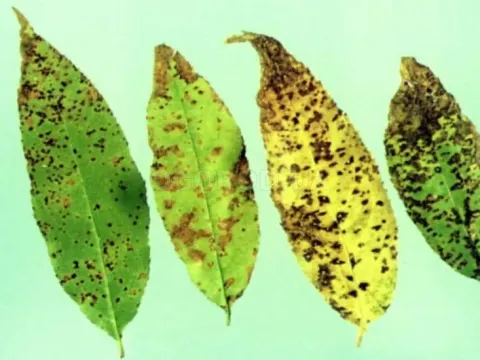
Cherry Leaf Spot
Coccomyces leptideus
The causative agent of the disease is the fungus Coccomyces hiemalis (often synonymous with Coccomyces leptideus in certain contexts). It is an obligate parasite that specifically targets the foliage of stone fruit trees.
What the section contains
Cherry Leaf Spot
The life cycle begins with the fungus overwintering in fallen, infected leaves. In the spring, specialized structures called apothecia release ascospores, which are spread by wind and rain splashes to new leaves.
Throughout the growing season, the fungus reproduces via conidia. These spores form white, cushion-like masses on the underside of the leaves, allowing for secondary infections during rainy periods.
The pathogen is highly aggressive and capable of multiple infection cycles within a single growing season. This rapid reproduction allows the disease to spread quickly throughout an orchard.
The primary hosts are species of the Prunus genus, most notably sour and sweet cherries, though other stone fruits may also be affected by related species of this fungal group.
Initial symptoms typically appear in early summer. Small, circular, purple-to-reddish-brown spots emerge on the upper surface of the leaves, which may eventually coalesce into larger lesions.
On the underside of the leaf, directly beneath the spots, light-colored fungal masses (conidia) become visible. This diagnostic feature is a clear indicator of a active infection.
As the disease progresses, the leaves turn yellow or brown and drop prematurely. In severe cases, trees can lose most of their foliage by mid-summer, leading to significant stress.
Fruits may also become infected, appearing distorted, watery, and failing to ripen properly. In some cases, affected fruits may shrivel and drop early, reducing the total yield.
- Small reddish-brown spots on leaves
- Whitish fungal growth on leaf undersides
- Premature yellowing and leaf drop
- Poor fruit development and shriveling
The development of leaf spot is heavily dependent on moisture. Prolonged wet weather, frequent rainfall, and high humidity provide the ideal conditions for spore germination and infection.
The optimal temperature range for the pathogen is between 18 and 22 degrees Celsius. Warm, humid days significantly accelerate the infection rate and the life cycle of the fungus.
Orchards with poor air circulation or dense tree canopies are at higher risk. Moisture remains on the foliage for longer periods, which allows spores to penetrate the leaf tissue more easily.
The amount of primary inoculum remaining from the previous year is a critical factor. Gardens where fallen leaves are not cleared act as a constant source of infection for the new season.
Dry weather acts as a natural inhibitor. Without the presence of water droplets on the leaf surface, the fungus struggles to germinate and spread, effectively stalling the epidemic.
The primary damage is caused by premature defoliation. When trees lose their leaves early, they cannot perform photosynthesis effectively, which prevents the storage of energy reserves for winter.
Loss of foliage significantly reduces the tree's cold hardiness. Trees weakened by leaf spot are much more likely to suffer from winter injury or complete dieback during cold spells.
Fruit quality is severely impacted, making the crop unmarketable. The fruit often lacks sweetness and proper size, and in heavy infections, the tree may produce little to no fruit the following year.
The systemic weakening of the tree makes it more susceptible to secondary pests and pathogens, potentially leading to a shorter lifespan for the entire orchard.
Since the disease is easily spread by wind and rain, it can move across an entire region quickly, causing widespread economic losses if left unmanaged.
Sanitation is the cornerstone of management. Removing and destroying fallen leaves during autumn drastically reduces the overwintering inoculum and potential for spring infection.
Pruning is essential to improve airflow and sunlight penetration within the canopy. This helps the leaves dry out faster after rainfall, creating an unfavorable environment for the fungus.
Chemical control involving fungicides is often necessary, especially in commercial orchards. Applications should begin at the first sign of symptoms or based on a preventative schedule.
Copper-based fungicides applied in the early spring can be effective in reducing initial inoculum before the foliage fully develops.
Maintaining tree vigor through proper fertilization and irrigation helps the plant withstand stress, although these practices should be combined with a robust fungicide program.