
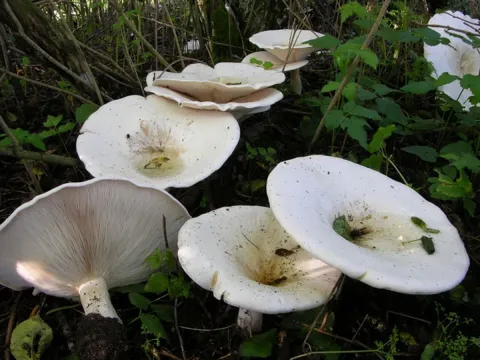
Clitocybe maxima
Clitocybe maxima
Clitocybe maxima, commonly known as the giant clitocybe, acts as a wood-decaying saprotroph that can occasionally function as a facultative parasite in weakened woody plants. It belongs to the Tricholomataceae family.
What the section contains
Clitocybe maxima
The fungus spreads via spores dispersed by wind or insects. The mycelium penetrates through bark cracks, wounds, or damaged root systems, establishing itself within the host's vascular tissues.
As a lignin- and cellulose-degrading organism, it actively breaks down the structural integrity of woody plants. It thrives particularly well in ecosystems with high organic debris accumulation.
Its life cycle involves a prolonged vegetative phase in soil and a distinct fruiting phase, where large, visible mushroom colonies appear near the base of the infected plant.
By releasing specific enzymes, the fungus disrupts the host's nutrient transport systems, leading to a steady decline in the plant's health and vigor.
The most prominent sign is the development of large, cream-colored fruiting bodies near the base of the trunk. Concurrently, the plant exhibits signs of systemic distress, such as leaf wilting.
The bark at the root collar may become discolored, soft to the touch, and prone to peeling. Beneath the bark, one can often find a dense, white mat of fungal mycelium.
Infected trees show reduced shoot growth, premature leaf drop, and brittle branches. These symptoms indicate a critical failure in the tree’s internal hydraulic system.
Internal inspection of the wood reveals softening, a bleached appearance, and a distinct fungal odor. This indicates that the rot is deep-seated and progressing through the structural wood.
Fairy ring patterns of mushrooms around the tree base often serve as a late-stage indicator that the fungal mycelium has fully colonized the root zone and surrounding soil.
High humidity and soil moisture levels are essential for the rapid development of Clitocybe maxima. Stagnant water around roots significantly increases susceptibility to infection.
The optimal temperature for spore germination ranges from 18 to 24 degrees Celsius. These moderate conditions facilitate the rapid spread of the mycelium through the soil.
Poor soil aeration and dense plant spacing create environments where humidity remains high, fostering the survival and colonization of the fungus.
The presence of abundant woody debris or old tree stumps provides a stable food source, allowing the fungus to persist in the environment for several seasons.
Mechanical injuries from gardening equipment serve as primary entry points for spores, especially in neglected or poorly maintained orchards and landscapes.
The primary harm caused by Clitocybe maxima is root and crown rot, which eventually kills the host plant. The compromised root system leads to tree instability and potential windthrow.
The destruction of vascular tissues prevents water and mineral absorption, leading to chronic malnutrition, yellowing foliage, and stunted growth in fruit-bearing species.
The fungus is capable of infecting a wide variety of woody hosts, posing a significant risk to biodiversity in forests, parks, and agricultural settings.
Infections spread through the soil from plant to plant, creating expanding "dead zones" that require drastic mitigation efforts.
Economic consequences include the loss of mature specimen trees, the cost of tree removal, and the necessity of soil remediation to prevent further spread.
Sanitation is the most effective management strategy: removing stumps, woody debris, and fallen leaves significantly reduces the inoculum potential in the area.
Preventing physical damage to the trunk and roots during routine maintenance is crucial. If wounds occur, they should be cleaned and treated with protective fungicides.
If an infection is detected early, systemic fungicides applied to the root zone can help inhibit fungal growth and provide a measure of protection to neighboring trees.
Improving soil drainage and thinning out dense vegetation helps lower humidity levels, creating an environment unfavorable for fungal reproduction.
- Apply biological control agents like Trichoderma species to the soil.
- Remove heavily infected trees including the root system to halt spread.
- Maintain optimal plant health through balanced nutrition.
- Conduct periodic inspections of tree collars for mushroom growth.