
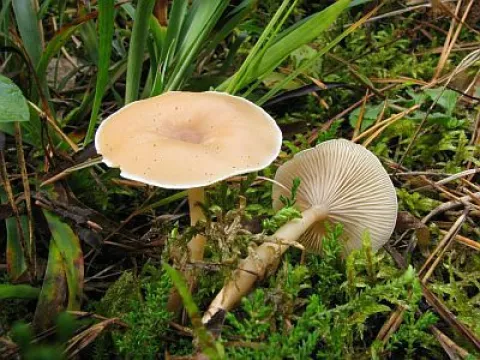
Clitocybe phaeophthalma
Clitocybe phaeophthalma
Clitocybe phaeophthalma is a saprotrophic fungus belonging to the Tricholomataceae family. In agronomic terms, it is not classified as a plant pathogen but as a soil-dwelling fungus involved in the decomposition of organic matter.
What the section contains
Clitocybe phaeophthalma
This species lacks the mycelial specialization required to parasitize living plant tissues. Its biological life cycle is strictly linked to the degradation of plant residues, typically within coniferous or mixed leaf litter.
The mycelium of this fungus spreads actively in the upper soil horizons rich in humus and woody debris. It does not produce toxins capable of harming the vascular systems of cultivated plants.
Biologically, this organism serves as an important component of the soil ecosystem, facilitating the mineralization of nitrogen and other essential elements. However, massive colonization by the mycelium may indicate high humidity and soil acidity.
Unlike true phytopathogens, Clitocybe phaeophthalma does not form spores that infect compromised fruit or vegetable crops. Its entire metabolic activity is confined to decaying organic material.
The fruiting bodies of this fungus are characterized by a distinct odor, often described as resembling rancid fat or stale meat, which serves as a primary diagnostic feature of the species.
The cap diameter ranges from 3 to 6 cm, often featuring a depressed center and a somewhat watery texture. Its color typically varies from pale brown to grayish-beige with a notably darker central area.
The gills are decurrent along the stem and are relatively sparse, exhibiting a pale or creamy hue. The stem is generally firm, fibrous, and frequently thickened at the base.
In garden environments, these fungi are most commonly observed in clusters located in areas with high concentrations of mulch, wood chips, or near tree root zones.
The absence of necrosis, chlorosis, or wilting on surrounding vegetation confirms the saprotrophic, rather than pathogenic, nature of the organism.
The development of Clitocybe phaeophthalma mycelium is directly dependent on soil moisture levels. It favors shaded, poorly ventilated garden areas that maintain consistent dampness.
The most favorable environment includes sites with excessive accumulation of woody waste. Acidic soils with low calcium content promote more vigorous mycelial growth.
Activity peaks during the autumn season when temperatures drop to 10–15 degrees Celsius while maintaining high atmospheric and soil humidity.
A thick layer of uncomposted mulch provides an ideal substrate for fungal colonization. A lack of soil aeration or cultivation around root zones also facilitates the establishment of the mycelium.
Stable conditions without rapid drying cycles allow the mycelium to persist in the soil for several consecutive seasons.
Clitocybe phaeophthalma causes no direct harm to cultivated crops. The primary concern is the competition for nutrients when the mycelial network becomes excessively dense.
Abundant mycelial presence may lead to localized changes in soil structure, making it either too compacted or overly saturated with decomposition byproducts.
Indirect harm may occur as the fungi attract soil-dwelling pests, which, while seeking food, may damage the root systems of neighboring plants.
The aesthetic appeal of a garden may be compromised by mass clusters of fruiting bodies, particularly when they emerge on lawns or decorative flower beds.
While not toxic to plants, some species within this genus may be poisonous if ingested, posing a significant risk to pets or small children.
The primary method of prevention is maintaining proper water balance and regular soil cultivation within the tree root zones.
It is recommended to avoid accumulating thick layers of uncomposted woody mulch, which serves as a nutrient-rich substrate for the fungus.
If necessary, soil liming should be performed to reduce acidity, which renders the environment less suitable for the development of this specific fungus.
Removing fruiting bodies immediately upon discovery prevents the spread of spores to other areas of the garden, although it does not eradicate the underlying mycelium.
To improve soil health, the application of biological agents based on antagonist fungi (such as Trichoderma) is effective in suppressing the development of unwanted mycoflora.