
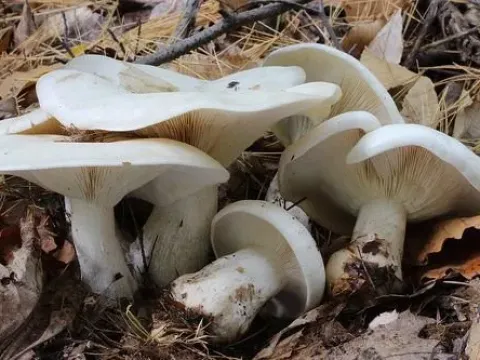
Clitocybe robusta
Clitocybe robusta
Clitocybe robusta is a fungus belonging to the Tricholomataceae family. While many Clitocybe species are saprotrophic, Clitocybe robusta can act as a facultative parasite, causing wood decay in weakened or stressed trees.
What the section contains
Clitocybe robusta
The fungus propagates through mycelial growth, which penetrates the bark and vascular systems of the tree. By secreting specific enzymes, it breaks down the complex structural components of wood, such as cellulose and lignin, compromising the tree's internal integrity.
Reproduction is facilitated by the formation of fruit bodies, which release millions of spores into the air. These spores are highly resilient and can travel significant distances, colonizing new hosts whenever conditions become favorable.
The biological nature of this fungus allows it to thrive on both decaying organic matter and living tissues of vulnerable trees. This adaptability makes it a persistent challenge in managed forest environments and orchards.
Diagnostic characteristics of Clitocybe robusta include its sturdy, often whitish or cream-colored fruit bodies with decurrent gills. Distinguishing it from other Clitocybe species is critical for correct identification and management.
The most visible sign of an infestation is the emergence of fruit bodies near the base of the tree or on exposed roots. The presence of these mushrooms indicates that the internal mycelial network is already well-established.
Trees affected by this pathogen often exhibit a decline in overall vigor. Symptoms include chlorosis (yellowing of leaves), sparse foliage, and premature leaf drop as the tree fails to transport enough water and nutrients.
Advanced stages of the disease result in wood rot, which can be seen upon inspection of the tree base. The wood may become soft, discolored, and fibrous, losing its ability to provide structural support for the tree.
Cracking and sloughing off of the bark near the root collar are common manifestations of decay beneath the surface. Sometimes, white mycelial mats can be found under the bark if the infestation is severe.
A noticeable decrease in annual growth rings and stunted shoot development are reliable indicators that the tree is diverting critical energy resources to combat the systemic fungal infection.
High moisture levels are the primary catalyst for the development of Clitocybe robusta. Waterlogged soil and humid environments provide the essential conditions for the spores to germinate and the mycelium to spread rapidly.
Temperature fluctuations within a temperate range generally favor fungal activity. Consistent, moderate temperatures combined with high humidity create the perfect environment for the colonization of new root tissues.
Mechanical damage to a tree's roots or lower stem acts as a primary entry point for the fungus. Injuries caused by heavy machinery, pests, or improper pruning practices significantly increase the tree's vulnerability.
Accumulated dead wood and forest litter near the base of trees provide a continuous food source for the fungus. This allows the pathogen to maintain a high population density, waiting for an opportunity to infect living specimens.
Low tree immunity, caused by drought stress, nutrient deficiency, or soil compaction, severely weakens the tree's natural defense mechanisms, leaving it unable to contain the fungal expansion.
The primary harm is the destruction of the root and buttress system, which significantly compromises the structural stability of the tree. This leads to an increased risk of windthrow, posing a danger to surrounding plants and property.
Economic damage is substantial in forestry and fruit production due to the loss of timber value and the decline in harvest quality. Infested trees often become unusable for commercial purposes.
The infection disrupts the ecological balance of the soil by crowding out beneficial mycorrhizal fungi. This degradation of the rhizosphere hinders the growth of healthy trees and slows down natural reforestation efforts.
Rapid spread in nurseries can lead to the loss of entire batches of saplings, necessitating expensive disposal and site sterilization processes to prevent further contamination.
Long-term colonization leads to the total degradation of the host, potentially resulting in the death of significant sections of forest or orchard land if the initial outbreak is not controlled promptly.
Sanitation is the cornerstone of management. Infected trees should be removed and destroyed, including the root ball, to eliminate the source of spores and the reservoir of mycelium.
Chemical control using systemic fungicides can be applied to the soil to inhibit mycelial growth; however, this is most effective when integrated with broader cultural management practices.
Improving drainage and soil aeration is essential to creating an environment hostile to fungal growth. Preventing water stagnation helps the tree recover its vigor and improves its ability to withstand secondary infections.
Proactive care, including proper fertilization and protection from mechanical injury, helps maintain the tree's natural defense systems, significantly reducing the chances of a successful fungal attack.
- Regular monitoring of tree health.
- Prompt removal of decaying wood and stumps.
- Sterilization of pruning tools to prevent cross-contamination.
- Avoiding wounding the roots during cultivation.