
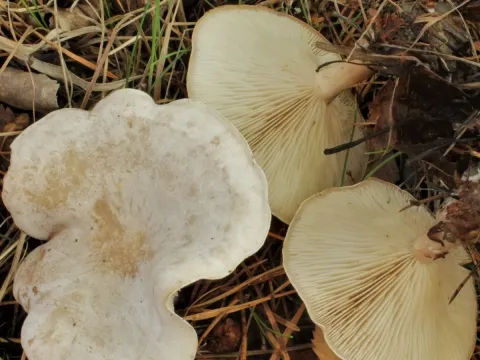
Clitocybe phyllophila
Clitocybe phyllophila
Clitocybe phyllophila (also known as the frost funnel) is a mushroom species belonging to the Tricholomataceae family. In an agronomic context, it acts as a soil-borne saprotroph that can occasionally colonize weakened plant tissues.
What the section contains
Clitocybe phyllophila
The primary pathogen is the mycelium, which resides in the leaf litter and organic matter of the topsoil. It decomposes cellulose and lignin, effectively transforming the soil environment to suit its growth requirements.
The life cycle involves the formation of fruiting bodies during autumn. Spores are dispersed by wind and water, allowing the fungus to spread rapidly across damp, sheltered areas of a garden or orchard.
Unlike obligate parasites, this fungus thrives on decaying organic material. However, its expansion into the root zones of trees often leads to competition for nutrients and space, creating stress for the host plant.
The fungal colonies are highly resilient and can persist in the soil for several seasons, particularly if the environment remains undisturbed and sufficiently moist.
The most visible sign of infestation is the appearance of whitish to cream-colored fruiting bodies near the base of trees. They often form dense clusters or circular patterns known as fairy rings.
Infected plants may exhibit chlorosis, characterized by yellowing leaves and reduced vegetative growth. This occurs because the mycelium disrupts the absorption of water and minerals through the roots.
At the root collar, a dense, white, web-like mycelium can be observed. The bark in these areas may become softened and exhibit a distinct, sweet-mushy odor typical of fungal decay.
As the disease progresses, fine lateral roots begin to die, leading to stunted overall development. The edges of the leaves may turn brown and dry out, a symptom of water transport failure.
Inspecting the soil surface beneath leaf litter often reveals extensive white mycelial cords. These cords penetrate the humus layer and actively bind to the root structures of nearby plants.
High humidity and consistent moisture levels are essential for the development of Clitocybe phyllophila. It predominantly favors shaded or partially shaded environments where moisture persists for longer periods.
The ideal temperature range for mycelial growth is between 15°C and 22°C. The fungus remains active throughout the cooler autumn months, which is when sporulation typically occurs.
Poor airflow, often caused by overly dense planting or lack of pruning, creates a stagnant microclimate that encourages the spread of spores and the development of fungal colonies.
The presence of thick, unmanaged layers of mulch or decomposing leaves provides an ideal substrate for the fungus to thrive. Fresh, untreated wood chips used as mulch can trigger an outbreak if applied too heavily near stems.
Soil pH plays a significant role in its establishment. This species prefers neutral to slightly acidic soils, making it more prevalent in areas where soil chemistry is not frequently monitored or adjusted.
The primary harm caused by this fungus is the depletion of soil nutrients and the weakening of plant roots. By competing for resources, it restricts the growth potential of crops and ornamental trees.
Chronic infestation makes trees highly susceptible to secondary infections, such as bacterial pathogens that exploit the weakened state of the root system.
The fungus produces secondary metabolites that can have an allelopathic effect, suppressing the growth of neighboring vegetation and decreasing the overall biodiversity of the garden soil.
Prolonged presence of the mycelium can alter the structural integrity of the soil, disrupting the microbial balance necessary for healthy root function and overall soil fertility.
If left unmanaged, the cumulative damage can lead to the gradual decline of host plants, characterized by significant branch dieback and decreased fruit production in orchards.
Maintaining good sanitation in the root zone is the most effective preventive measure. Regularly clearing away excess leaf litter and organic debris prevents the fungus from establishing a base.
Promoting soil aeration through light cultivation helps dry out the upper soil layers, making them less hospitable for the mycelium to spread and establish new growth centers.
Adjusting soil pH through the application of lime can create an unfavorable environment for the fungus, as it tends to prefer slightly acidic to neutral soil conditions.
For established infestations, systemic fungicides approved for agricultural use can be applied to the root zone to inhibit fungal growth during the active season.
Biocontrol agents, specifically Trichoderma species, are highly effective when applied to the soil. These beneficial fungi act as antagonists, naturally competing with and suppressing the growth of the pathogen.