
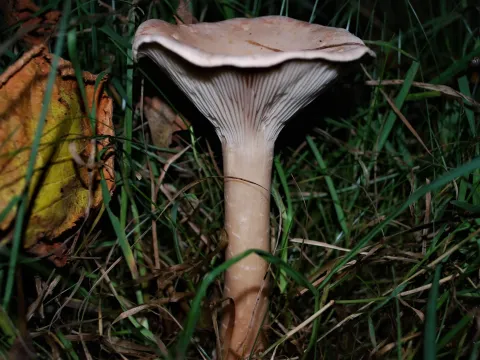
Clitocybe geotropa
Clitocybe geotropa
Clitocybe geotropa is a species of gilled mushroom in the family Tricholomataceae, commonly known as the trooping funnel.
What the section contains
Clitocybe geotropa
This fungus acts as a saprotroph, meaning it obtains its nutrients by breaking down non-living organic matter such as leaf litter and woody debris.
It is not classified as a plant disease or an agricultural pathogen; it does not harm living tissues of crops or trees.
The mycelium resides in the soil, secreting enzymes that decompose complex organic molecules into simpler substances.
As a decomposer, it plays a critical ecological role in nutrient cycling and soil enrichment within forest ecosystems.
The most visible indicator of this fungus is the presence of its characteristic funnel-shaped fruiting bodies during autumn.
The cap is typically large, fleshy, and yellowish-buff, with a distinct upturned margin when fully mature.
The gills are crowded and decurrent, running down the stalk, which is a key identification feature for this species.
These mushrooms often appear in arcs or large rings on the forest floor, marking the expansion of the underground mycelium.
The stalk is robust and often matches the color of the cap, becoming slightly darker with age and handling.
Clitocybe geotropa thrives in environments with high levels of organic matter, such as deciduous or mixed forests.
It prefers moist, well-drained soils and is commonly found in areas where leaf litter has accumulated for several years.
The development of fruiting bodies is heavily dependent on cool, humid weather conditions typically seen in late summer and autumn.
Soil pH and the availability of decaying plant material are the primary drivers of fungal colonization density.
Inadequate moisture or extreme temperatures will cause the mycelium to remain dormant until favorable conditions return.
There is no evidence of Clitocybe geotropa causing damage to agricultural productivity or plant health.
It is not a parasite and does not compete with crops for resources in standard field or garden settings.
No systemic agricultural risks are associated with this species, making it harmless to farmers and gardeners.
Some minor aesthetic issues might occur in landscaped forest areas if the fungus is unwanted, but this is rare.
Overall, the fungus is considered a neutral or beneficial component of the environment rather than a source of harm.
No chemical or biological control measures are necessary, as the fungus poses no threat to cultivated plants.
If its presence is undesirable in a specific location, physical removal of fruiting bodies can prevent further spore dispersal.
Soil cultivation, such as tilling and aerating, can disrupt the mycelial network and reduce fungal activity.
Removing excess organic litter and maintaining proper soil drainage are effective preventative measures against colonization.
General garden sanitation practices are sufficient to manage the presence of this saprotrophic mushroom.