
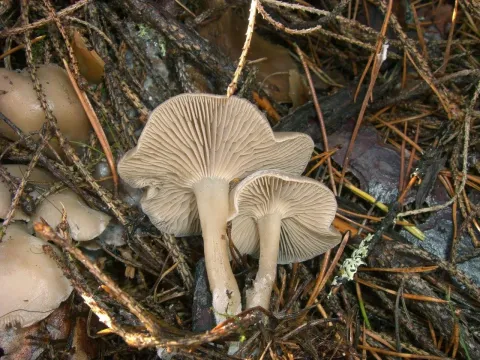
Clitocybe ditopa
Clitocybe ditopa
Clitocybe ditopa is a species of fungus belonging to the Tricholomataceae family. In mycological terms, it acts as a saprotroph, living in forest litter and breaking down organic material.
What the section contains
Clitocybe ditopa
The causative agent of this species' appearance is the mycelium, which develops within organic soil debris. It is not a pathogen to agricultural crops but plays a role in the natural decomposition process.
Morphologically, the fungus is characterized by a greyish-brown cap and a distinct meal-like (farinaceous) odor. It is primarily a woodland species and is rarely found on cultivated agricultural land.
The biological function of this fungus is the degradation of lignin and cellulose. It does not infect plant roots or cause any recognized diseases in agricultural crops.
It is important to distinguish between saprotrophic species that occupy debris and pathogenic fungi that harm plants. Clitocybe ditopa poses no threat to harvests as it is a natural component of ecosystems.
The primary sign of this fungus is the formation of fruiting bodies on the soil surface or within accumulated plant debris during the autumn season.
The fruiting bodies are relatively small, appearing in grey or smoky brown shades. The cap usually exhibits a depressed or funnel-like shape with decurrent gills.
A distinctive feature for identification is the specific odor, often described as meal-like or musty, which is typical for many members of the Clitocybe genus.
The fungi often grow in clusters or small colonies. In humid woodland environments or shaded gardens, these clusters can become quite noticeable during the growing season.
Visual inspection of the plot helps identify these fungi when the mycelium is active. Their presence usually indicates a high level of organic matter and moisture in the soil.
The development of Clitocybe ditopa fruiting bodies is directly dependent on environmental humidity and temperature. The fungus prefers cool, rainy autumn weather.
A temperature range of 10–18 degrees Celsius is most favorable for the active growth of the mycelium. Severe frosts or drought will halt the formation of fruiting bodies.
Loose, humus-rich soil is essential for the species' survival. Leaf litter from coniferous or deciduous trees serves as the primary food source for the mycelium.
Shaded areas of a garden or forest edges provide the ideal conditions for maintaining the humidity required for fruiting body development.
The mycelium of the fungus can survive in the soil for a long period, waiting for the necessary environmental conditions to trigger the reproductive phase.
Clitocybe ditopa causes no direct damage to agricultural crops, as it is a saprotroph. In agronomic terms, it is not considered a plant disease.
The main danger lies in its inedibility and the risk of accidental consumption. Many species in the Clitocybe genus contain toxins that can cause digestive distress.
The presence of these fungi on a plot may indirectly suggest excessive soil moisture or poor drainage, which might be detrimental to sensitive vegetable crops.
For landowners, the presence of these fungi is a sign to observe soil drainage and sanitation, but it is not a reason to worry about crop health.
Due to its potential toxicity, it is advisable to restrict access for children and pets to areas where large clusters of these fungi appear.
No specific control measures are required for this fungus, as it is not a pest or a pathogen to plants.
If removal is desired, physical collection and disposal of the fruiting bodies along with organic debris is sufficient.
Preventative measures involve improving soil drainage and regularly clearing away fallen leaves to reduce the substrate available for mycelial development.
The use of fungicides against this species is inefficient and detrimental to beneficial soil microorganisms, so agronomic management is preferred.
Maintaining a healthy garden ecosystem through proper crop rotation and soil care is the best way to prevent the uncontrolled spread of fungal colonies.