
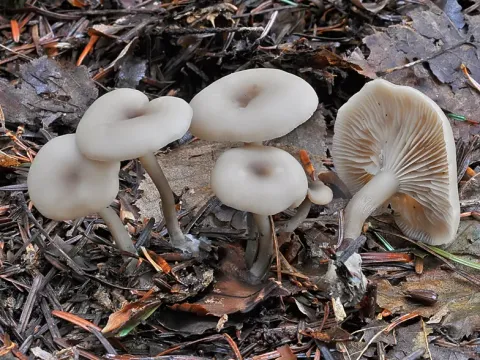
Clitocybe decembris
Clitocybe decembris
Clitocybe decembris is a fungus belonging to the Basidiomycota division. In an agricultural context, it acts primarily as a saprotroph, decomposing organic matter within the forest floor or nutrient-rich soil layers.
What the section contains
Clitocybe decembris
This fungus is not typically a primary plant pathogen; however, its occurrence reflects specific ecological conditions in the field, often linked to the accumulation of undecomposed organic debris.
The fungal mycelium spreads through the upper soil layers, utilizing its enzymatic activity to break down complex organic compounds like lignin and cellulose into simpler substances.
Morphologically, it is recognized by the appearance of its fruit bodies in late autumn and winter. The subterranean mycelium remains active even during cold spells, provided moisture levels are high.
While biologically beneficial as a decomposer, its presence in arable land signifies a need for better soil management to optimize organic matter turnover and soil microbial balance.
The primary drivers for Clitocybe decembris development are high soil moisture and temperate to cool climate conditions. The fungus thrives during the late autumn transition into winter.
Fields with significant amounts of surface crop residue or thick mulch layers provide the ideal substrate for this fungus to establish and spread effectively.
The fungus prefers loosely textured, humified soils that retain moisture but allow for the penetration of its hyphae. Compact or overly dry soils generally inhibit its development.
An environment with minimal sunlight reaching the soil surface encourages the growth of this species. Shaded, damp conditions prevent the rapid desiccation of the topsoil, which the fungus requires.
Stable temperatures between 2 and 10 degrees Celsius are ideal for its vegetative phase and the subsequent emergence of fruit bodies, making it a seasonal occurrence in many regions.
The harm caused by Clitocybe decembris is indirect, often involving competition with beneficial soil microorganisms for nutrients within the rhizosphere of cultivated plants.
Massive colonization of organic residues by the fungus can lead to nitrogen immobilization, temporarily depriving germinating seeds or young crops of vital nutrients during the autumn planting season.
Its presence indicates poor soil aeration or inadequate incorporation of organic debris, which creates a habitat that may also be conducive to other more harmful soil pathogens.
Although it does not directly infect healthy plant tissues, the dense hyphal mats can physically interfere with root development and water uptake in seedlings planted into fresh residue.
Overall, the fungus acts as an indicator species, showing that the soil conditions are favoring saprotrophic activity over the rapid nutrient cycling required for high-yield crop production.
The most effective strategy for managing this fungus is thorough soil cultivation. Deep plowing helps incorporate organic residues, accelerating their mineralization and reducing the habitat for saprotrophs.
Implementing a proper crop rotation strategy prevents the buildup of organic debris and fungal populations in the soil, promoting a more diverse and balanced microbial community.
The use of microbial stubble decomposers can speed up the decay process of crop residues, making the soil less attractive for colonization by Clitocybe species.
Improved field drainage is essential in preventing the waterlogged conditions that allow such fungi to thrive, particularly in areas where winters are mild and damp.
Manual removal of visible fruit bodies before they reach full maturity can help reduce the localized spore load, though this is primarily effective for small-scale garden settings or nurseries.