
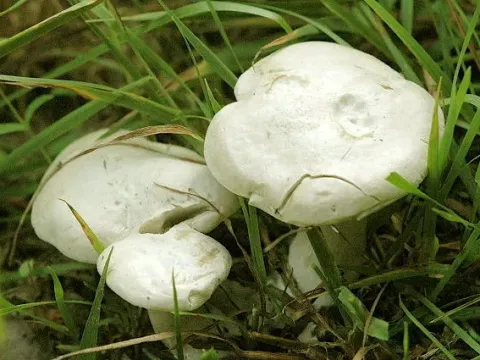
Clitocybe dealbata
Clitocybe dealbata
Clitocybe dealbata, commonly known as the ivory funnel, is a gilled mushroom in the Tricholomataceae family. While not a classical plant pathogen, it acts as a soil fungus that frequently colonizes agricultural areas and lawns.
What the section contains
Clitocybe dealbata
As a saprotrophic fungus, it feeds on decaying organic matter in the soil. It forms a dense network of mycelium that can disrupt the natural biological balance of the affected area.
The fungus produces fruiting bodies that appear in clusters, often forming distinct circles on the ground. These structures are short-lived but are capable of releasing vast amounts of spores into the environment.
Reproduction is primarily via spores, which are easily dispersed by wind and splashing rainwater. This efficient mechanism allows the fungus to spread rapidly across fields and garden beds.
For growers, Clitocybe dealbata is categorized as a nuisance organism due to its high toxicity and the negative impact its presence has on soil quality and overall hygiene of the crop land.
The most visible sign of Clitocybe dealbata is the formation of "fairy rings." These are circular patches of growth where the grass inside may look discolored or stunted compared to the surroundings.
The cap of the mushroom is small, usually 2 to 6 centimeters in diameter, with a creamy-white to greyish-white color. It often features a slightly powdery or frosted appearance on the surface.
The gills are crowded and decurrent, meaning they run down the stem. This specific gill arrangement is a primary identification feature for the species. The stem is solid and consistent in color with the cap.
Fruiting bodies tend to emerge in masses after periods of high rainfall or prolonged humidity. In dry conditions, the mushrooms shrink and may become nearly invisible to the casual observer.
The fungus has a typical "mushroomy" or slightly mealy odor when handled, which helps distinguish it from other soil-borne fungi commonly found in similar environments.
The development of Clitocybe dealbata is strongly associated with high levels of un-decomposed organic matter in the soil. Areas heavily amended with fresh manure often suffer from infestations.
High moisture levels in both the soil and the air are essential for the formation of fruiting bodies. Therefore, over-irrigation and poor site drainage are major environmental triggers.
Compacted, poorly aerated soils create a perfect haven for the fungus. It frequently colonizes areas that are rarely tilled or have been neglected for extended periods.
Moderate temperatures ranging from +15°C to +22°C are ideal for the metabolic activity of the mycelium. Fluctuations outside this range may slow growth but rarely kill the fungus entirely.
The fungus tends to prefer neutral to slightly acidic soils. Maintaining proper pH levels is often a key factor in limiting the spread of this organism across an agricultural site.
The primary concern regarding Clitocybe dealbata is its severe toxicity due to high concentrations of muscarine. Ingestion can lead to dangerous poisoning symptoms, making it a serious hazard in food-growing areas.
The presence of the fungus often indicates poor aeration and excessive organic accumulation in the soil, which can hinder the growth of healthy crop roots.
Mycelial growth can outcompete beneficial microorganisms and mycorrhizal fungi, potentially reducing the overall productivity and fertility of the affected patches of soil.
In ornamental settings, such as golf courses or home lawns, the aesthetic damage caused by fairy rings is significant, often requiring expensive renovation to restore uniform grass coverage.
For large-scale operations, the fungus poses a workplace safety risk, requiring protocols to handle or eliminate the mushrooms to prevent accidental contact by farm workers.
Mechanical removal of fruiting bodies is the most immediate control measure. Gloves should always be worn to prevent dermal exposure to the toxins present in the mushroom.
Deep tilling or aeration of the affected area helps break up the mycelial mats. This process introduces oxygen into the soil, which helps decompose organic matter more rapidly.
Improving soil drainage is crucial. By preventing waterlogged conditions, you make the environment far less hospitable for fungal colonization.
Applying lime or dolomite to shift soil pH toward alkalinity can effectively suppress the growth of many soil fungi, including Clitocybe dealbata.
- Clear away excess decaying plant debris from the surface.
- Ensure balanced fertilization to promote crop health over fungal development.
- Practice regular crop rotation to break the survival cycle of soil-borne organisms.