
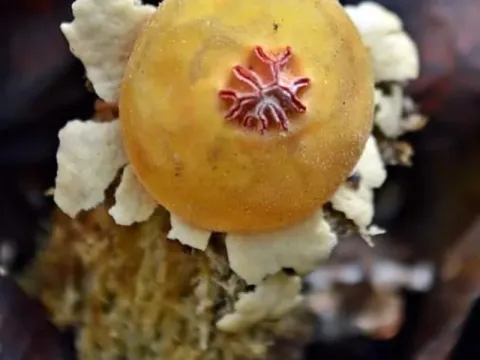
Calostoma
Calostoma
Calostoma is not a plant disease or a pathogen. It is a genus of stalked puffball fungi belonging to the family Sclerodermataceae that act as essential saprotrophs in nature.
What the section contains
Calostoma
These organisms derive their nutrients from decaying organic matter, such as leaf litter and woody debris. They do not attack living plant tissues and have no parasitic relationship with crops.
The fungus is characterized by a unique morphology featuring a gelatinous outer layer and a bright interior known as the gleba, which emerges upon maturation.
In forest ecology, Calostoma plays a vital role by breaking down complex organic compounds and recycling essential nutrients back into the soil ecosystem.
Because of its unusual appearance, it is sometimes mistaken for a symptom of a plant infection by amateur observers, but it is completely harmless to garden and agricultural plants.
Calostoma requires specific environmental conditions to develop fruiting bodies, typically preferring moist, shaded areas with high levels of accumulated organic matter.
These fungi thrive in stable microclimates, often found in temperate or subtropical forests where the forest floor provides a consistent moisture level and rich humus.
The production of fruiting bodies usually occurs during cooler, wetter periods, such as late summer or autumn, when humidity levels are optimal for fungal growth.
Spores are dispersed through the air or by small insects attracted to the scent and color of the exposed gleba, allowing the fungus to colonize similar habitats nearby.
The presence of Calostoma in an area is often a positive biological indicator of high soil quality and rich organic activity within the surrounding environment.
Calostoma causes zero harm to agricultural crops, fruit trees, or ornamental plants. It is not an infectious agent and does not compromise plant health in any way.
Control measures are unnecessary for this organism. Applying fungicides to treat Calostoma is wasteful and potentially harmful to the beneficial soil microbial community.
Rather than being a nuisance, the fungus contributes to soil fertility by acting as a natural decomposer, transforming plant remnants into usable nutrients for trees.
If you encounter plant decline in areas where this fungus grows, you should investigate other factors such as nutrient deficiencies, pest infestation, or actual pathogens.
In summary, Calostoma is an ecologically beneficial component of the landscape and requires no intervention or chemical protection strategies.