
Calycellina alniella
Calycellina alniella
Description
Symptoms
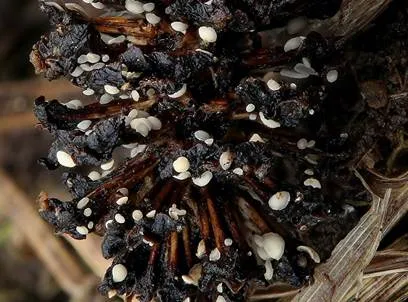
The primary symptom is the emergence of tiny, disc-shaped fruit bodies on fallen or dying alder leaves. These are often so small that they appear as tiny dots to the naked eye.
Before the appearance of fruit bodies, leaf tissues may lose their natural green pigment, turning yellowish or light brown. The structural integrity of the leaf weakens in the affected areas.
Premature leaf drop is a common indicator of significant infection. This occurs because the fungus disrupts the leaf's physiological functions, leading to early senescence and abscission.
Necrotic spots may develop on leaf petioles and young shoots, eventually covered by a fine layer of spores. These spots serve as visible proof of the pathogen's active colonization of the plant.
Visual identification in the field can be difficult, as the symptoms may resemble those of other leaf-spotting fungi, necessitating microscopic examination to confirm the presence of Calycellina alniella.
Pathogen
The causative agent of this disease is the fungus Calycellina alniella, which belongs to the Helotiales order. It is a micro-fungus that acts primarily as a saprotroph but can exhibit opportunistic pathogenic traits on alder trees.
The life cycle of the fungus is closely tied to humid environments where alder stands typically thrive. Spores are disseminated via wind and rain, landing on suitable organic substrates to begin the infection process.
Upon germination, the fungal mycelium penetrates plant tissues by secreting specific enzymes that degrade cell walls. This action provides the pathogen with nutrients necessary for its further growth and development.
The fruit bodies, known as apothecia, are small and disc-like, often appearing in pale yellow or creamy colors. They form on infected leaf surfaces and stems during periods of high humidity, acting as the primary source of new spore production.
Mycological analysis of Calycellina alniella reveals specialized structures of asci and spores that are characteristic of the genus, allowing for accurate identification under laboratory conditions.
Conditions for development
The proliferation of Calycellina alniella is highly dependent on humidity levels. Wet, overcast weather conditions are ideal for the rapid development of the fungus on host tissues.
Alder stands located in low-lying areas, near water bodies, or in dense forests with limited airflow are at the highest risk. These environments maintain the moisture required for spore germination.
The accumulation of leaf litter is a critical factor in disease propagation. Since the fungus overwinters on fallen debris, failing to remove this material ensures the presence of inoculum for the next growing season.
Temperatures ranging from 15 to 22 degrees Celsius (59–72 degrees Fahrenheit) provide the optimal metabolic environment for the fungus to thrive during the spring and autumn months.
Lack of proper forest management, including excessive density and poor thinning practices, creates the stagnant, humid microclimate that this fungal pathogen requires to spread effectively.
Why it matters
The main damage caused by Calycellina alniella is the reduction of the tree's photosynthetic capacity due to early defoliation. This weakens the tree's overall vigor and energy storage reserves.
Chronic infection can lead to stunted growth and reduced annual wood increments. Over time, affected trees may become less resilient to environmental stressors like drought or severe frost.
By compromising the health of the alder, this fungus makes the host more susceptible to secondary infestations by insects or more aggressive pathogenic fungi that can lead to tree decline.
Economic losses are most significant in nurseries, where young saplings may suffer reduced growth rates or mortality, requiring expensive intervention and loss of stock quality.
In broader ecological terms, the pathogen influences the decay rate of leaf litter, potentially altering the nutrient cycling processes within the specific alder forest ecosystem.
Protection
Sanitation is the most effective preventative measure. Regularly removing and destroying fallen leaf litter significantly reduces the fungal inoculum present in the immediate environment.
Thinning out dense stands improves air circulation and sunlight penetration, which helps to keep foliage dry and creates an environment less conducive to fungal development.
In nurseries, the application of fungicides may be necessary during periods of high disease pressure. Treatments should be timed according to local weather forecasts and expert guidance.
Promoting general tree health through balanced fertilization and proper site selection helps strengthen the plant's natural immune response against fungal pathogens.
Adopting sustainable silviculture practices that emphasize stand diversity and proper spacing is essential for long-term prevention of Calycellina alniella outbreaks.
Discussion
No discussions yet — be the first.