
Calostomataceae
Calostomataceae
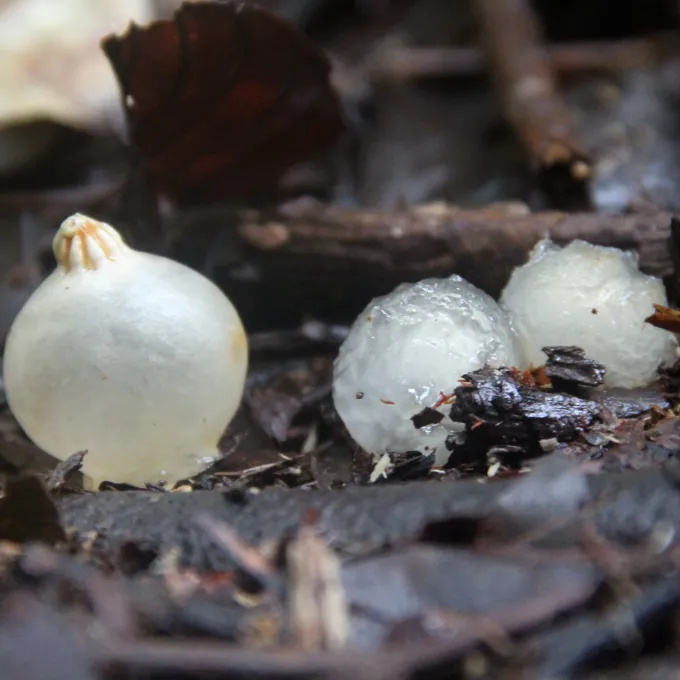
Description
Pathogen
The Calostomataceae family does not constitute a plant disease agent. These organisms are saprotrophic fungi that live in natural forest ecosystems and have no pathogenic impact on agricultural crops.
Unlike parasitic fungi, they do not infiltrate or damage living plant tissues. Their primary ecological function is the decomposition of organic matter, such as leaf litter and woody debris.
The fungal mycelium spreads through the upper layers of forest soil. They function as decomposers, breaking down organic polymers into simpler substances that return nutrients to the soil.
Their fruiting bodies are highly specialized, often featuring a gelatinous stipe and a persistent, often tough, peridium. Spore dispersal is typically passive or triggered by environmental moisture.
In terms of plant pathology, Calostomataceae are considered harmless. They are never classified as agents of agricultural disease or crop pests.
Conditions for development
Calostomataceae require specific environmental conditions, typically found in moist, temperate, or tropical forests. They thrive in areas with undisturbed soil and high organic content.
High humidity levels are crucial for the development of their fruiting bodies. Without sufficient moisture in the soil and air, the mycelium remains inactive.
They are sensitive to soil disruption, such as plowing or heavy fertilization, which explains why they are not found in modern agricultural fields.
Preferential habitats include deep litter layers where the temperature remains relatively stable. They often associate with shaded areas protected from direct drying sunlight.
The presence of these mushrooms is often indicative of healthy, long-term undisturbed forest soil. They are highly dependent on the stability of their microhabitat.
Why it matters
There is no economic harm or plant damage associated with Calostomataceae. They are not plant pathogens and do not impact agricultural productivity.
They do not produce toxins that affect crops or surrounding vegetation. Their role is strictly beneficial within the nutrient cycle of forest environments.
No protective measures are required for these mushrooms, as they do not pose any threat to forestry or farming practices.
Studies confirm that these fungi do not display parasitic behavior toward woody plants or herbaceous flora. They are strictly decomposers.
Therefore, Calostomataceae are regarded as a benign part of the ecosystem, not a concern for professional agronomy or plant health management.
Discussion
No discussions yet — be the first.