
Calostoma cinnabarinum
Calostoma cinnabarinum
Description
Symptoms
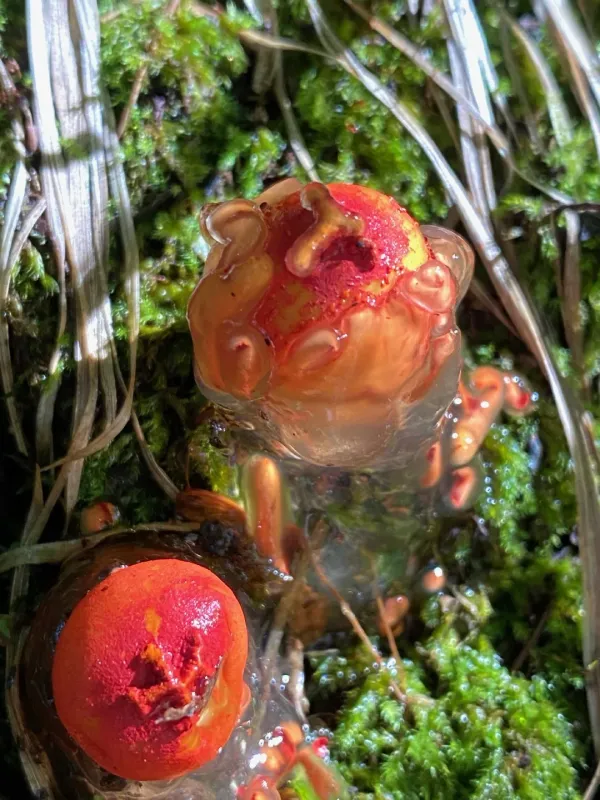
The fungus is easily identified by its striking bright red fruiting bodies that emerge from the soil surface, often looking like small, ornamental cages.
A key physical feature is the gelatinous, translucent stalk that supports the spore-bearing head, which is highly visible under moist conditions.
The apex of the fruiting body features a distinct, star-shaped pore through which spores are released, providing a unique diagnostic characteristic for identification.
While the exterior is vibrant, it can fade due to desiccation, eventually turning into a dry, crusty texture as the fungus ages in drier environments.
- Bright cinnabar-red spore-bearing head
- Gelatinous, stem-like base
- Distinct apical pore for spore dispersal
- Typically found growing on soil in wooded areas
Pathogen
Calostoma cinnabarinum is not a plant disease or an agricultural pathogen; it is a saprotrophic fungus that thrives on decomposing organic matter within forest habitats.
Belonging to the family Calostomataceae, this species functions as a decomposer, breaking down leaf litter and woody debris in natural forest ecosystems.
It does not possess the biological mechanisms to infect living plant tissue, meaning it poses no risk to horticultural crops, field plants, or ornamental garden trees.
The fungus spends the majority of its lifecycle as mycelium hidden within the soil, interacting solely with decaying organic material rather than attacking host plants.
Labeling this species as a crop disease is biologically inaccurate, as it serves an ecological role in recycling nutrients back into the forest soil.
Conditions for development
The growth and emergence of Calostoma cinnabarinum are highly dependent on specific environmental conditions found in temperate deciduous or mixed forests.
Sufficient moisture is the primary requirement for the development of its visible structures; it is most commonly found during periods of high rainfall and humidity.
Soil composition is equally critical, as the fungus requires a substrate rich in decaying organic matter, such as leaf mold or rotting woody fragments.
Shaded environments are preferred, as these locations provide the stable microclimate and moisture retention necessary for the fragile fruiting bodies to mature.
Seasonal fluctuations define its appearance, with the fungus appearing most frequently in the late summer and autumn when temperature and rainfall levels are optimal.
Discussion
No discussions yet — be the first.