
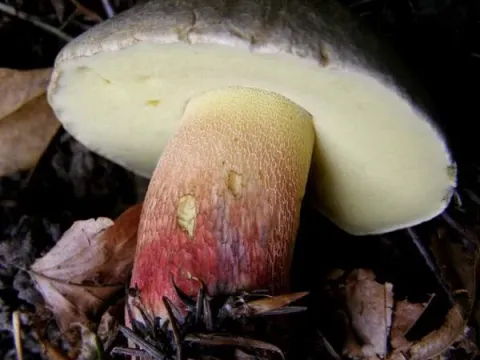
Bitter bolete
Caloboletus
The bitter bolete, botanically known as Caloboletus radicans, is a fungus characterized by a sturdy, heavy body often found in deciduous forests.
What the section contains
Bitter bolete
Its cap is typically 5 to 15 cm wide, featuring a pale, grayish-white or brownish-buff surface that often looks dry and may become cracked in mature specimens.
Underneath the cap, the pore surface is a distinct lemon-yellow color, which turns an immediate and vivid blue when bruised or damaged.
The stem is robust, frequently bulbous at the base, and pale-colored, often displaying a very faint reticulation pattern near the top.
The flesh is firm and white, but like the pores, it bruises bright blue upon cutting or exposure to air, serving as a vital clue for identification.
Caloboletus radicans is an ectomycorrhizal fungus, meaning it maintains a symbiotic relationship with tree roots, especially oak and beech trees.
It is not a plant pathogen; it does not infect or damage the living tissues of trees but rather aids in nutrient uptake for its host species.
As a mycorrhizal partner, it plays an important role in the forest ecosystem by facilitating the exchange of minerals and water between the soil and trees.
The term "inedible" reflects its chemical composition, specifically the presence of bitter compounds that make it unpalatable and toxic to humans, not its status as a plant disease.
From an agronomic perspective, this mushroom is ecologically neutral or beneficial and poses no threat to agricultural or forest productivity.
This fungus thrives in deciduous woodlands, particularly where oak, beech, or birch trees provide the necessary environmental conditions for its mycorrhizal growth.
It requires moderate temperatures and consistent moisture, typically appearing during the late summer and throughout the autumn months.
The species prefers well-drained soils and is commonly found along forest paths, trails, or in clearings where the ground is sufficiently aerated.
Spread by spores, the fungus disperses its genetic material across the forest floor, allowing for continued colonization of suitable root zones.
It is somewhat sensitive to extreme cold, meaning its seasonal appearance is restricted to the warmer months of the year when the soil is biologically active.
The primary harm caused by the bitter bolete is to human health when consumed, as it causes severe gastrointestinal distress and nausea.
The mushroom is classified as inedible due to its intense bitterness, which remains even after prolonged cooking, making it unsuitable for human consumption.
It poses no threat to crops, plants, or timber production, and there is no evidence that it contributes to any plant-related diseases.
Cases of accidental ingestion occur when foragers mistake it for the highly prized Boletus edulis (porcini), highlighting the need for proper identification.
The fungus is effectively harmless to the environment; it is a natural component of healthy woodland soil that helps maintain forest diversity.
No protective measures or control strategies are needed for Caloboletus radicans as it does not negatively affect plant health or agricultural yields.
Foraging safety relies entirely on the knowledge of the mushroom collector and the ability to differentiate this bitter species from edible lookalikes.
Practicing due diligence, such as tasting a small fragment of the cap (spitting it out immediately) if unsure, can help detect the characteristic bitterness.
Educational programs and local field guides are the best tools to minimize the risk of accidental ingestion for mushroom enthusiasts.
- Always check the color change reaction on the pores and flesh.
- Familiarize yourself with the lack of edibility of bitter-tasting boletes.
- When in doubt, discard the mushroom rather than risking potential gastrointestinal illness.