
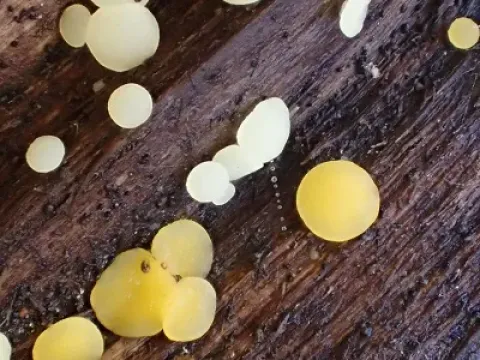
Bisporella pallescens
Bisporella pallescens
Bisporella pallescens is a species of fungus in the order Helotiales. It acts primarily as a saprotroph, decomposing organic matter within woody tissues.
What the section contains
Bisporella pallescens
This fungus is typically found on the wood of deciduous trees, where it plays an ecological role in breaking down lignin and cellulose components.
Biologically, it is recognized by its small, lemon-yellow or pale apothecia that erupt through the bark surface during favorable weather conditions.
The mycelium of the fungus can penetrate deep into the woody xylem, especially when the tree's natural defense mechanisms are compromised.
While often considered non-parasitic, it can exploit weakened trees, contributing to the decay of branches and causing structural instability over time.
The most visible signs are the small, yellow-colored fruiting bodies that appear in clusters on the surface of decaying wood or bark.
These apothecia have a distinct cup-like or disc-like shape, measuring typically between 2 to 5 millimeters in diameter.
As the infection progresses, the wood underneath the bark may show visible signs of discoloration or softening, indicating internal decay.
The bark itself often becomes loose or begins to slough off, revealing the colonized and rotting wood underneath where the fungus thrives.
In humid conditions, the fruiting bodies become more prominent and hydrated, making them easy to identify during routine garden inspections.
High moisture levels and atmospheric humidity are essential requirements for the development of the fungal fruiting bodies.
The fungus thrives in moderate temperature ranges, typically between 10 and 20 degrees Celsius, often appearing during autumn or spring.
Wounds, pruning cuts, or frost cracks act as entry points for the fungal spores, allowing them to colonize the interior of the tree.
Stagnant air and lack of proper canopy ventilation contribute to persistent dampness, which is highly conducive to fungal outbreaks.
The presence of deadwood, either on the tree or as fallen debris on the ground, serves as a primary reservoir for the fungus to persist in the environment.
The primary damage caused by Bisporella pallescens is the progressive softening and rot of the timber, which weakens the tree's structural integrity.
Trees affected by significant rot are at a higher risk of branch failure or structural collapse during strong winds or heavy snow events.
The fungal infection creates a niche that attracts wood-boring insects, further exacerbating the decline of the tree's health.
Over time, the cumulative impact of decay can shorten the lifespan of ornamental or fruit-bearing trees, reducing their aesthetic and commercial value.
By interfering with vascular processes, the decay can also stress the tree, making it less productive and more sensitive to external environmental stressors.
Regular sanitation, including the prompt removal of dead, dying, or diseased branches, is the most effective way to manage the fungus.
Pruning cuts should be clean, and larger wounds should be sealed with appropriate wound dressings to prevent the entry of fungal spores.
Promoting tree health through adequate irrigation, fertilization, and soil management helps the tree maintain strong natural defenses.
Ensuring proper air circulation within the canopy helps keep the bark dry and reduces the chances of fungal colonization.
In cases of severe infestation, using copper-based fungicides can help protect healthy tissues and mitigate the spread of the pathogen.