
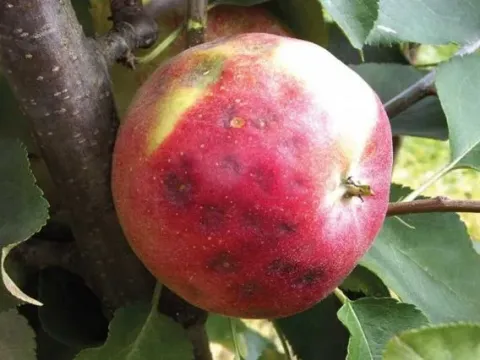
Bitter pit of apple
Apple scar
The first symptoms of bitter pit manifest as small, slightly sunken spots on the skin of the fruit. These spots often appear darker or lighter than the surrounding healthy skin, depending on the cultivar.
What the section contains
Bitter pit of apple
Beneath these external indentations, the flesh of the apple contains dry, corky, and brown-colored tissue. When eaten, these areas have a distinctly bitter taste, which gives the disorder its common name.
Symptoms usually develop as the fruit approaches maturity, but in many cases, they remain invisible until weeks or months after the apples have been placed in cold storage.
As the condition progresses, the pitting can become more severe, causing the fruit to look bumpy and deformed, making it completely unmarketable for commercial sale.
Different apple cultivars show varying levels of sensitivity; large fruits on young trees are typically the most susceptible to developing these characteristic pits.
Bitter pit is not caused by pathogens such as bacteria, fungi, or viruses. Instead, it is classified as a physiological disorder related to the internal metabolic processes of the tree.
The primary driver of the disorder is a localized deficiency of calcium within the fruit flesh. Calcium is essential for stabilizing the cell walls and membranes; its absence leads to cell collapse.
Nutrient competition between vegetative parts and fruits causes an imbalance. Calcium is mobile in the soil but poorly transported into fruits, often being redirected to rapidly growing shoots.
Disturbances in the water transport system (xylem) prevent enough calcium from reaching the fruit, especially when transpiration rates fluctuate due to extreme weather.
The disorder is essentially a failure of cell integrity during the development phase, resulting in programmed cell death in concentrated areas of the fruit.
Excessive nitrogen fertilization is a major factor in promoting bitter pit. Nitrogen encourages rapid leafy growth, which consumes calcium that would otherwise be allocated to the fruit.
Inconsistent irrigation or soil moisture levels significantly hinder calcium uptake by the roots, making the fruit more prone to deficiency during hot, dry spells.
High temperatures during the growing season increase transpiration, which can disrupt the flow of mineral nutrients to the fruit, thereby exacerbating the risk of disorder development.
Severe pruning techniques stimulate excessive new vegetative growth, which acts as a "sink" for calcium, competing directly with the developing apples for nutrient supply.
Low crop loads on trees often result in oversized fruit. These large apples have a higher concentration of potassium and magnesium relative to calcium, increasing their susceptibility to pitting.
The primary impact of bitter pit is the drastic reduction in fruit quality. Even if the internal damage is minimal, the exterior appearance prevents the fruit from meeting market standards.
Significant economic losses occur during storage, as asymptomatic fruit at harvest time can suddenly develop spots, leading to massive rejection of stored batches.
The bitter taste and corky texture make the fruit unsuitable for consumption or processing, forcing growers to discard significant portions of their annual yield.
The breakdown of tissue at the pit sites creates entry points for secondary pathogens, such as rots, which can spread and cause total losses in storage environments.
Continuous management of this physiological disorder adds significant labor and chemical costs, impacting the overall profitability of the commercial orchard.
Regular foliar applications of calcium-based fertilizers are the most effective management strategy. These sprays should begin a few weeks after petal fall and continue throughout the growing season.
Proper nutrient management is crucial; avoid excessive nitrogen applications and ensure that potassium and magnesium levels are balanced to prevent them from interfering with calcium uptake.
Maintaining consistent soil moisture through drip irrigation helps ensure a steady supply of nutrients, reducing the stress that triggers physiological imbalances.
Moderate pruning practices help maintain a balance between foliage and fruit, ensuring that calcium is distributed equitably throughout the tree's structures.
- Monitor leaf and fruit tissue for calcium levels periodically.
- Harvest fruits at the optimal maturity window to avoid over-ripening.
- Select rootstocks known for high calcium uptake efficiency.
- Proper thinning of the fruit crop to prevent overly large fruit development.