
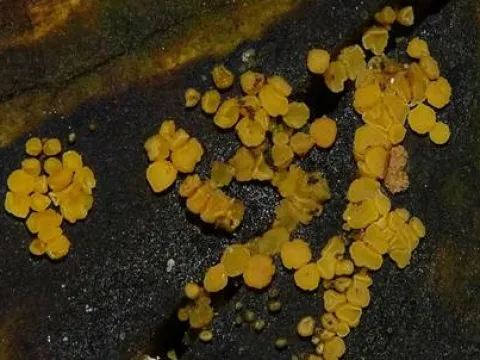
Bisporella subpallida
Bisporella subpallida
Bisporella subpallida is an ascomycete fungus often found on decaying wood. It is recognized as a saprotrophic species that can occasionally turn opportunistic in weakened tree hosts.
What the section contains
Bisporella subpallida
The fungus manifests through small, cup-shaped apothecia that appear pale yellow or whitish. These fruiting bodies are typically clustered and attach directly to the decaying substrate.
The mycelium of the pathogen penetrates wood fibers, actively breaking down organic complexes such as cellulose. This activity results in the gradual softening and degradation of the wooden tissues.
Reproduction is primarily via airborne spores, which allow the fungus to colonize new areas, particularly where the bark has been compromised by environment or injury.
As part of the Helotiaceae family, this fungus plays a significant role in forest ecology as a decomposer, although its presence on commercial trees is considered detrimental.
High humidity and moisture levels are the most critical factors for the successful colonization of Bisporella subpallida. It thrives in damp, shaded environments with minimal airflow.
Temperature ranges typical of spring and autumn seasons are optimal for mycelial growth, facilitating rapid spread when the host is stressed or damp.
Mechanical damage, such as wounds from storm breakage or pruning, provides an entry point. Without proper protection, these open tissues are highly susceptible to fungal spores.
Poorly ventilated planting areas or dense canopies create a stagnant microclimate that encourages the survival of moisture-dependent pathogens like this one.
Consistent rainfall or high fog levels sustain the dampness of the bark and wood surfaces, directly promoting the emergence of the fungus's reproductive structures.
The primary damage caused by Bisporella subpallida is the structural weakening of the wood. As the fungus consumes essential fibers, branches lose their mechanical strength and break under stress.
In living trees, internal decay disrupts the vascular system, limiting the transport of nutrients and water, which ultimately leads to canopy thinning and branch dieback.
Timber value is severely impacted by the presence of this fungus, as decay renders the wood structurally unsound for any construction or manufacturing purpose.
The presence of this fungus acts as a source of inoculum in an orchard or forest, increasing the likelihood of infection for surrounding trees that may have existing vulnerabilities.
Chronic infestation often leads to the decline of tree vitality, reducing the aesthetic appeal and long-term viability of the plant in a landscape setting.
The most effective strategy is proactive sanitation, which includes the removal of dead or rotting wood from the proximity of healthy trees to prevent the buildup of spores.
Proper pruning techniques are essential; all pruning wounds should be sealed with wound paints or fungicides to prevent spores from entering the inner layers of the tree.
Enhancing air circulation through regular canopy thinning helps dry out bark surfaces quickly after rain, making the environment less hospitable to fungal colonization.
Applying copper-based fungicides during the dormant season can help reduce the overall load of spores in an area, providing a layer of protection for exposed bark surfaces.
- Regular inspection for the small, cup-shaped yellow fruiting bodies.
- Avoidance of mechanical trauma to tree trunks and branches.
- Maintenance of tree vigor through appropriate fertilization and hydration.