
Bisporella claroflava
Calycina claroflava
Description
Symptoms
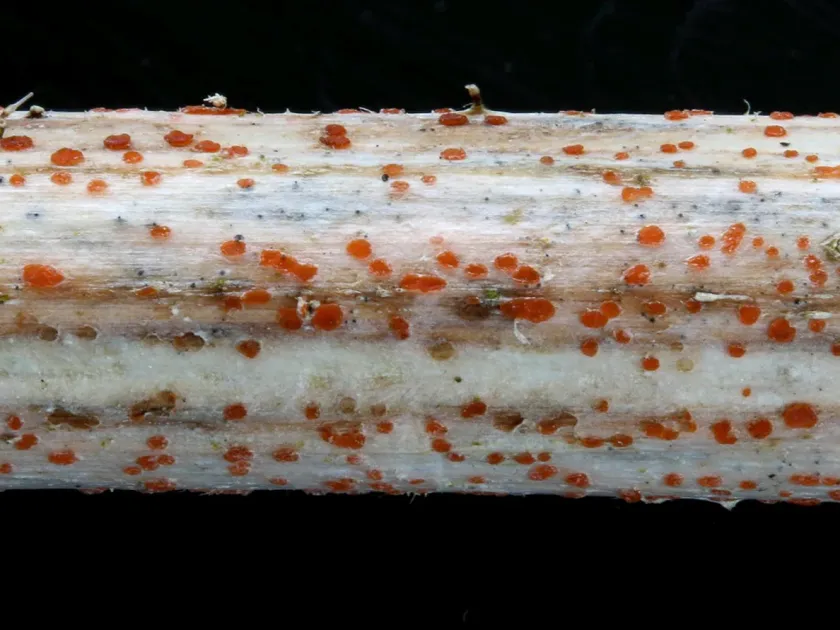
Bisporella claroflava manifests as the formation of small, bright yellow or lemon-yellow, cup-shaped fruiting bodies.
The diameter of the apothecia typically ranges from 1 to 3 millimeters, and they are either attached directly to the substrate or possess a short stalk.
When attacking woody plants, the fungal colonies often cluster together in tight groups on the bark or exposed wood surfaces.
As they mature, the fruiting bodies may become flatter while maintaining their characteristic and intense color pigment.
Infested plant tissues often undergo structural changes, becoming softer and increasingly susceptible to further decay by secondary microflora.
Pathogen
The pathogen responsible for this condition is the ascomycete fungus Calycina claroflava, belonging to the order Helotiales.
This microorganism is typically a saprotroph that can transition to a parasitic lifestyle on weakened or stressed host plants.
The fungus's life cycle involves the production of ascospores, which are easily disseminated by air currents during periods of high humidity.
The fungus prefers to grow and develop on dead or severely weakened wood of various deciduous tree species.
Biologically, this species is closely associated with lignin degradation, making it an active contributor to the decomposition of plant debris.
Conditions for development
Active development of Bisporella claroflava is observed under conditions of high air humidity and moderate temperature ranges.
The fungus thrives in shaded, damp environments where the surface of the bark or timber remains saturated for extended periods.
Spring and autumn seasons, characterized by frequent rainfall, are the most favorable times for the mass emergence of fruiting bodies.
Bark wounds caused by frost, insect pests, or mechanical damage provide ideal entry points for fungal infection.
Lack of proper sanitary pruning and poor aeration within plant stands create the microclimate necessary for sustained mycelial growth.
Why it matters
The primary danger lies in the accelerated destruction of the wood structure, which significantly reduces the stability of trunks and branches.
In garden and horticultural crops, the fungus can further weaken the plant's overall vitality, rendering it vulnerable to other opportunistic pathogens.
In forest stands, mass presence of the species indicates poor stand hygiene and the accumulation of excessive necrotic wood tissue.
Gradual softening of the bark leads to the disruption of normal plant physiological processes and potential loss of productivity.
Despite its predominantly saprotrophic nature, the active spread of mycelium limits the plant's ability to heal and recover from localized damage.
Protection
The primary control measure involves the timely removal and disposal of infested branches and deadwood to prevent further spore dissemination.
Maintaining tree vigor through proper fertilization and irrigation is essential for enhancing the plant's natural defense mechanisms.
Regular sanitary pruning is recommended, ensuring all damaged or infected bark is removed down to healthy, intact tissue.
The application of copper-based fungicides can help disinfect pruning wounds and prevent new infections through bark fissures.
- Proper plant spacing to improve canopy ventilation and reduce humidity.
- Routine clearing of the garden from rotting wood and plant debris.
- Use of sanitized tools that are disinfected after each pruning operation.
Discussion
No discussions yet — be the first.